
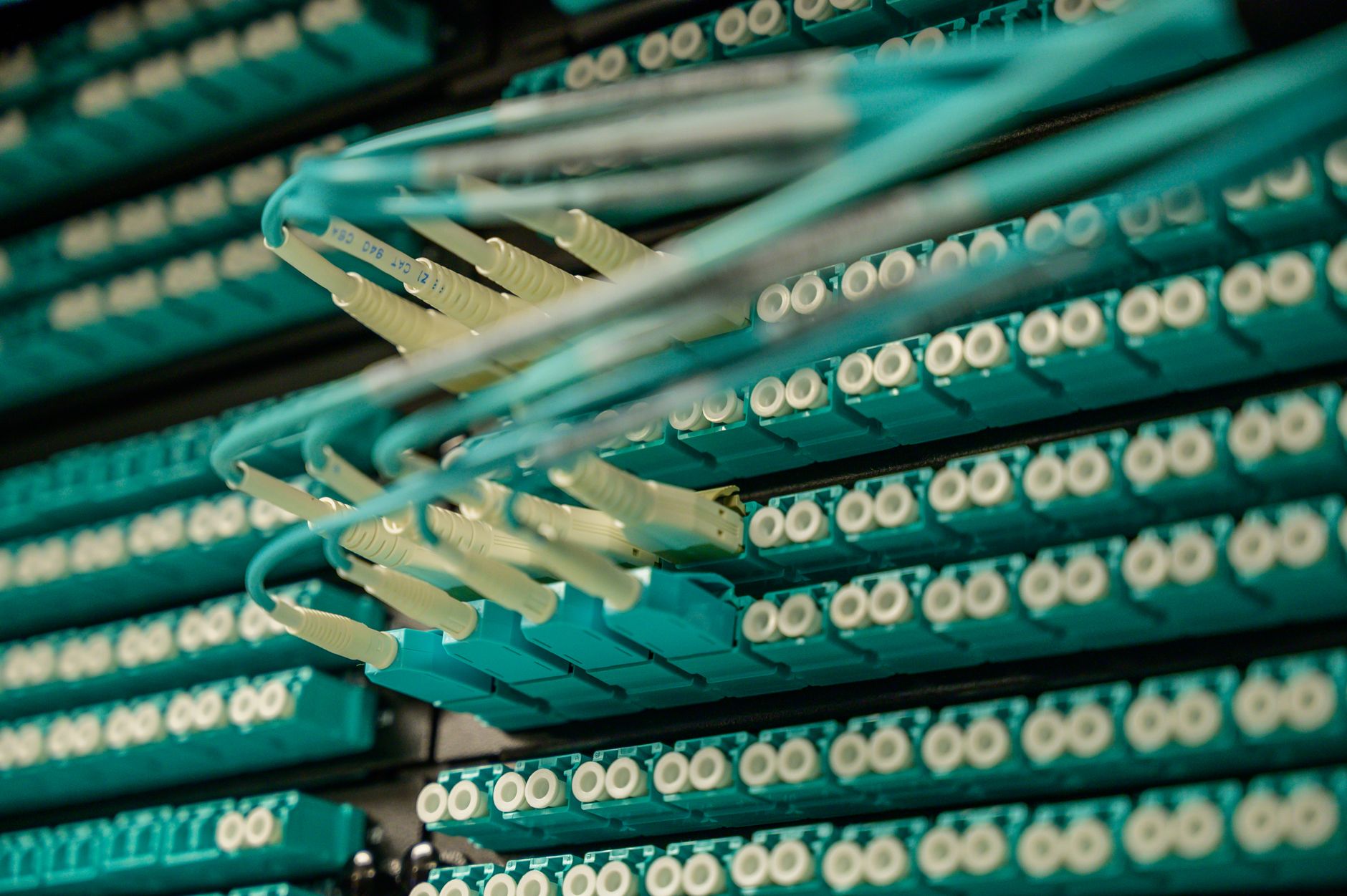
Photo by Brett Sayles on Pexels
For decades, the telecom industry operated under a comfortably simple assumption: more cables equal more resilience. If one subsea cable goes down, traffic reroutes across the others. Job done. But as the global communications infrastructure faces an increasingly hostile and complex environment — from ship anchors and seismic activity to deliberate sabotage and geopolitical brinkmanship — that assumption is starting to look dangerously naive.
Industry experts and network architects are now pushing for a more sophisticated framework for measuring subsea resilience, one that moves well beyond raw cable counts and into the nuanced territory of corridor-level risk analysis. The implications for carriers, hyperscalers, and enterprise customers who depend on transoceanic connectivity couldn’t be more significant.
The Illusion of Route Diversity
On paper, many of the world’s most critical subsea corridors look impressively redundant. The North Atlantic, for instance, hosts dozens of active cable systems connecting North America to Europe. The Asia-Pacific region has seen a flurry of new cable deployments over the past five years, with hyperscalers like Google, Meta, and Amazon pouring billions into private subsea infrastructure. Surely, more cables mean more safety?
Not necessarily. The problem lies in what engineers call “shared dependencies” — the hidden points of commonality that can turn an apparently diverse set of routes into a single point of failure. Many cables that appear geographically distinct on a world map actually share landing stations, terrestrial duct infrastructure, or narrow chokepoints at critical junctures. A single backhoe accident at a shared cable landing station in a coastal city, or a concentrated fault zone in a narrow geographic corridor, can simultaneously knock out multiple “diverse” cable systems.
Consider the Red Sea corridor, which carries an estimated 17-25% of global internet traffic. Multiple major cable systems thread through this narrow passage, and recent disruptions — whether from Houthi activity, anchor damage, or environmental factors — have demonstrated in real time how geographic concentration can eviscerate theoretical route diversity. When several cables share the same physical corridor, the number of cables becomes largely irrelevant to the resilience equation.
The Geopolitical Dimension
Beyond physical geography, the geopolitical threat landscape has transformed subsea risk in ways that pure engineering frameworks struggle to capture. The deliberate targeting of subsea infrastructure — whether through state-sponsored sabotage, hybrid warfare tactics, or the kind of mysterious incidents that plagued Baltic Sea cables in 2023 and 2024 — represents a threat category that simply didn’t factor into earlier resilience planning models.
NATO, the European Union, and various national governments have dramatically elevated their focus on subsea cable security, with some nations now treating major cable systems as critical national infrastructure warranting military protection. This geopolitical escalation forces network planners to evaluate not just whether cables are physically diverse, but whether they traverse territories or waters where the risk of deliberate interference is elevated — and whether that risk is correlated across multiple systems simultaneously.
A corridor-level risk assessment must therefore incorporate threat intelligence, political stability indices, and maritime security analysis alongside traditional engineering metrics. This represents a significant departure from how most network resilience teams have historically operated.
The Repair Constraint Problem
A Shrinking Fleet for a Growing Network
There’s another critical variable that aggregate cable counts obscure entirely: the severe constraints on subsea cable repair capacity. The global fleet of cable repair ships is surprisingly small — fewer than 60 vessels are capable of deep-water cable repair worldwide — and they are heavily concentrated in certain regions. When multiple cable failures occur simultaneously, as has happened in the Red Sea and off the coast of West Africa in recent years, repair queues can stretch for weeks or even months.
This means that even if a network has multiple “redundant” cables in a given corridor, a scenario involving several simultaneous failures could leave operators relying on degraded capacity for an extended period while waiting for repair vessels to become available. A truly resilient network architecture must factor in mean time to repair (MTTR) at a corridor level, not just the theoretical availability of alternative paths.
Rethinking the Resilience Scorecard
The industry is beginning to develop more sophisticated resilience metrics that capture these multi-dimensional risks. Corridor-level analysis would assess the concentration of cable systems within shared geographic chokepoints, the correlation of threat vectors across routes, landing station and terrestrial backhaul diversity, available repair capacity and estimated restoration timelines, and geopolitical risk scores for transit territories and exclusive economic zones.
This kind of holistic assessment demands closer collaboration between network engineers, security teams, geopolitical analysts, and in some cases, government stakeholders — a significant organizational evolution for an industry that has traditionally siloed these disciplines.
Industry Outlook: Resilience as a Competitive Differentiator
As enterprises and hyperscalers grow more sophisticated in their procurement of connectivity services, corridor-level resilience analysis is becoming a genuine commercial differentiator. Customers who experienced firsthand the impact of Red Sea cable disruptions on their Asia-Europe latency are now asking sharper questions of their service providers — and “we have X cables on this route” is no longer an acceptable answer.
Carriers and subsea operators who invest in rigorous corridor-level risk frameworks, and who can demonstrate genuine architectural resilience rather than paper diversity, are likely to find themselves in a stronger competitive position as the market matures. Meanwhile, the continued expansion of private cable systems by hyperscalers — often routed deliberately to avoid shared infrastructure with competitor or incumbent systems — suggests that the industry’s largest players have already absorbed this lesson.
The bottom line is clear: in an era of geopolitical volatility, concentrated threat vectors, and constrained repair resources, counting cables is the beginning of a resilience conversation, not the end of one. The networks that will truly withstand the pressures of the next decade are those designed with corridor-level thinking baked in from the start.
