
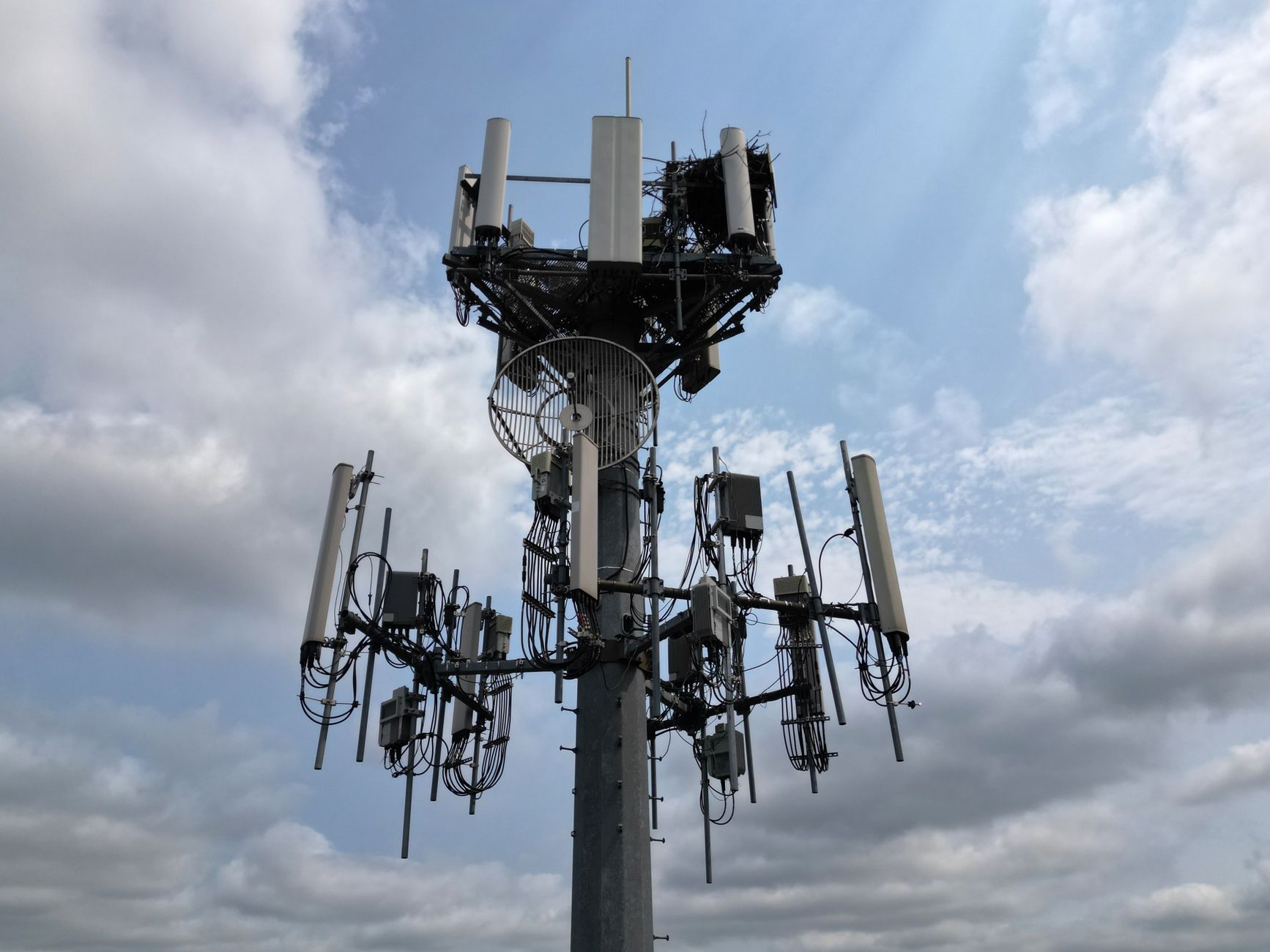
Photo by Giant Asparagus on Pexels
Indosat Charts a New Course with AI-Integrated 5G Network Architecture
Indosat Ooredoo Hutchison, one of Indonesia’s leading telecommunications operators, is making a bold play to transform its national network into what it calls an “AI Grid” — a hybrid infrastructure model that combines the raw computational power of centralized AI Factories with distributed edge computing nodes deployed closer to end users. The strategy, outlined by company leadership, signals a pivotal shift in how emerging market operators are approaching 5G modernization: not merely as a connectivity upgrade, but as the backbone for a nationwide artificial intelligence ecosystem.
For a country as geographically complex as Indonesia — spanning over 17,000 islands and home to more than 270 million people — the challenge of delivering consistent, low-latency AI services is formidable. Indosat’s AI Grid concept attempts to solve this through architectural layering, ensuring that both compute-intensive AI workloads and real-time, latency-sensitive applications can be served effectively across urban centers and remote regions alike.
What Is the AI Grid? Breaking Down the Architecture
At its core, Indosat’s AI Grid is a dual-tier computing framework. The first tier consists of centralized AI Factories — high-density GPU-powered data centers capable of training large language models, running inference workloads at scale, and supporting enterprise AI deployments that require massive computational throughput. These facilities are designed to serve as the brain of the network, handling complex AI processing where latency is less critical but computational depth is paramount.
The second tier brings AI computing closer to the edge — distributed nodes embedded within the 5G radio access network (RAN) infrastructure or regional data centers that reduce the round-trip time for AI inference tasks. This is particularly significant for applications such as autonomous systems, smart manufacturing, real-time video analytics, and augmented reality, where millisecond-level latency can be the difference between a functional and a failed deployment.
This architecture mirrors a broader industry trend toward what analysts are calling “AI-native” networks — infrastructure designed from the ground up to support AI workloads rather than retrofitting AI capabilities onto legacy systems. Operators globally, from Deutsche Telekom to SK Telecom, are pursuing similar strategies, but Indosat’s approach is notable given the scale and geographic complexity of its operating environment.
5G Modernization as the Enabler
Central to the AI Grid vision is Indosat’s ongoing 5G network modernization. The operator has been accelerating the rollout of 5G Standalone (SA) architecture, which provides the network slicing capabilities and ultra-low latency performance necessary to support differentiated AI service tiers. Unlike Non-Standalone (NSA) 5G, which relies on legacy 4G core infrastructure, a 5G SA core enables Indosat to dynamically allocate network resources based on the specific requirements of AI-driven applications — a critical capability for multi-tenant enterprise deployments.
The integration of Open RAN principles into the modernization roadmap further enhances Indosat’s flexibility. By disaggregating hardware and software components, the operator can more readily embed AI-driven network optimization tools, such as automated interference management, predictive capacity planning, and real-time traffic steering — capabilities that are increasingly central to next-generation network operations.
Edge Computing and the Indonesian Market Reality
Indonesia’s digital economy is projected to reach $130 billion by 2025, according to reports from Google, Temasek, and Bain & Company, driven by e-commerce, fintech, and digital media. However, realizing this potential requires infrastructure that can support sophisticated applications at the local level. Indosat’s distributed AI computing layer directly addresses this gap, enabling local businesses, government agencies, and developers to access AI capabilities without routing every request through distant centralized servers.
This is especially relevant for Indonesia’s growing industrial and smart city initiatives, where manufacturing plants in Java or logistics hubs in Sumatra could leverage edge AI for real-time quality control, predictive maintenance, and supply chain optimization — all without dependence on intercontinental data center connectivity.
Competitive and Strategic Implications
Indosat’s AI Grid vision places it in direct competition not only with fellow Indonesian telcos like Telkomsel and XL Axiata, but also with hyperscale cloud providers — Amazon Web Services, Google Cloud, and Microsoft Azure — all of which are aggressively expanding their Southeast Asian infrastructure footprints. By building AI computing capabilities directly into its network fabric, Indosat is positioning itself as a local alternative that offers the twin advantages of lower latency and greater data sovereignty — an increasingly important consideration for Indonesian enterprises and government clients subject to domestic data localization regulations.
Industry Outlook: AI-Native Networks Define the Next Decade
Indosat’s AI Grid announcement reflects a broader inflection point in the global telecom industry. As operators search for new revenue streams beyond traditional connectivity, AI-as-a-service delivered over purpose-built network infrastructure represents one of the most promising paths forward. Analyst firm Dell’Oro Group has projected that AI-driven network infrastructure spending will accelerate significantly through 2027, with Asia-Pacific operators at the forefront of adoption.
For Indosat, the success of its AI Grid will ultimately depend on execution — scaling the distributed edge footprint across Indonesia’s challenging geography, forging the right technology partnerships, and convincing enterprise customers that telco-delivered AI can compete with hyperscaler alternatives. If it can deliver on that promise, the operator won’t just be modernizing a network — it will be building the connective tissue for Indonesia’s AI-driven future.
