
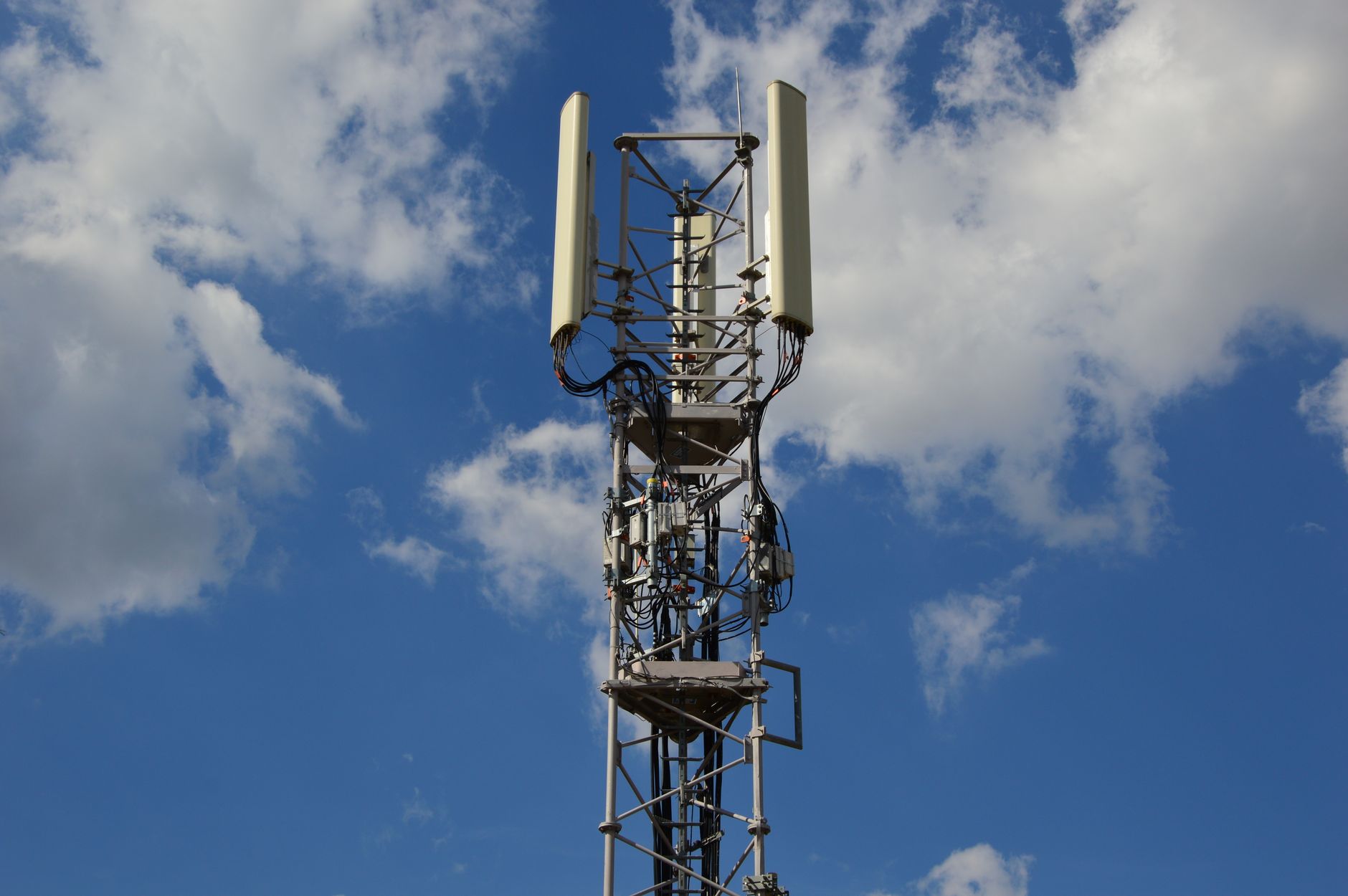
Photo by Ulrick Trappschuh on Pexels
From Infrastructure Spending to Profit Harvesting: US Telecoms Enter a New Era
For most of the past half-decade, the dominant narrative in US telecommunications was one of relentless capital expenditure, spectrum auctions costing tens of billions of dollars, and the slow, painstaking work of building out nationwide 5G infrastructure. Profitability, analysts frequently reminded investors, would come — eventually. That “eventually” may have finally arrived.
Verizon’s latest quarterly results have added fresh fuel to a growing conviction across Wall Street and the broader telecom industry: America’s major mobile operators are transitioning from a growth-through-investment model to something analysts are increasingly calling a “new telco growth profile” — one characterized by expanding margins, improving free cash flow, and a maturing but still-evolving 5G monetization strategy.
What Verizon’s Numbers Are Actually Telling Us
Verizon’s performance wasn’t just a win for its shareholders — it was a signal flare for the entire sector. The carrier reported continued momentum in fixed wireless access (FWA) subscriber additions, steady postpaid phone net adds, and — critically — improving average revenue per user (ARPU) metrics. These aren’t just vanity numbers. ARPU improvement, in particular, suggests that customers are beginning to trade up to premium unlimited tiers and 5G-enabled service bundles, validating years of costly network upgrades.
Verizon’s C-band deployment, which now covers a substantial portion of the US population, is increasingly being credited for tangible improvements in network performance that are translating into real commercial outcomes. Faster speeds and lower latency are giving the carrier leverage to upsell higher-margin plans — a dynamic that had seemed theoretical for years but is now showing up concretely in financial statements.
Fixed Wireless Access: The Unexpected Growth Engine
Perhaps the most transformative subplot in the new telco growth story is the explosive rise of fixed wireless access as a viable broadband product. Verizon, alongside T-Mobile, has aggressively scaled its FWA offerings, targeting both underserved rural markets and urban households fatigued by cable monopolies. The business case is compelling: carriers can monetize excess 5G network capacity — spectrum and infrastructure already paid for — by delivering home broadband without the cost of physical last-mile infrastructure buildout.
T-Mobile currently leads the FWA race with over 5 million subscribers, while Verizon has been steadily closing the gap. Together, these two carriers are reshaping the competitive landscape of US broadband in ways that were barely imaginable when 5G standards were still being finalized at 3GPP. For the telecom industry, FWA represents something rare and valuable: a genuinely new revenue stream that leverages existing assets.
The Broader Industry Shift: CapEx Peaks and Free Cash Flow Returns
The “new telco growth profile” thesis rests on a foundational premise: that the industry’s capital expenditure cycle has peaked. After a frenzied period of C-band spectrum deployment, millimeter wave (mmWave) buildouts in dense urban environments, and the installation of hundreds of thousands of new small cells and macro towers, carriers are signaling a transition toward CapEx discipline.
This matters enormously for free cash flow generation. When network investment spending moderates while subscriber revenues continue to grow — driven by 5G premium tier adoption, FWA expansion, and enterprise 5G deals — the mathematical result is improving cash conversion. That cash can be returned to shareholders through dividends and buybacks, used to retire debt accumulated during the buildout years, or reinvested selectively in next-generation capabilities like Open RAN, edge computing, and early 6G research.
Enterprise 5G: The Long-Awaited Revenue Catalyst
Beyond consumer wireless, enterprise and industrial 5G applications are beginning to mature into credible revenue contributors. Private 5G networks for manufacturing, logistics, healthcare, and smart infrastructure represent a market opportunity that carriers have courted for years. While still relatively nascent compared to consumer revenues, the pipeline of enterprise deals is growing — and these contracts typically carry higher margins and longer contract terms than consumer subscriptions.
Network slicing, a key 5G feature that allows carriers to carve out dedicated virtual network segments with guaranteed quality-of-service parameters for enterprise clients, is gradually moving from proof-of-concept to commercial deployment. As standards mature and operational tooling improves, this capability could become a meaningful differentiator for carriers competing in the B2B space.
Challenges That Could Complicate the Narrative
Not every indicator points toward smooth sailing. Competition for postpaid subscribers remains fierce, with all three major US carriers — Verizon, AT&T, and T-Mobile — continuing to offer aggressive promotional pricing that pressures ARPU from below. Inflationary pressures on operational expenses, particularly energy costs for running dense 5G networks, also represent a structural headwind. And the promise of enterprise 5G, while real, has been slower to materialize at scale than early projections suggested.
Additionally, the looming arrival of 6G — while still a decade away from commercial deployment — is already prompting discussions about the next round of spectrum investment and infrastructure spending, a reminder that the telecom industry’s CapEx cycle never truly ends, it merely pauses.
Industry Outlook: A Maturing Market Finding Its Rhythm
What Verizon’s results and the broader industry trajectory suggest is that US telecoms are entering a phase of earned maturity. The heroic, disruptive chapter of 5G deployment is giving way to the steadier, more financially rewarding work of monetization, optimization, and incremental expansion. For investors, operators, and the ecosystem of vendors and technology partners that depend on carrier spending, this shift carries significant implications.
The new telco growth profile isn’t about explosive subscriber growth or landmark spectrum wins. It’s about operational efficiency, smarter capital allocation, and the gradual realization of value from infrastructure that has already been built. For an industry that spent years asking “when will 5G pay off,” the answer is increasingly clear: the payoff is happening now, one quarterly earnings call at a time.
