
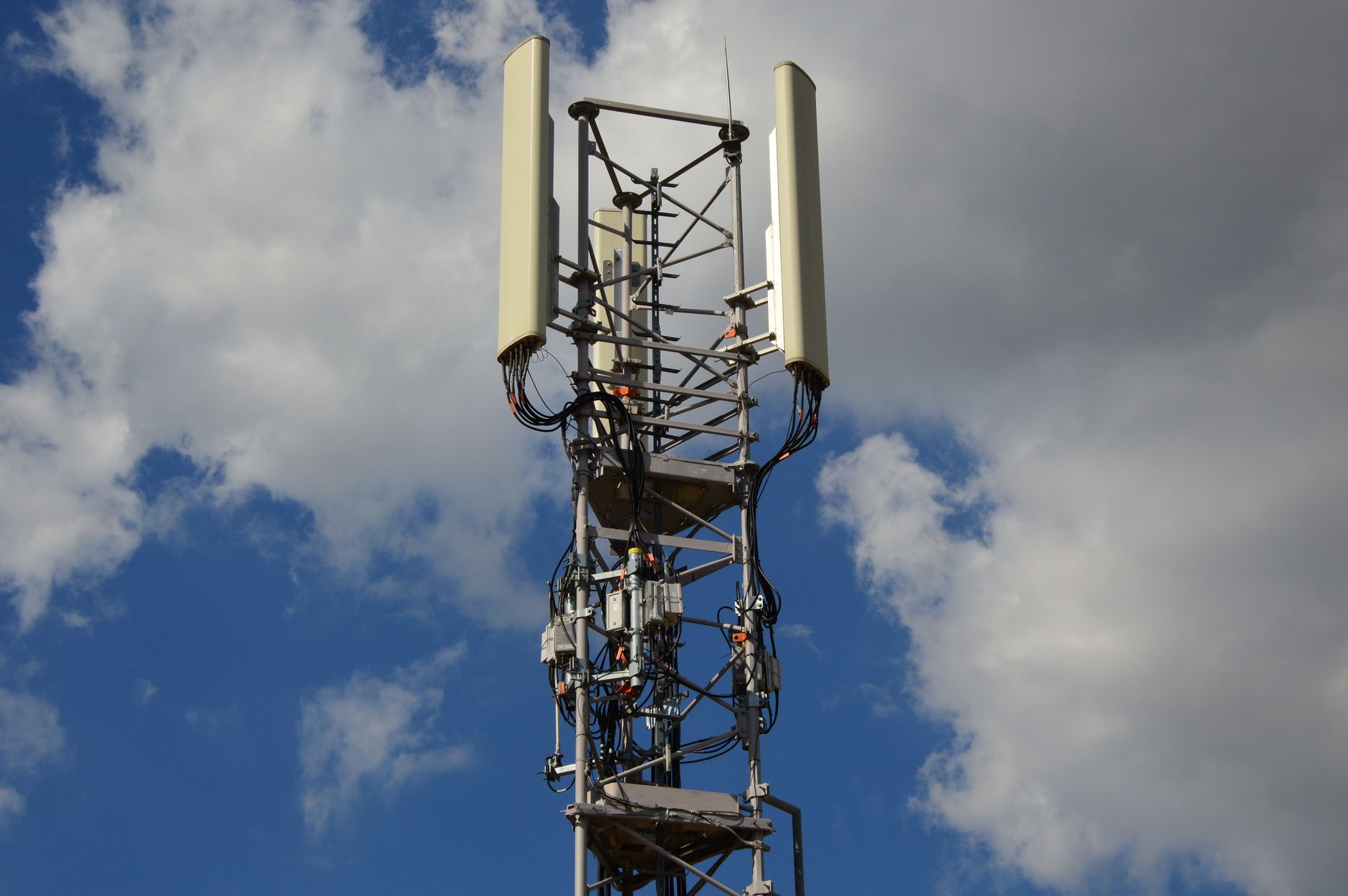
Photo by Ulrick Trappschuh on Pexels
Ericsson Sets the Bar: AI in the RAN Must Deliver Real-World Results
The excitement surrounding artificial intelligence in telecommunications has reached a fever pitch, but Ericsson is urging the industry to pump the brakes on hype and focus on what truly matters — measurable outcomes at scale. Speaking at the RCRTech Telco AI Forum, Gabriel Foglander, Head of Strategic RAN Leadership at Ericsson, made the case that AI-RAN isn’t just a feature upgrade; it represents a fundamental architectural shift that must be justified through hard performance data, not theoretical benchmarks.
Foglander’s remarks come at a pivotal moment. Operators globally are under intense pressure to optimize network performance while managing capital expenditure, reducing energy consumption, and preparing infrastructure for next-generation demands. AI embedded in the radio access network promises to address all of these challenges simultaneously — but only if it actually works in the real world, at the scale of live commercial networks serving millions of users.
What “Telco-Grade” AI Really Means
The term “telco-grade” carries enormous weight in the industry. It implies carrier-class reliability, sub-millisecond responsiveness, and the ability to operate continuously without degradation — standards that consumer-facing AI applications simply don’t need to meet. Ericsson’s position is that AI integrated into the RAN must be held to these same uncompromising standards.
In practical terms, telco-grade AI-RAN encompasses several critical capabilities: real-time interference management, predictive resource scheduling, dynamic beamforming optimization, and automated anomaly detection — all operating within the stringent timing constraints of 5G New Radio. These aren’t features that can tolerate the occasional hiccup that a chatbot or recommendation engine might get away with. A misstep in RAN-layer AI can translate directly into dropped calls, degraded throughput, and degraded user experience across thousands of simultaneous connections.
The Scale Problem Is the Real Test
One of the most underappreciated challenges in AI-RAN deployment is the sheer scale at which these systems must operate. Ericsson manages radio networks covering billions of devices across hundreds of operators worldwide. An AI model that performs brilliantly in a controlled trial environment with a few hundred base stations faces an entirely different set of challenges when rolled out across tens of thousands of sites spanning diverse geographic, spectral, and traffic environments.
This is precisely why Foglander’s emphasis on measurable gains “at scale” resonates so strongly with network engineers. Pilot programs and proof-of-concept deployments are necessary first steps, but the industry has seen too many promising technologies that failed to survive contact with the messy reality of live commercial networks. Ericsson’s insistence on rigorous, scaled validation signals a maturity of thinking that the broader AI-RAN ecosystem would do well to adopt.
AI-RAN as a Bridge to a Fully Intelligent Network
Perhaps the most forward-looking element of Ericsson’s perspective is the framing of AI-RAN not as an end goal, but as a critical stepping stone toward a network that is intelligent from edge to core. The vision is of AI not bolted on as an afterthought, but embedded at every layer of the network stack — from the silicon in the radio unit to the orchestration platforms managing multi-vendor, multi-domain environments.
This architecture aligns closely with the O-RAN Alliance’s ongoing work on near-real-time and non-real-time RAN Intelligent Controllers (RICs), which provide standardized interfaces for AI-driven optimization applications, known as xApps and rApps. Ericsson has been an active contributor to these standards while simultaneously developing its own proprietary AI capabilities, reflecting the dual-track approach that most major vendors are pursuing.
Energy Efficiency: The Killer Use Case
Among the many promised benefits of AI-RAN, energy efficiency may be the most immediately compelling for operators. With energy costs representing a substantial portion of network operating expenditure — and sustainability commitments becoming non-negotiable for corporate governance — AI-driven power management offers a direct path to bottom-line impact. Intelligent sleep mode activation, traffic-aware transmission power control, and predictive load balancing can collectively reduce RAN energy consumption by meaningful percentages, translating to millions of dollars in annual savings for large operators.
Ericsson’s own research has pointed to AI-driven energy savings as a key commercial differentiator, and several early deployments have reported double-digit percentage reductions in radio unit power consumption during low-traffic periods — without compromising coverage or capacity commitments.
Market Implications and Competitive Dynamics
Ericsson’s vocal stance on measurable AI-RAN performance also carries competitive significance. As the market for AI-native network solutions heats up, with challengers ranging from cloud hyperscalers like Microsoft and Google entering the telco AI space to Open RAN vendors pitching AI-first architectures, established infrastructure vendors need to differentiate on reliability and proven outcomes rather than feature lists.
Operators evaluating AI-RAN investments will increasingly demand vendor accountability in the form of performance guarantees, detailed KPI reporting, and transparent model explainability — particularly as regulators begin scrutinizing AI decision-making in critical infrastructure.
Industry Outlook
The broader consensus emerging from the telecom industry is that 2025 and 2026 will be defining years for AI-RAN. The technology is maturing rapidly, standardization frameworks are solidifying, and operator willingness to invest is growing — but patience for unproven claims is running thin. Ericsson’s call for measurable, scalable results isn’t just good engineering discipline; it’s a market signal that the era of AI-RAN experimentation is giving way to the era of AI-RAN accountability. For operators, vendors, and the ecosystem at large, that shift cannot come soon enough.
