
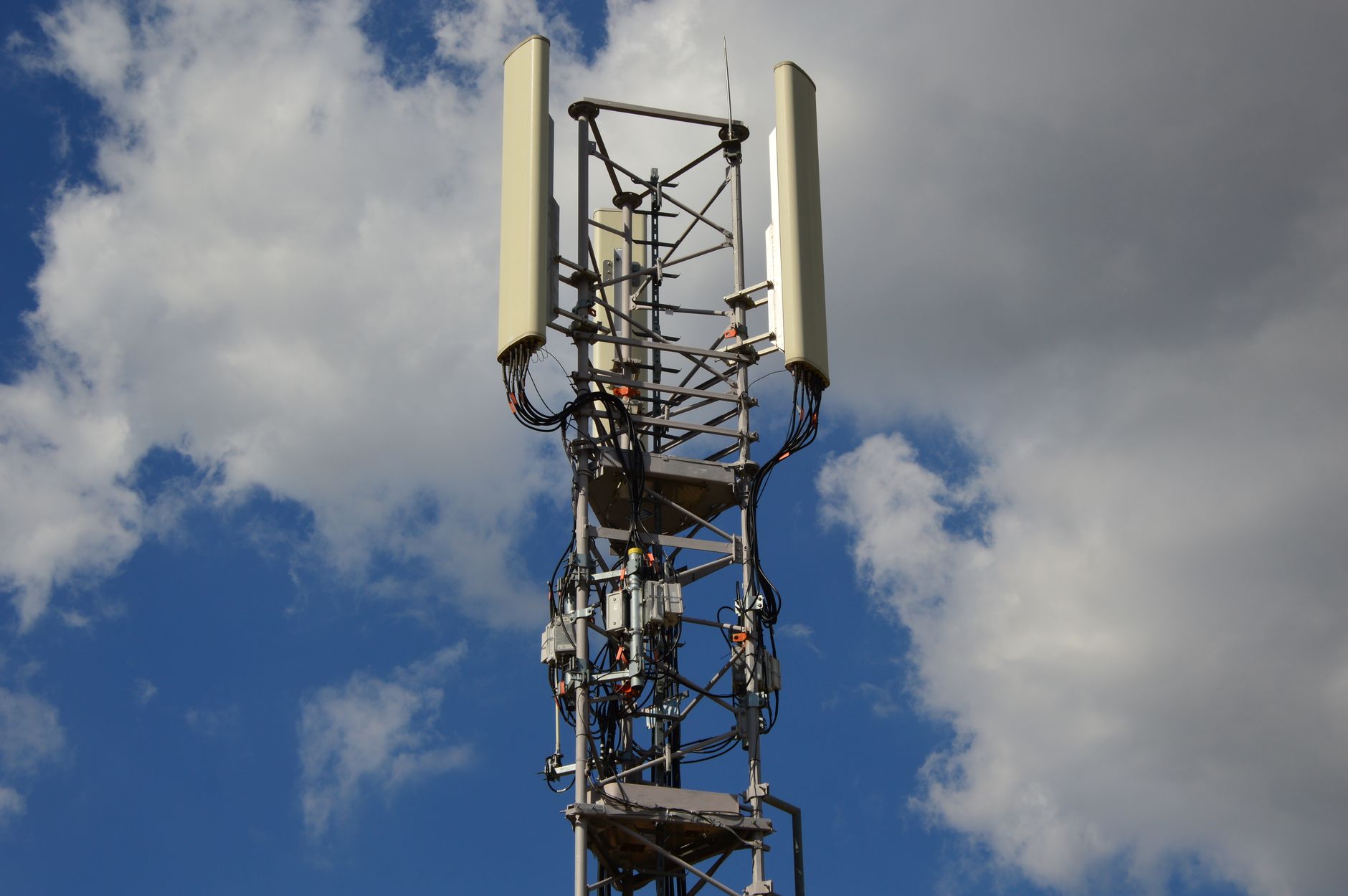
Photo by Ulrick Trappschuh on Pexels
The Telecom Industry Faces a Defining Moment — and a Familiar Danger
The telecommunications industry is no stranger to hype cycles. When 5G rolled out globally, operators invested billions in spectrum, infrastructure, and marketing — only to find that sustainable, differentiated revenue streams proved far more elusive than the glossy launch presentations suggested. Now, as Artificial Intelligence Radio Access Network (AI-RAN) technology emerges as the next transformative frontier, at least one major operator is issuing a pointed warning: don’t let history repeat itself.
SK Telecom, South Korea’s largest wireless carrier and widely regarded as one of the most technically progressive operators in the world, has publicly cautioned the global telecom community that the biggest risk surrounding AI-RAN is the industry falling into the same strategic traps it stumbled into with 5G. The message is clear — visionary technology alone doesn’t guarantee business success, and telcos need to plan smarter this time around.
What Went Wrong with 5G — and Why It Matters for AI-RAN
To understand SK Telecom’s warning, it’s worth revisiting the 5G experience. Operators worldwide spent an estimated $600 billion-plus on 5G infrastructure throughout the early 2020s, driven by promises of ultra-low latency, massive machine-type communications, and network slicing for verticals like manufacturing, healthcare, and smart cities. While the technology largely delivered on its technical promises, the business models didn’t scale the way analysts and vendors projected.
Network slicing remains underutilized at commercial scale. Private 5G enterprise deployments, while growing, have been slower and more complex to sell than anticipated. And average revenue per user (ARPU) in many markets has remained stubbornly flat, even as capital expenditure soared. The result: a technology triumph that has, for many operators, yet to translate into a financial one.
SK Telecom’s concern is that AI-RAN — which integrates machine learning and artificial intelligence directly into the radio access network to optimize spectrum efficiency, predict interference, manage traffic dynamically, and reduce energy consumption — risks being deployed with the same “build it and they will come” mentality that plagued 5G rollouts.
The Core Risk: Technology Without a Business Case
According to SK Telecom’s perspective, the fundamental error with 5G was prioritizing technical capability over commercial clarity. Operators built networks first and searched for customers second. For AI-RAN to succeed, the business case — including who pays for it, what the value proposition is, and how it integrates into existing operational frameworks — must be established before large-scale deployment commitments are made.
AI-RAN is not a small bet. Deploying AI at the RAN level requires significant investment in both hardware-accelerated infrastructure (think NVIDIA GPUs embedded in base stations) and software platforms capable of real-time inference and closed-loop automation. Without clear monetization strategies, operators risk compounding the investment overhang already weighing on their balance sheets from 5G.
Optus Envisions Networks as “Social Networks for Agents”
While SK Telecom is focused on caution, Australian operator Optus is thinking boldly about what AI-native infrastructure could ultimately look like. Optus has floated a compelling conceptual framework: reimagining telecommunications networks not as pipes for human-generated data, but as “social networks for agents” — interconnected platforms where autonomous AI agents communicate, negotiate, and transact with each other at machine speed.
This is more than a metaphor. As agentic AI systems — those capable of independent decision-making and multi-step task execution — proliferate across industries, they will generate their own communication needs that are fundamentally different from human traffic patterns. Agents don’t browse, stream, or scroll. They require deterministic, low-latency, high-reliability data exchanges at potentially massive scale and frequency.
Re-Architecting for an Agentic Future
Optus’s framing suggests that network architecture must evolve to support machine-to-machine AI workloads natively. This means rethinking everything from Quality of Service (QoS) parameters and API exposure layers to edge computing strategies and core network design. Networks optimized for human users may be fundamentally ill-suited for the communication patterns of AI agents operating across logistics, financial services, healthcare, and smart infrastructure verticals.
This vision aligns closely with the broader Open RAN and cloud-native trends already reshaping RAN architecture. If networks become platforms for agentic AI, then programmability, real-time intelligence, and fine-grained resource orchestration aren’t nice-to-haves — they’re existential requirements.
Industry Outlook: Proceed With Vision, Not Just Ambition
The convergence of SK Telecom’s cautionary stance and Optus’s forward-looking architecture vision actually points toward a coherent strategic prescription for the global industry. AI-RAN holds genuine transformative potential — it could slash energy costs by 20–30%, dramatically improve spectral efficiency, and enable entirely new service paradigms. But realizing that potential requires disciplined commercial planning alongside technical innovation.
Operators should be engaging enterprise partners, hyperscalers, and regulators now to define value-sharing models, interoperability standards, and deployment roadmaps. The O-RAN Alliance, 3GPP, and GSMA all have roles to play in ensuring AI-RAN evolves with open, vendor-neutral frameworks that prevent lock-in and promote competitive innovation.
The 5G era taught the industry that even groundbreaking technology needs a business plan. AI-RAN is too important — and too expensive — to learn that lesson twice. Operators that invest in strategy as seriously as they invest in silicon will be the ones that ultimately define what the AI-native network era looks like.
