
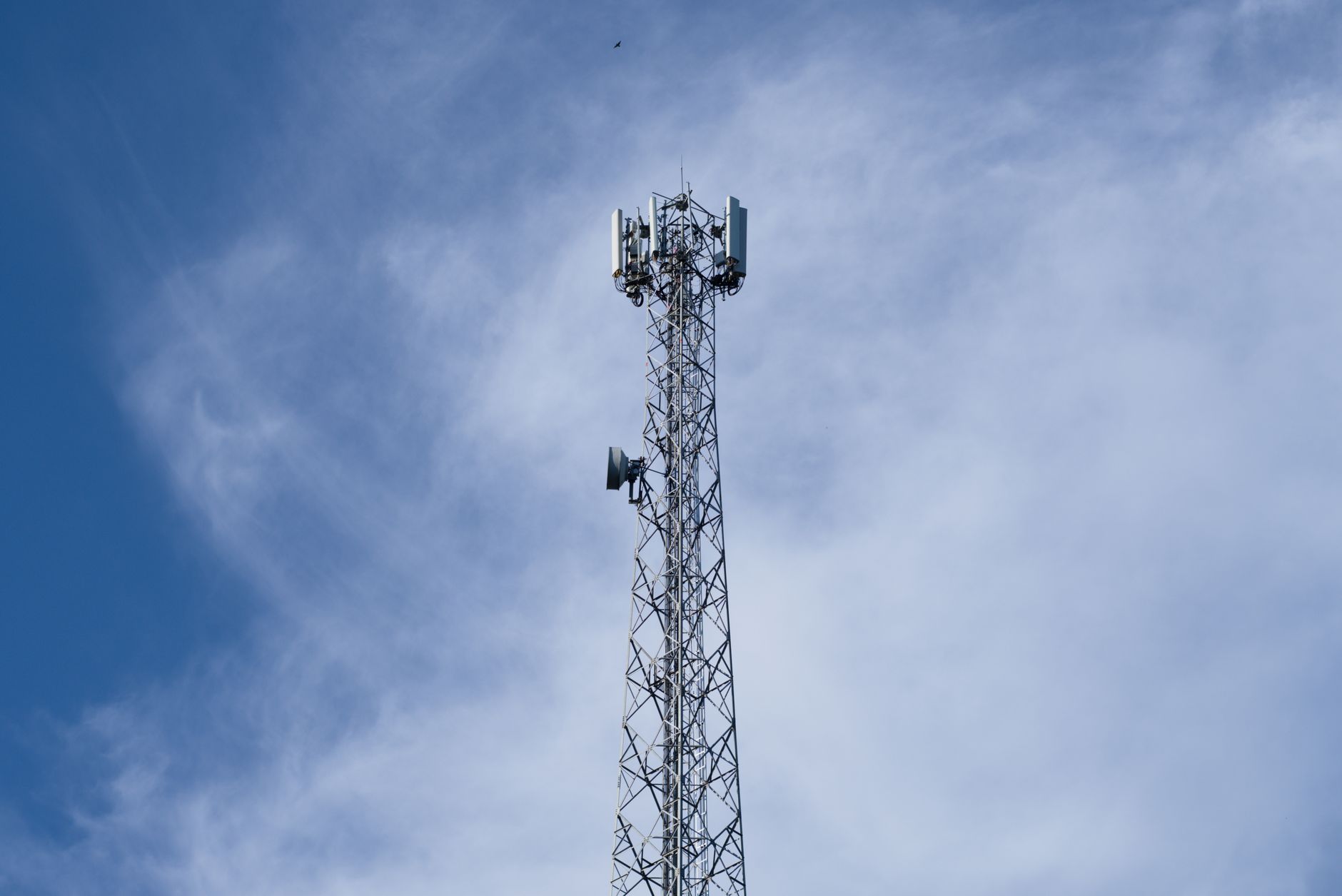
Photo by Qeis Ismail on Pexels
Apple Sets the Stage: October 13, 2026 Global Launch Event Confirmed
Apple has officially scheduled its next major product launch event for October 13, 2026, sending ripples through the global telecommunications industry. While Apple has kept specific product details tightly under wraps — as is its tradition — the event is widely anticipated to mark the debut of the iPhone 18 series, potentially alongside updated wearables, iPad iterations, and connectivity-focused accessories that could redefine how consumers interact with mobile networks worldwide.
For telecom operators, network vendors, and wireless infrastructure providers, an Apple launch event is never just a consumer moment — it is a pivotal industry inflection point that drives upgrade cycles, tests network resilience, and accelerates the adoption of cutting-edge wireless standards. The October 2026 event promises to be no different, and arguably more consequential than any before it.
The Connectivity Story: What Telecom Professionals Are Watching
5G Advanced and the Push Toward 6G Readiness
Industry analysts expect the iPhone 18 lineup to be Apple’s most connectivity-ambitious device generation yet. With 3GPP’s Release 18 — commonly referred to as 5G Advanced — now in full commercial deployment across leading markets, the next iPhone is widely tipped to integrate 5G Advanced modem capabilities that can leverage enhanced uplink, AI-driven beam management, and carrier aggregation across a broader swath of sub-6 GHz and mmWave spectrum bands.
Apple’s reported continued development of its in-house modem chip, following the partial debut of custom silicon in earlier models, is expected to reach a more mature iteration by the time of the October launch. A proprietary Apple modem deeply integrated with the A-series or M-series chip architecture could deliver significantly improved network efficiency, reduced latency, and better power consumption — all critical metrics that carriers use to benchmark device performance on their networks.
Satellite Connectivity: Going Beyond Emergency SOS
One of the most closely watched telecom dimensions of Apple’s 2026 launch will be the evolution of satellite connectivity. Apple’s partnership with Globalstar, which introduced Emergency SOS via satellite in 2022 and expanded to roadside assistance and messaging features in subsequent years, is expected to graduate into a more robust direct-to-device (D2D) satellite broadband capability by the iPhone 18 generation.
This would place Apple squarely in a growing competitive landscape alongside SpaceX’s Starlink Direct to Cell service and AST SpaceMobile’s ambitions, fundamentally altering the relationship between smartphone OEMs and terrestrial telecom operators. For carriers, this raises nuanced questions around revenue sharing, network offloading, and whether satellite-native features will complement or cannibalize traditional cellular service in low-coverage regions.
Carrier Network Readiness: Preparing for the Upgrade Tsunami
Every Apple launch triggers one of the most intense and predictable surges in mobile network traffic the industry experiences. Carriers in the United States, Europe, India, Japan, South Korea, and Australia are already understood to be stress-testing their core networks and RAN infrastructure in preparation for activation spikes expected in the days following October 13, 2026.
In markets like India — where Apple has rapidly grown its market share and where Jio and Airtel have aggressively expanded 5G SA (Standalone) infrastructure — the iPhone 18 launch could be the catalyst that meaningfully shifts the 5G subscriber base from NSA to SA architecture, unlocking network slicing, ultra-low latency applications, and enhanced VoLTE/VoNR (Voice over New Radio) services at scale.
eSIM and iSIM Proliferation
Apple’s ongoing push to eliminate the physical SIM card — a journey that began with eSIM dual-capability and accelerated with the US iPhone 14 going eSIM-only — is expected to take another significant step forward in 2026. Speculation around iSIM (integrated SIM) technology embedded directly into the application processor is mounting, a development that would further challenge traditional carrier SIM provisioning models and accelerate the importance of Remote SIM Provisioning (RSP) infrastructure compliance globally.
Carriers that have not fully modernized their eSIM and digital onboarding workflows risk a friction-heavy customer experience during the critical post-launch activation window — a competitive disadvantage in an already saturated postpaid market.
Market Impact: Device Supercycle and Network Investment
The broader macroeconomic and market context surrounding the October 2026 launch is significant. With global smartphone replacement cycles having elongated post-pandemic, many industry forecasters — including analysts at IDC and Counterpoint Research — have pointed to 2026 as a potential “supercycle” year, driven by a combination of AI-native device features, improved 5G network coverage maturity, and compelling hardware upgrades attracting users holding three-to-four-year-old devices.
For telecom infrastructure vendors like Ericsson, Nokia, and Samsung Networks, an Apple-driven supercycle translates directly into increased pressure on carrier customers to ensure their RAN and core networks can handle higher data throughput demands, particularly in dense urban environments where mmWave small cell deployments become critical to managing capacity.
Industry Outlook: Apple as a Telecom Ecosystem Catalyst
Apple’s October 13 launch event underscores a fundamental truth that has defined the mobile industry for nearly two decades: device launches from Cupertino do not merely sell phones — they set the technical and commercial agenda for an entire ecosystem of operators, chipmakers, network vendors, and standards bodies.
As the industry edges closer to 6G standardization discussions and AI-integrated network management becomes mainstream, Apple’s 2026 product strategy will offer important signals about which wireless technologies are graduating from specification sheets to mass-market reality. Telecom professionals would do well to watch October 13 not just as a consumer event, but as a roadmap briefing for the next chapter of global connectivity.
