
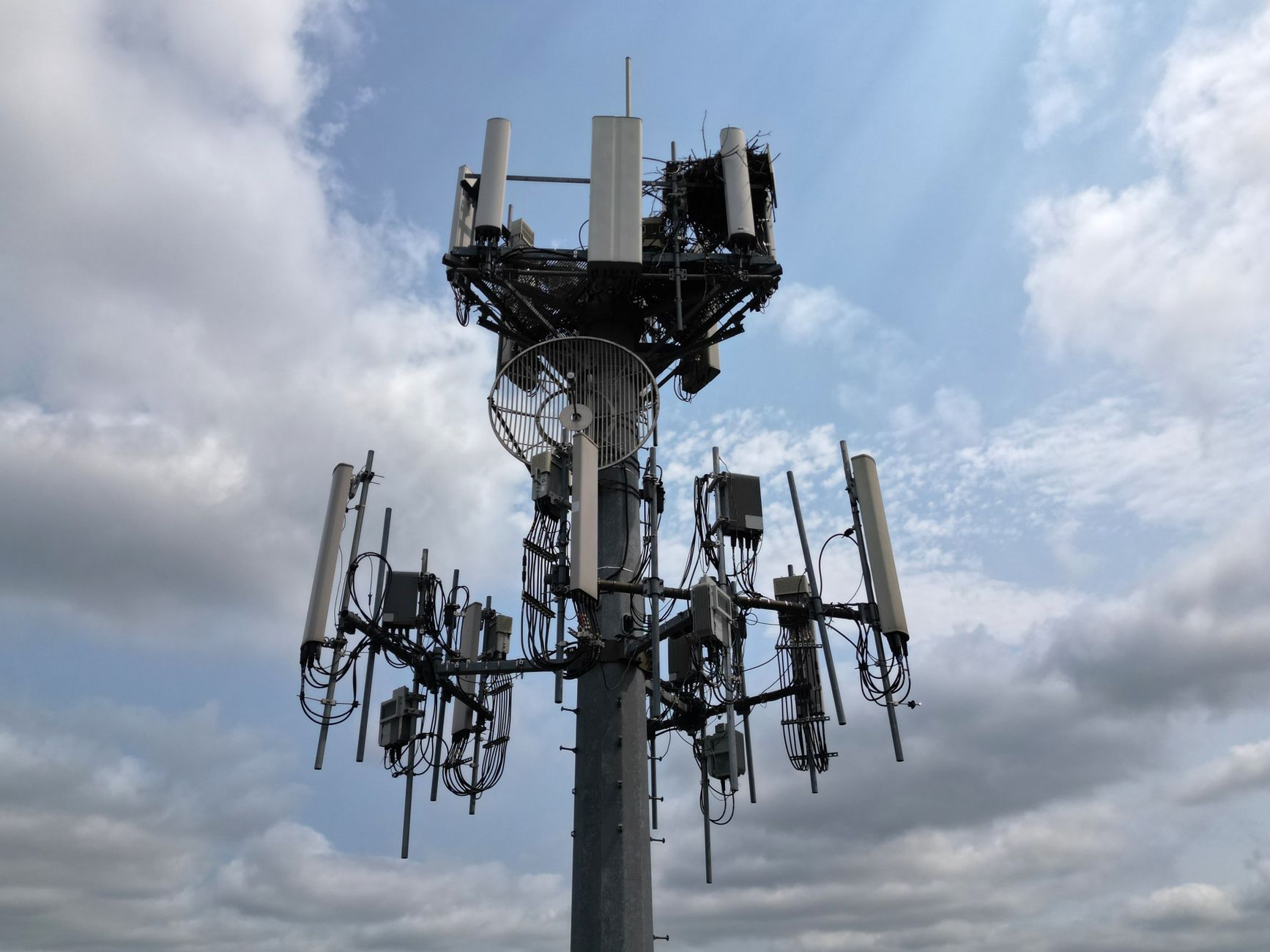
Photo by Giant Asparagus on Pexels
The Hidden Complexity Behind Every 5G Rollout
On paper, 5G sounds like a straightforward upgrade — faster speeds, lower latency, and higher device density. In practice, deploying a 5G network is one of the most technically demanding undertakings in the history of telecommunications. From dynamic spectrum sharing and network slicing to millimeter wave propagation and edge computing integration, the variables at play are staggering. And yet, despite this complexity, many operators have historically relied on lab environments that bear little resemblance to the chaotic, unpredictable conditions of the real world.
That gap between controlled lab testing and live network behavior has quietly become one of the most expensive problems in telecom. Dropped deployments, degraded user experiences, and costly post-launch fixes have pushed network emulation — the practice of replicating real-world network conditions in a test environment — to the center of 5G validation strategy.
What Network Emulation Actually Does
Network emulation is distinct from network simulation. Where simulation models network behavior using software abstractions, emulation actively reproduces real-world network conditions — including latency, packet loss, jitter, bandwidth constraints, and congestion — in a live traffic environment. This allows engineers to subject applications, devices, and network components to the kind of stress they will face in production, before a single antenna goes live in the field.
For 5G specifically, this capability is indispensable. Unlike 4G LTE, which operated largely within well-understood parameters, 5G introduces a layered architecture that spans sub-6 GHz, mid-band, and millimeter wave frequencies, each with dramatically different propagation characteristics. A network emulator can replicate the variable latency of a mmWave link, the handoff behavior between 5G NR and LTE in non-standalone configurations, or the performance degradation caused by network congestion during a major public event.
Key Conditions That Emulation Must Replicate
Effective 5G network emulation needs to account for a wide range of real-world impairments. These include round-trip latency across different deployment scenarios — from dense urban cores to rural fixed wireless access links — as well as packet loss rates that vary under high-load conditions. Jitter, the variability in packet delivery timing, is particularly critical for latency-sensitive applications like industrial automation, remote surgery, and autonomous vehicle coordination, all of which are among the highest-profile use cases 5G promises to enable.
Bandwidth throttling, link asymmetry, and reorder buffers also need to be faithfully reproduced. As network slicing becomes more prevalent — allowing operators to carve out dedicated virtual network segments for enterprise customers — emulation environments must be capable of validating slice isolation and guaranteed quality of service parameters simultaneously across multiple traffic flows.
The Business Case for Emulation-First Testing
The financial argument for investing in robust network emulation is increasingly compelling. Industry analysts estimate that network outages and performance failures cost telecom operators billions of dollars annually in lost revenue, customer churn, and remediation costs. In enterprise 5G deployments — where service-level agreements carry financial penalties for downtime — the stakes are even higher.
Early identification of performance bottlenecks through emulation testing can dramatically compress the gap between deployment intent and deployment reality. Engineers who discover a latency issue in a test harness can address it in days. The same issue discovered post-launch, in a live network serving thousands of users, can take weeks to diagnose and rectify — with reputational and contractual consequences compounding throughout.
For hyperscalers and cloud providers now entering the telecom space through Open RAN partnerships and private 5G networks, emulation also serves as a critical validation tool for software-defined network components that have never been tested against the full spectrum of real-world impairments.
Open RAN and the New Testing Imperative
The shift toward Open RAN architectures has introduced an additional layer of complexity that makes network emulation even more essential. Traditional RAN deployments used tightly integrated hardware and software from a single vendor, making end-to-end performance predictable within known parameters. Open RAN disaggregates these components, introducing multi-vendor interoperability challenges that can only be thoroughly validated through rigorous, condition-variable testing.
O-RAN Alliance specifications and the growing ecosystem of Open Testing and Integration Centers (OTICs) worldwide reflect the industry’s recognition that disaggregated networks require more sophisticated pre-deployment validation frameworks. Network emulation sits at the core of this validation process, enabling engineers to stress-test interfaces between radio units, distributed units, and centralized units under realistic traffic conditions.
Looking Ahead: Emulation at the Edge of 6G Research
As the industry begins laying the groundwork for 6G — with research programs active in the US, Europe, South Korea, Japan, and China — network emulation methodologies developed for 5G are already being adapted to explore sub-terahertz propagation behavior, AI-native air interface concepts, and integrated sensing and communication use cases. The lessons learned from 5G testing failures and successes will directly shape how 6G networks are validated before they ever reach commercial deployment.
For operators, vendors, and enterprise customers investing in 5G today, the message is clear: the sophistication of your testing environment will determine the reliability of your production network. Network emulation is no longer an optional quality assurance step — it is a fundamental discipline in modern telecom engineering, and its importance will only grow as network complexity continues to accelerate.
