
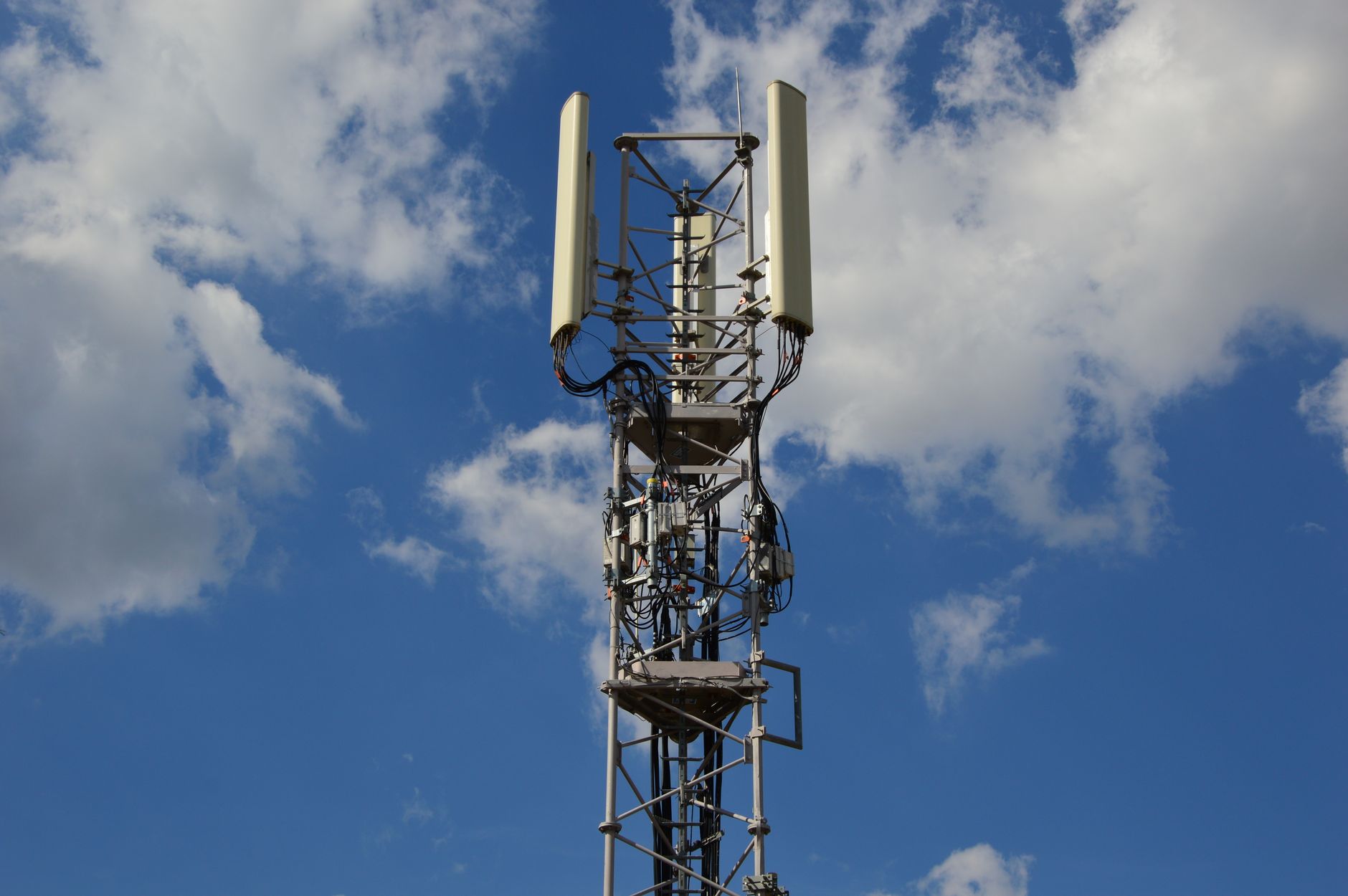
Photo by Ulrick Trappschuh on Pexels
Samsung and KDDI Prove AI Can Supercharge 5G Performance Without Touching a Single Tower
In one of the most closely watched live network trials in recent memory, Samsung Electronics and Japanese carrier KDDI have jointly announced the successful completion of a months-long artificial intelligence-powered Radio Access Network (RAN) optimization trial conducted across live 5G infrastructure in Tokyo. The results are turning heads across the global telecom industry: peak downlink throughput improvements of up to 52% in select high-demand cells, with a network-wide average gain of 31% across the trial footprint.
What makes the outcome especially compelling is what didn’t happen — no new spectrum was deployed, no additional base stations were erected, and no hardware upgrades were required. The performance leap came entirely from software-layer intelligence working in real time.
How the AI Optimizer Actually Works
At the heart of the trial is Samsung’s AI-native RAN optimization engine, which uses machine learning models trained on live network telemetry to make continuous, automated adjustments to radio parameters. These include beam management, scheduling weights, interference coordination, and load balancing — functions that have traditionally required manual intervention from highly skilled RF engineers or periodic optimization cycles that can take days or weeks to implement.
By operating in real time, the AI system can respond to rapidly shifting traffic patterns that characterize dense urban environments like Tokyo — where commuter surges, stadium events, and high-rise building dynamics create constantly moving interference and demand profiles. Traditional static parameter configurations simply cannot keep pace with this level of variability.
Closed-Loop Automation: The Key Differentiator
A critical technical element of Samsung’s approach is its closed-loop automation architecture. Rather than simply recommending parameter changes for human review, the system executes adjustments autonomously within defined guardrails — a design philosophy aligned with the O-RAN Alliance’s rApp and xApp framework for non-real-time and near-real-time RAN intelligent controllers (RICs). This closed-loop capability is what separates next-generation AI RAN optimization from earlier generation SON (Self-Organizing Network) tools that often required significant human validation before deployment.
Samsung’s platform leverages both non-RT RIC functions for strategic, trend-based adjustments and near-RT RIC capabilities for millisecond-level responsiveness — a dual-layer intelligence model that is increasingly viewed as the gold standard for carrier-grade AI RAN deployment.
Why Tokyo Was the Perfect Testing Ground
KDDI’s choice to conduct the trial across Tokyo’s live urban 5G network was deliberate and strategically significant. Tokyo represents one of the world’s most challenging RF environments — ultra-dense small cell deployments, massive MIMO arrays competing for spectrum, and millions of concurrent users on a network that must deliver consistent quality of service across wildly different use cases, from mobile broadband to enterprise IoT.
If AI RAN optimization can prove its value in Tokyo, the argument for global scalability becomes considerably stronger. For KDDI, which has been aggressively expanding its 5G sub-6GHz and millimeter-wave footprint, the ability to extract significantly more performance from existing infrastructure has direct implications for capital expenditure planning and competitive positioning against domestic rivals NTT Docomo and SoftBank.
The Broader Industry Implications
The KDDI-Samsung results arrive at a pivotal moment for the global RAN market. Operators worldwide are under mounting pressure to improve spectral efficiency and network performance while simultaneously managing tightening budgets and deferring large-scale infrastructure spend. Traditional approaches to network optimization — manual drive testing, periodic parameter audits, and vendor-led optimization services — are increasingly viewed as too slow and too expensive for the demands of modern 5G operations.
AI-native RAN optimization is rapidly emerging as a strategic imperative rather than a nice-to-have feature. Analyst firm Dell’Oro Group has projected that the RAN automation and AI software market could exceed $3 billion annually by the end of the decade, driven precisely by use cases like the one validated in Tokyo.
Competitive Landscape Heats Up
Samsung is not alone in this race. Ericsson, Nokia, and Huawei have all made significant investments in AI-driven RAN capabilities, while a growing ecosystem of independent software vendors — including Amdocs, Mavenir, and Parallel Wireless — are building RIC-compatible optimization applications targeting the open RAN ecosystem. The KDDI trial result gives Samsung a powerful, real-world data point to wield in an increasingly competitive vendor selection environment.
The trial also strengthens Samsung’s position in Japan specifically, where it has cultivated a deep strategic relationship with KDDI that spans both consumer devices and network infrastructure — a dual footprint that gives it unique visibility into end-to-end network performance data.
Looking Ahead: From Trial to Commercial Scale
The natural next question is how quickly these AI optimization capabilities can be deployed at commercial scale across KDDI’s full network footprint. While neither company has announced a specific timeline for broader rollout, the successful live trial significantly de-risks the technology from an operational standpoint.
Industry observers expect AI RAN optimization to become a standard feature of 5G network management contracts within the next two to three years, with carriers increasingly mandating AI-native capabilities in RFP processes. For operators still weighing the business case, a 31% network-wide throughput improvement — achieved without additional spectrum or hardware — makes the ROI calculation considerably more straightforward.
As 5G networks mature and the industry begins laying the conceptual groundwork for 6G, the Tokyo trial serves as a powerful reminder that some of the most impactful gains in wireless performance may not come from the next generation of radio hardware — but from teaching the networks we already have to think for themselves.
