
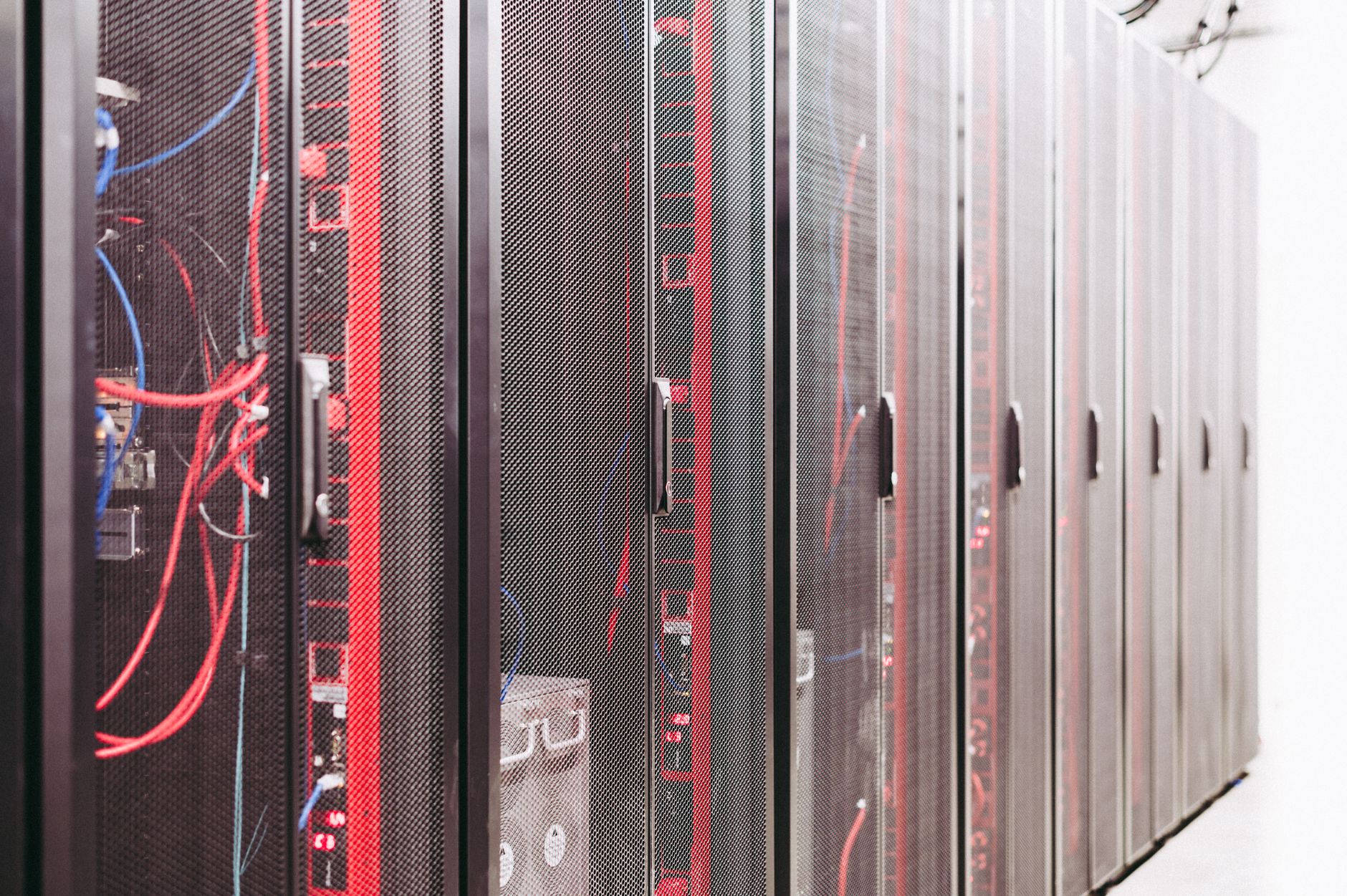
Photo by Brett Sayles on Pexels
The Digital Infrastructure Boom: Opportunity Meets Obligation
The telecommunications and digital infrastructure sectors are experiencing a moment of extraordinary transformation. Artificial intelligence, hyperscale computing, and the insatiable demand for connectivity have triggered a data center construction frenzy unlike anything the industry has seen before. Yet amid the breathless excitement, a growing chorus of seasoned industry voices is urging stakeholders to pump the brakes — not to stop the momentum, but to steer it more responsibly.
Ilissa Miller, Founder and CEO of iMiller Public Relations and a nearly three-decade veteran of digital infrastructure communications, has emerged as one of the more compelling voices in this conversation. Her perspective, shaped by witnessing multiple technology hype cycles from fiber optics to cloud computing to 5G, offers a grounded counterpoint to the unbridled optimism that often dominates industry headlines.
AI’s Infrastructure Appetite: The Numbers Don’t Lie
The scale of AI-driven infrastructure demand is staggering by any measure. According to recent projections from Goldman Sachs, data center power consumption is expected to grow 160% by 2030, driven primarily by generative AI workloads. A single ChatGPT query consumes roughly 10 times the energy of a standard Google search, and as AI models grow more complex and widely deployed, that energy footprint multiplies exponentially.
Major hyperscalers — Microsoft, Amazon, Google, and Meta — have collectively committed hundreds of billions of dollars to data center expansion through 2026. Meanwhile, colocation providers, edge computing operators, and telecom carriers are scrambling to build out the underlying fiber, power, and cooling infrastructure required to support these deployments. The result is a capital expenditure environment that rivals the dot-com era in its ambition, if not its recklessness.
Power, Water, and the Sustainability Imperative
But the infrastructure gold rush comes with significant environmental and logistical baggage. Modern hyperscale data centers can consume between 20 and 100 megawatts of power — with next-generation AI-optimized facilities pushing well beyond that threshold. Water cooling systems at scale facilities can consume millions of gallons annually, raising concerns in water-stressed regions across the American Southwest and beyond.
Responsible growth, in this context, means more than simply building green. It requires thoughtful site selection, genuine commitments to renewable energy procurement, transparent reporting on power usage effectiveness (PUE), and meaningful engagement with local communities and utility providers. Industry veterans note that the companies cutting corners today on sustainability will face significant regulatory and reputational consequences tomorrow.
Telecom’s Pivotal Role in the AI Ecosystem
What often gets lost in data center-centric conversations is the critical role telecommunications infrastructure plays in enabling the AI economy. Every AI inference request, every real-time model interaction, every data pipeline feeding machine learning systems travels across fiber networks, wireless backhaul, and increasingly, 5G and edge computing infrastructure.
Telecom carriers are positioning themselves not merely as connectivity pipes but as active participants in the AI value chain. AT&T, Verizon, and T-Mobile have all articulated strategies around AI-enhanced network management, while international operators like NTT and Lumen Technologies are investing heavily in subsea cable systems and terrestrial fiber to support cross-border AI data flows.
Edge Computing: Bringing AI Closer to the Network
One of the more technically significant trends driving responsible infrastructure growth is the maturation of edge computing as a viable AI deployment platform. Rather than routing all AI workloads to centralized hyperscale facilities, edge architectures distribute compute resources closer to end users — reducing latency, alleviating backbone congestion, and enabling real-time AI applications in manufacturing, healthcare, autonomous vehicles, and smart cities.
This distributed model also offers a more sustainable footprint for certain workloads. Smaller, purpose-built edge facilities can be more efficiently powered and cooled than massive campuses, and their geographic distribution reduces the strain on any single power grid or water supply. For telecom operators already managing thousands of cell sites, the transition to AI-capable edge nodes represents a natural evolution of existing infrastructure investments.
The Communications Industry’s Maturity Test
Perhaps the most important insight emerging from experienced infrastructure communicators and strategists is that the telecom and data center industries are facing a maturity test. The question is no longer whether AI and digital infrastructure will grow — that trajectory is essentially locked in — but rather how the industry will manage that growth in ways that are financially sustainable, environmentally responsible, and socially accountable.
Responsible growth requires long-term thinking in an industry often driven by quarterly earnings pressure. It demands that infrastructure developers engage proactively with regulators, environmental groups, and local governments rather than treating community concerns as obstacles to be managed. And it means investing in workforce development to ensure that the technicians, engineers, and operations personnel needed to maintain these facilities are trained, fairly compensated, and available at scale.
Looking Ahead: Substance Over Spectacle
As the industry moves deeper into what many are calling the AI infrastructure supercycle, the voices calling for measured, responsible expansion are becoming harder to ignore. Institutional investors are increasingly scrutinizing ESG commitments. Regulators in the EU and United States are sharpening their focus on data center energy consumption. And communities hosting large facilities are demanding greater transparency and accountability.
The telecom and digital infrastructure sectors have successfully navigated hype cycles before. The companies and leaders who emerge strongest from this one will be those who understood early that sustainable growth is not a constraint on ambition — it is the foundation upon which lasting competitive advantage is built. In an era defined by the transformative promise of AI, that may be the most important infrastructure investment of all.
