
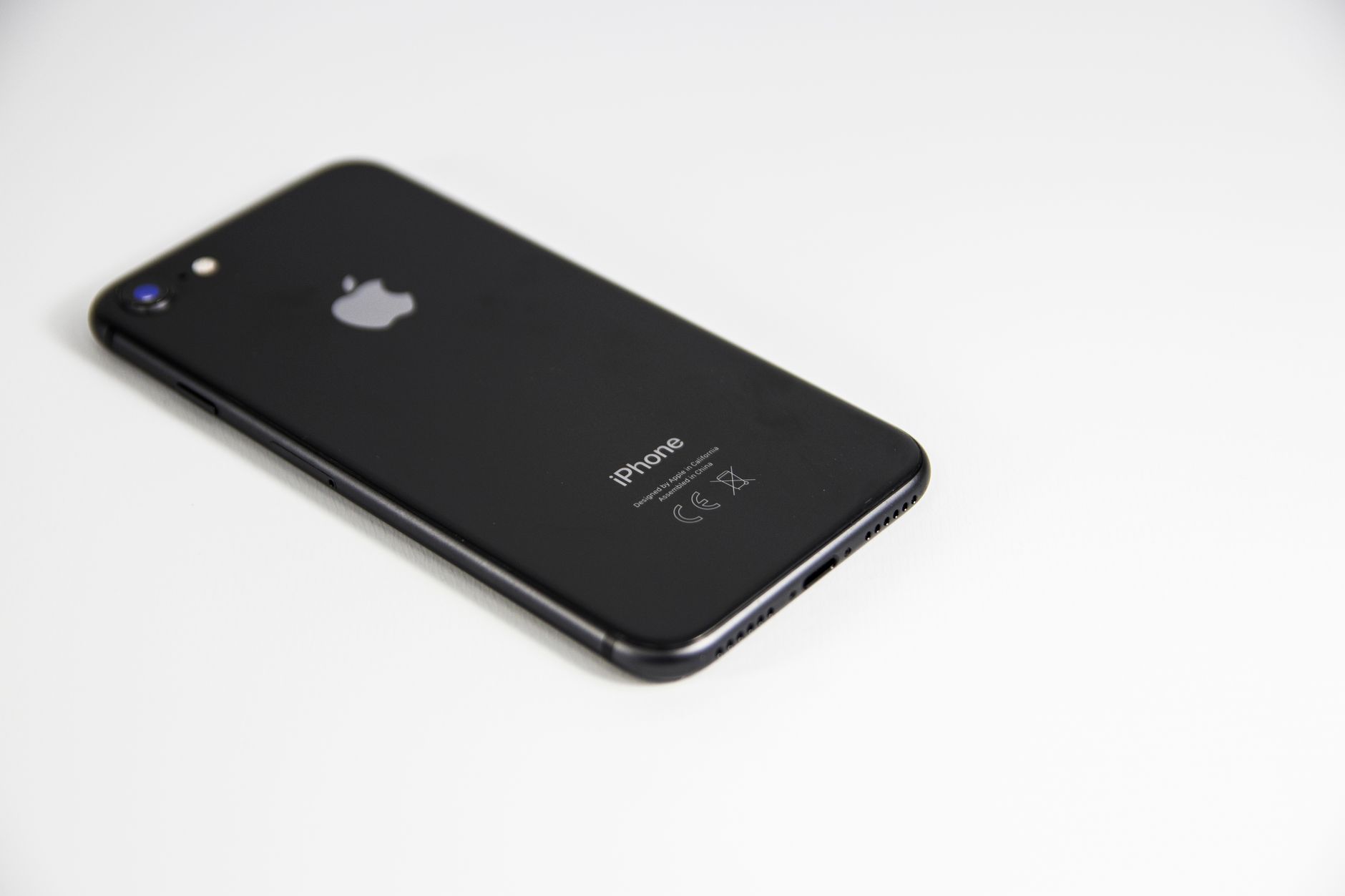
Photo by Tuur Tisseghem on Pexels
Every iPhone launch cycle follows a predictable rhythm: camera comparisons dominate headlines, display brightness specs flood social media, and battery life debates rage across tech forums. The iPhone 18 Pro is no exception — but buried beneath the marketing noise is a connectivity story that deserves a far bigger spotlight, one with profound implications for the entire wireless industry.
Apple’s Modem Evolution: The Quiet Revolution
When Apple unveiled its first custom-designed cellular modem — the C1 chip — inside the iPhone 16e earlier in 2025, it marked a seismic shift in the smartphone industry. The iPhone 18 Pro is expected to carry forward and significantly mature that in-house silicon strategy, with Apple reportedly integrating a next-generation version of its proprietary modem that pushes the boundaries of what integrated wireless chipsets can achieve.
For years, Apple relied on Qualcomm’s Snapdragon X-series modems to power its flagship connectivity. That dependency came with licensing costs, thermal compromises, and design limitations. By bringing modem development in-house — much like it did with application processors through the A-series chips — Apple is reclaiming architectural control over one of the most critical components in a modern smartphone.
What Apple’s Custom Modem Actually Means for Performance
The technical implications are significant. Apple’s homegrown modem is designed to work in deep co-optimization with its A-series application processor, enabling shared memory architectures, tighter power management handoffs, and AI-driven radio frequency decisions that external modems simply cannot match. Early benchmarks from the C1 modem suggested competitive real-world download speeds with meaningfully better power efficiency — a combination that has historically been difficult to achieve simultaneously.
For the iPhone 18 Pro, industry analysts expect Apple to push further into advanced 5G sub-6GHz band aggregation, potentially supporting more simultaneous carrier aggregation combinations than its predecessors. This matters enormously in dense urban environments where mmWave coverage remains spotty and sub-6GHz throughput determines real-world user experience for the vast majority of 5G subscribers globally.
The Satellite Connectivity Angle No One Is Discussing
Perhaps the most underappreciated dimension of iPhone 18 Pro’s connectivity story is how Apple’s integrated modem strategy positions it to dominate the emerging satellite-to-cellular market. With direct-to-device satellite connectivity rapidly evolving from emergency SOS functionality toward genuine broadband supplementation — driven by partnerships and competitive pressure from T-Mobile and SpaceX’s Starlink service, as well as AST SpaceMobile’s growing constellation — Apple’s ability to tune its modem at the silicon level for non-terrestrial network (NTN) protocols is a genuine competitive moat.
The 3GPP standards governing NTN integration with 5G New Radio (NR) are still maturing, and the operators and device makers that can most rapidly iterate on firmware and silicon to support evolving NTN specifications will define the next chapter of ubiquitous coverage. Apple, with full control over its modem stack, is uniquely positioned to ship updates and optimizations without waiting on third-party chipmaker release cycles.
Wi-Fi 7 and UWB: The Full Connectivity Picture
The iPhone 18 Pro’s wireless story extends beyond cellular. Wi-Fi 7 (IEEE 802.11be) support brings multi-link operation (MLO), enabling simultaneous use of 2.4GHz, 5GHz, and 6GHz bands for dramatically reduced latency and improved throughput in congested environments. For enterprise deployments and high-density venues — stadiums, convention centers, corporate campuses — this represents a meaningful quality-of-experience upgrade that network administrators are already planning infrastructure around.
Ultra-Wideband (UWB) technology, meanwhile, continues its quiet maturation as a precision indoor positioning tool. With cellular carriers and enterprise customers increasingly exploring UWB for asset tracking, indoor navigation, and seamless handoff experiences, Apple’s ongoing investment in UWB silicon places the iPhone 18 Pro at the center of an emerging indoor location ecosystem that complements traditional cellular and Wi-Fi positioning.
Industry Implications: Qualcomm, MediaTek, and the Competitive Landscape
Apple’s accelerating modem independence sends a clear message to the chipset industry. Qualcomm, which has long counted Apple as a flagship customer lending credibility to its Snapdragon modem lineup, faces a future where its most visible smartphone showcase is gone. This pressures Qualcomm to accelerate innovation on its X80 and future modem platforms while doubling down on Android OEM relationships and automotive connectivity markets.
MediaTek, increasingly competitive in the mid-tier and now pushing into premium segments with its Dimensity 9400 series, sees opportunity in the Android ecosystem vacuum. Meanwhile, Samsung’s Exynos division continues its own modem integration efforts — though with more mixed results in market reception.
For telecom operators, the proliferation of capable, efficiently integrated modems across flagship devices is fundamentally good news. Better modem silicon means more efficient spectrum utilization, reduced interference, and improved network capacity — outcomes that benefit every subscriber on a given cell site, not just iPhone users.
The Bigger Picture: Connectivity as a Platform
What Apple is building with its integrated modem strategy isn’t just a faster smartphone — it’s a vertically integrated connectivity platform that could eventually extend across MacBooks, iPads, Apple Watch, and even rumored augmented reality devices. Each new modem generation informs the next, compounding silicon expertise in a manner that external procurement simply cannot replicate.
For telecom professionals watching the smartphone market, the iPhone 18 Pro’s most important specification might not appear on any marketing slide. It’s the strategic modem investment quietly redefining what’s possible at the intersection of consumer hardware and wireless networks — and the industry would be wise to pay attention.
