
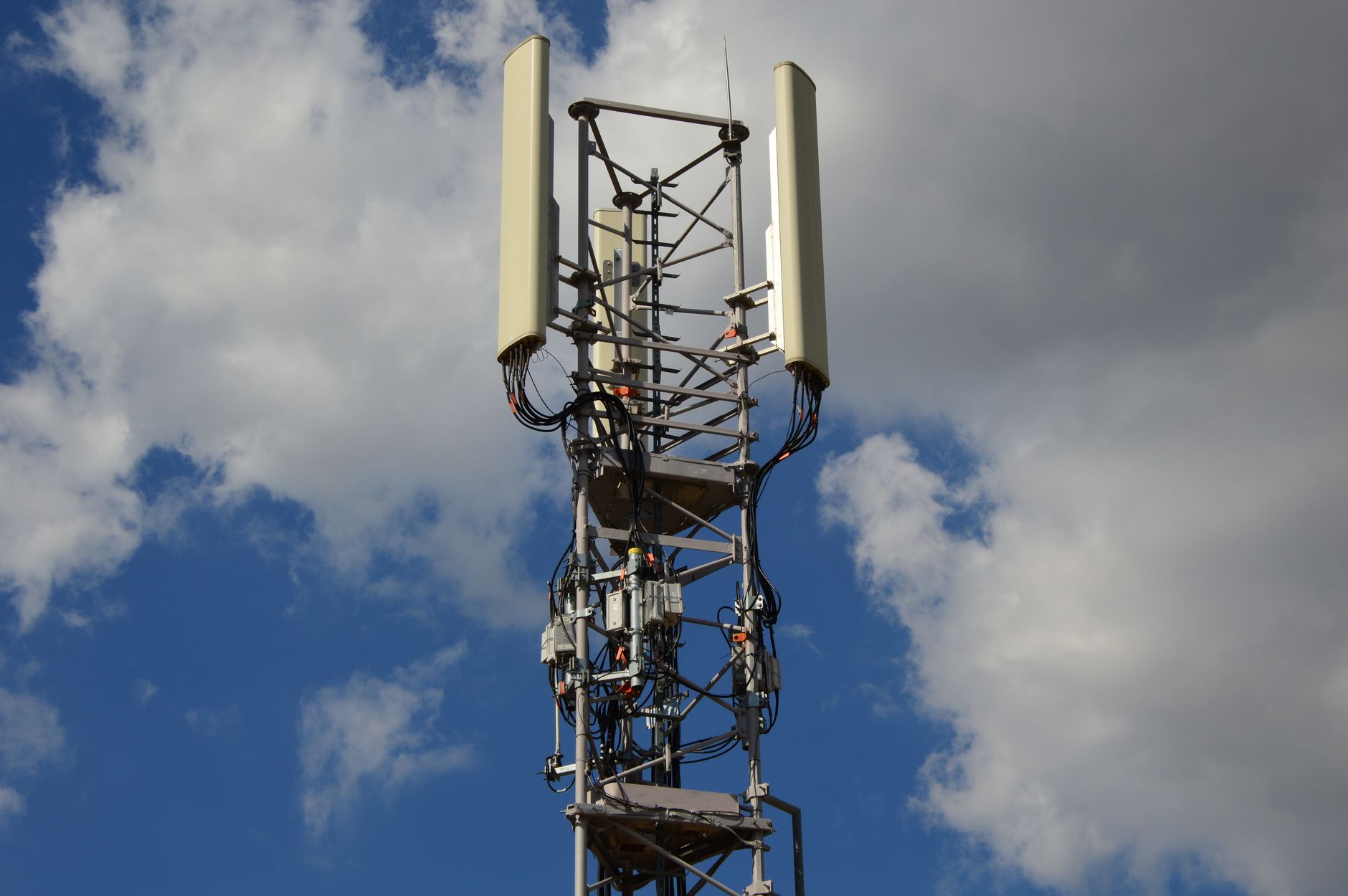
Photo by Ulrick Trappschuh on Pexels
Groundbreaking Independent Testing Validates FDD Massive MU-MIMO’s Uplink Potential
For years, the conversation around Massive MIMO and Multi-User MIMO (MU-MIMO) has been dominated by TDD spectrum deployments — particularly in mid-band 5G where operators have leveraged the flexibility of Time Division Duplex to extract extraordinary capacity gains. But a significant portion of the world’s mobile spectrum remains locked in Frequency Division Duplex (FDD) paired bands, and until now, credible independent performance data for Massive MU-MIMO in those bands has been virtually nonexistent. That gap in the industry’s knowledge base has just been meaningfully addressed.
Signals Research Group (SRG), one of the telecom industry’s most respected independent testing and research firms, has completed what is widely regarded as the first rigorous, independent evaluation of 5G Massive and Multi-User MIMO operating in live FDD spectrum. The results, described by SRG analysts using words rarely seen in measured technical reports — “simply outstanding” in the uplink — are turning heads across the wireless engineering community.
Why FDD Massive MIMO Has Lagged Behind TDD
To appreciate the significance of these findings, it helps to understand why FDD has historically been considered the harder problem for Massive MIMO implementations. In TDD systems, the base station can exploit channel reciprocity — because uplink and downlink share the same frequency, the network can use uplink sounding to directly estimate the downlink channel and steer beams accordingly. This makes precoding and spatial multiplexing considerably more straightforward.
FDD systems, by contrast, use separate frequencies for uplink and downlink transmission. Channel reciprocity does not hold across those paired bands, which means the base station must rely on feedback from the device — typically through CSI-RS (Channel State Information Reference Signals) and codebook-based reporting — to understand the downlink channel. Scaling this feedback mechanism efficiently to support a large number of antenna ports and simultaneous user layers has long been a core engineering challenge, one that has limited commercial deployment of FDD Massive MIMO.
Recent advancements in 5G NR standards, particularly in 3GPP Release 16 and Release 17, introduced enhanced Type II codebooks and other feedback compression mechanisms designed specifically to make FDD Massive MIMO commercially viable. The SRG testing appears to validate that those standardization efforts are paying off in real-world conditions.
What the Testing Revealed: Uplink Steals the Show
While both uplink and downlink performance were evaluated during the field testing campaign — conducted in a live network environment rather than a controlled lab setting — it was the uplink results that generated the most excitement. Massive MU-MIMO in the uplink direction delivered performance that SRG characterized as exceptional, suggesting that the technology is unlocking capacity and coverage gains in the FDD uplink that operators have long sought but struggled to achieve with conventional antenna configurations.
The uplink has increasingly become a strategic priority for operators as use cases like video uploading, cloud gaming, enterprise IoT telemetry, and fixed wireless access proliferate. Historically, FDD uplink bands — which tend to be allocated less bandwidth than their downlink counterparts and face different propagation and interference dynamics — have been a bottleneck. Massive MIMO’s ability to concentrate energy spatially in the uplink direction, improving signal-to-noise ratios without requiring more spectrum, addresses that constraint directly.
Multi-User MIMO: Serving Multiple Devices Simultaneously
Beyond raw link performance, the MU-MIMO component of the testing examined the network’s ability to spatially multiplex multiple user devices simultaneously on the same time-frequency resource — essentially serving several subscribers at once without proportionally consuming additional spectrum. Successfully executing MU-MIMO in FDD requires accurate user scheduling, precise beamforming, and effective interference suppression between simultaneously served users.
The test results suggest that modern 5G NR implementations are capable of managing these complexities in real deployed networks, not just in simulation. For operators managing dense urban environments where spectrum efficiency is paramount, this is a critical capability validation.
Implications for Global Operators
The commercial significance of these findings extends broadly. Globally, a substantial portion of mid-band and low-band 5G spectrum — including AWS, PCS, Band 3, Band 1, and Band 28 holdings widely used across North America, Europe, Asia-Pacific, and Latin America — is FDD spectrum. Operators who have been waiting for compelling, independent evidence before committing to massive antenna upgrades on their FDD layers now have data worth examining seriously.
Equipment vendors including Ericsson, Nokia, Huawei, and Samsung have all developed FDD Massive MIMO radio products targeting exactly this opportunity. Validation from an independent testing organization like SRG carries considerably more weight in operator procurement discussions than vendor-supplied performance claims.
A Catalyst for FDD Network Modernization
Analysts expect these results to accelerate conversations between operators and their vendor partners about upgrading legacy FDD radio units — many still running on 4G LTE configurations with far fewer antenna ports — to 5G NR Massive MIMO hardware. The business case, particularly for carriers seeking to squeeze more performance out of existing spectrum assets without the cost of acquiring new licenses, becomes considerably clearer when independent testing confirms the technology performs as advertised.
Looking Ahead: The Road to Full FDD MIMO Maturity
Despite the promising results, industry observers note that widespread FDD Massive MU-MIMO deployment will still require continued progress on device-side capabilities, including support for enhanced CSI feedback in commercial handsets, as well as network optimization expertise that many operators are still developing. 3GPP’s ongoing Release 18 and Release 19 work under the 5G-Advanced umbrella continues to refine FDD MIMO enhancements further.
What the Signals Research Group testing makes clear, however, is that the technology has crossed a meaningful threshold. FDD Massive MU-MIMO is no longer a theoretical promise or a vendor roadmap item — it is a deployable, high-performing capability ready for serious operational consideration. For an industry hungry for capacity solutions that don’t require perpetual spectrum auctions, that is genuinely significant news.
