
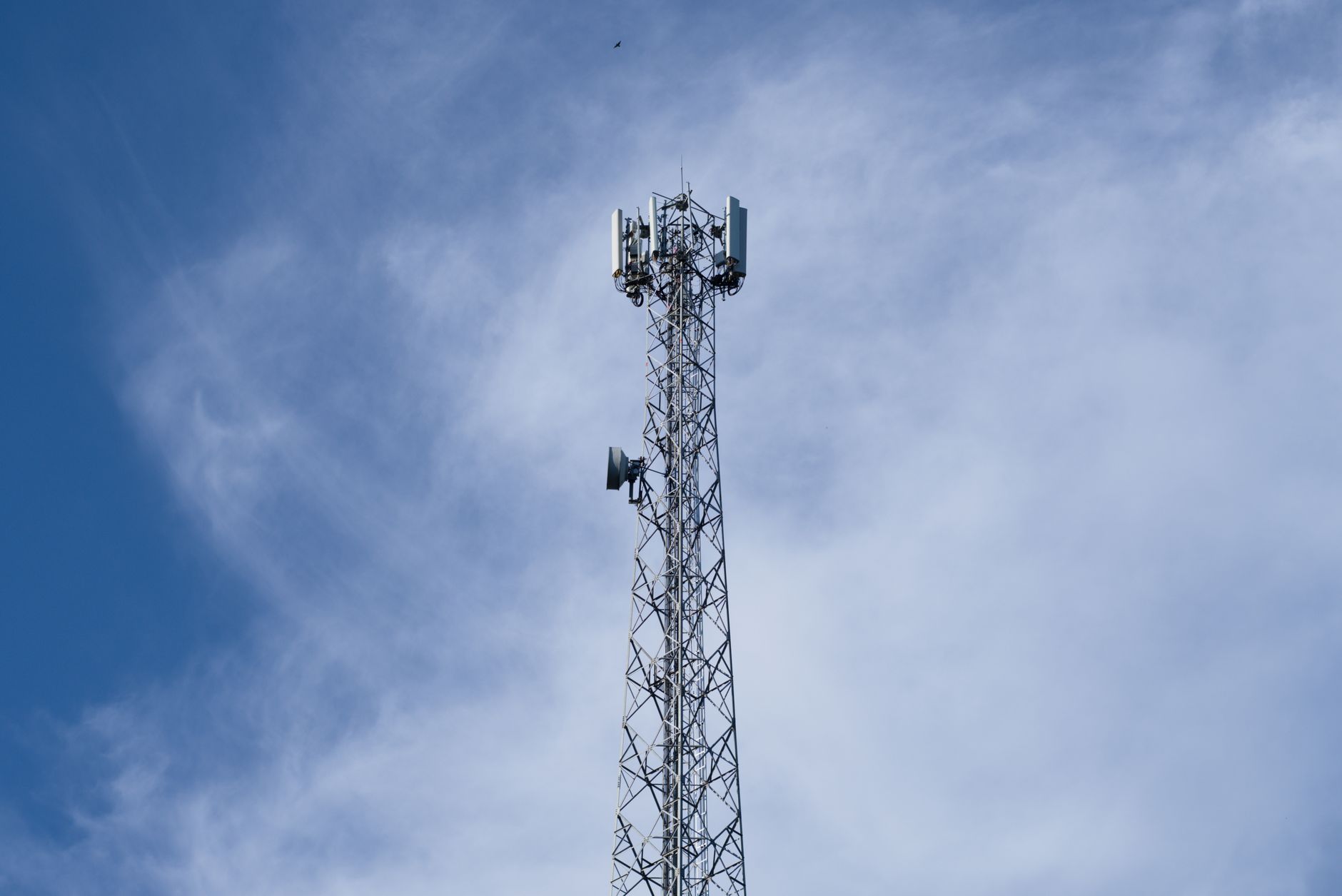
Photo by Qeis Ismail on Pexels
Telia Shifts Gears: 5G Standalone Moves from Pilot to Commercial Reality
Swedish telecommunications heavyweight Telia Company is making its most assertive push yet into 5G Standalone (5G SA) territory, using a significant Radio Access Network (RAN) restructuring deal in Norway as the springboard for a broader network evolution strategy across its Nordic and Baltic markets. The announcements, made during the company’s third-quarter earnings call, signal that Telia is ready to move beyond incremental 5G Non-Standalone deployments and embrace the architectural shift that industry analysts have long argued is necessary to unlock the full commercial value of fifth-generation networks.
CEO and President Patrik Hofbauer was unambiguous about the operator’s direction, emphasizing that 5G SA expansion is now central to Telia’s value proposition — not just as an infrastructure upgrade, but as a platform for delivering differentiated connectivity, enterprise-grade security capabilities, and innovative new services that simply aren’t achievable on legacy network architectures.
Why 5G Standalone Changes Everything
To understand why Telia’s move matters, it’s worth clarifying what separates 5G Standalone from the Non-Standalone (NSA) networks that most European operators have deployed to date. In an NSA configuration, the 5G radio layer still relies on a 4G LTE core for control plane functions — a practical compromise that allowed operators to launch 5G services quickly, but one that inherently limits performance and capability.
5G SA, by contrast, deploys a cloud-native 5G Core (5GC) that fully decouples from LTE infrastructure. This unlocks a suite of capabilities that are transformative for both consumer and enterprise segments:
Network Slicing: The ability to carve out dedicated, virtualized network segments with guaranteed quality-of-service parameters for specific customers or use cases — critical for industrial IoT, private networks, and mission-critical communications.
Ultra-Low Latency: With end-to-end 5G architecture and edge computing integration, latency figures can drop dramatically, enabling real-time applications in manufacturing, healthcare, and autonomous systems.
Enhanced Security: A native 5G core introduces improved authentication frameworks, including Subscription Permanent Identifier (SUPI) encryption and more robust mutual authentication protocols — a key selling point for enterprise clients handling sensitive data.
Norway’s RAN Deal: A Strategic Reshaping
The Norway RAN agreement represents more than routine network maintenance. Industry observers see it as a deliberate strategic repositioning, allowing Telia to modernize its radio infrastructure while simultaneously creating the foundation for SA core integration. Details suggest the deal involves a significant vendor ecosystem decision that will influence how Telia’s Norwegian network evolves through the remainder of the decade.
Norway is a particularly important market for this kind of bold infrastructure investment. The country consistently ranks among Europe’s most digitally advanced nations, with high smartphone penetration, strong enterprise digitalization appetite, and a geography — characterized by challenging fjords, mountainous terrain, and dispersed population centers — that demands efficient, high-performance network design. A modernized RAN that pairs seamlessly with a 5G SA core could allow Telia to serve premium enterprise customers and dense urban populations with equal effectiveness.
Enterprise and B2B: The Real 5G SA Prize
Hofbauer’s comments on security and new services weren’t incidental. Telia, like most major European operators, is acutely aware that consumer ARPU growth from 5G alone is limited without genuine service differentiation. The real revenue opportunity lies in enterprise and B2B segments, where 5G SA’s capabilities translate directly into premium pricing power.
Network slicing, in particular, enables Telia to offer SLA-backed connectivity to industries ranging from logistics and smart manufacturing to public safety and media production. Several Nordic enterprises have already piloted private 5G networks, and a commercially mature SA platform gives Telia a compelling managed service offering to compete against both hyperscalers and specialized private network vendors.
Nordic Competition Heats Up
Telia’s acceleration doesn’t happen in a vacuum. Across the Nordic region, competitors including Telenor, Elisa, and DNA are also advancing their 5G strategies, with varying degrees of SA commitment. Telenor, in particular, has been vocal about its own 5G SA ambitions, meaning Telia’s moves in Norway are partly a competitive defensive play as much as they are an offensive market strategy.
On the vendor side, the European telecom market continues to navigate geopolitical pressures around network equipment sourcing, with Nokia and Ericsson — both with deep Nordic roots — well-positioned to support operators seeking to expand 5G SA capabilities with trusted, EU-aligned supply chains.
Industry Outlook: SA Momentum Builds Across Europe
Telia’s push reflects a broader industry inflection point. According to GSMA Intelligence, the number of operators with live 5G SA networks globally has grown substantially through 2024, though Western Europe has lagged behind Asia-Pacific in SA deployment velocity. Regulatory tailwinds, including EU Connectivity Toolbox recommendations and national broadband strategies, are now adding urgency to operators’ core modernization timelines.
For Telia specifically, successfully commercializing 5G SA at scale would validate a multi-year capital investment cycle and position the company to attract the enterprise contracts that will define telecom revenue trajectories through the end of the decade. As Hofbauer’s Q3 messaging made clear, the era of treating 5G SA as a future roadmap item is over — for Telia, it’s now a commercial imperative.
The coming quarters will reveal whether the Norway RAN deal and broader SA expansion translate into measurable EBITDA improvements and new contract wins. For now, Telia has sent an unambiguous signal to the market: it’s betting its network future on the full promise of 5G.
