
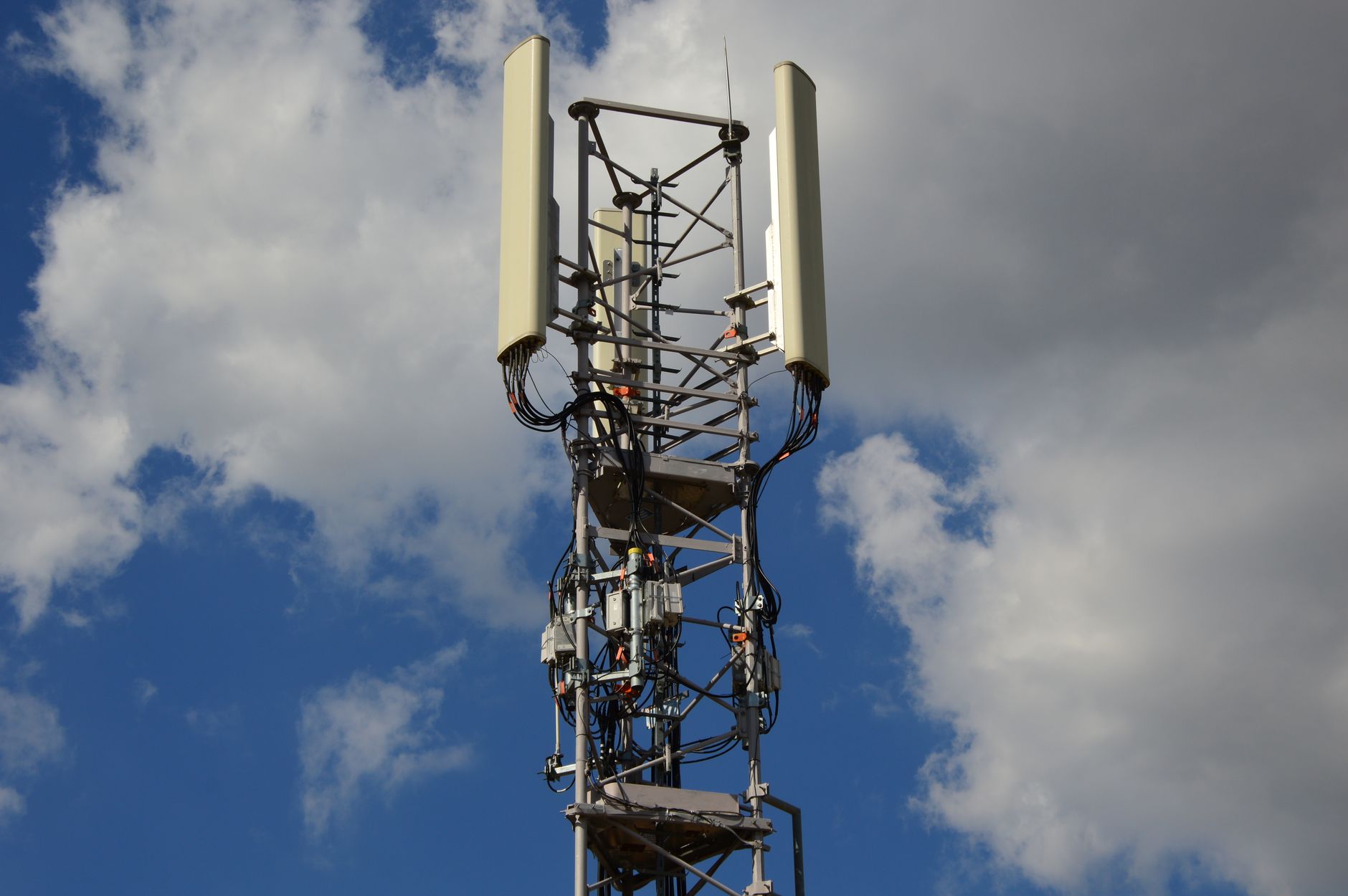
Photo by Ulrick Trappschuh on Pexels
The Telecom Industry’s AI Reckoning Has Arrived
For years, artificial intelligence in telecommunications was largely synonymous with predictive maintenance, customer churn analysis, and network optimization algorithms running quietly in the background. That era is rapidly giving way to something far more consequential. Following Telco Days 2026, Software Mind’s annual gathering that brought together telecom engineers, strategists, and technology architects, one message resonated clearly across sessions and hallway conversations alike: agentic AI is no longer a future-state ambition — it is an operational reality that demands immediate strategic attention.
Agentic AI, broadly defined as autonomous AI systems capable of setting goals, making decisions, and executing multi-step tasks without human intervention at each stage, represents a paradigm shift for an industry built on tightly controlled, deterministic processes. The question telecom leaders are wrestling with is not whether to adopt these systems, but how to do so without introducing unacceptable risk into networks that carry critical national infrastructure.
What Agentic AI Actually Looks Like in a Telecom Environment
Unlike conventional machine learning models that analyze historical data and produce recommendations for human review, agentic AI systems can autonomously reconfigure network slices, reroute traffic in response to anomalies, negotiate API interactions between systems, and even initiate procurement or ticketing workflows. In a 5G standalone architecture, where network functions are virtualized and software-defined, these capabilities become both more powerful and more consequential.
Carriers piloting agentic frameworks are exploring use cases including autonomous radio access network (RAN) tuning, real-time capacity rebalancing across multi-vendor environments, and AI-driven security response systems capable of isolating compromised network segments within milliseconds — far faster than any human operations team could respond. The efficiency gains are real and measurable. But so are the risks.
The Autonomy Paradox
Herein lies what industry observers are calling the autonomy paradox. The more capable and autonomous these AI agents become, the more difficult it is to predict, audit, and control their behavior — particularly when multiple agents interact within complex, interdependent network ecosystems. At Telco Days 2026, participants from both operator and vendor sides raised pointed concerns about cascading failures that could occur when an autonomous system makes an optimization decision that inadvertently conflicts with another agent’s concurrent actions.
This is not purely theoretical. Early enterprise deployments of agentic AI in adjacent industries have demonstrated how well-intentioned autonomous actions can produce unexpected second-order effects at scale. For telecom operators managing millions of endpoints across hybrid cloud, edge, and physical infrastructure, the blast radius of an AI-induced misconfiguration could be substantial.
Network Security: A Moving Target in the Age of AI Agents
The security implications of agentic AI extend well beyond operational risk. Cybersecurity professionals at the conference highlighted that the same architectural openness that enables AI agents to traverse network functions and APIs also creates new attack surfaces that adversaries are actively mapping and probing. As telecom networks increasingly expose machine-to-machine interfaces for AI orchestration, the perimeter — already a loosely defined concept in cloud-native architectures — becomes even more porous.
Threat vectors now include adversarial prompt injection targeting large language model-based agents, model poisoning attacks that corrupt the training data or fine-tuned parameters of AI systems embedded in network operations centers, and lateral movement exploits that use compromised AI agents as pivots to access deeper network infrastructure. The stakes are amplified by the fact that telecom networks increasingly underpin emergency services, financial transactions, and industrial control systems.
Zero Trust as a Foundation — But Not a Complete Answer
Zero trust architecture has emerged as a foundational framework for managing these risks, requiring continuous verification of every user, device, and AI agent attempting to access network resources. However, experts caution that zero trust principles designed for human-initiated access patterns must be meaningfully adapted for AI agent behavior, which is often high-frequency, non-linear, and difficult to baseline using traditional behavioral analytics. New approaches to AI-specific identity, credentialing, and behavioral monitoring are emerging from both established security vendors and telecom-native startups.
Governance Gaps and the Race to Establish Standards
One of the most urgent themes to emerge from industry dialogue is the significant governance gap surrounding agentic AI in telecommunications. While bodies such as ETSI, 3GPP, and the GSMA have begun preliminary work on AI governance frameworks for network environments, the pace of standardization lags considerably behind the pace of commercial deployment. Operators are essentially building governance policies in real time, drawing on principles from AI safety research, enterprise AI governance, and telecom-specific regulatory requirements that were never designed with autonomous agents in mind.
The regulatory dimension adds further complexity. As governments in the EU, UK, and United States advance AI legislation and telecom-specific security mandates — including requirements tied to the removal of untrusted network equipment — operators must demonstrate not only that their AI systems perform as intended, but that they can explain and audit autonomous decisions to regulators and, in some cases, to the public.
Industry Outlook: Cautious Acceleration
The prevailing sentiment across the telecom industry heading into the second half of the decade might best be described as cautious acceleration. No serious operator is stepping away from AI-driven automation — the competitive and operational imperatives are too compelling, and labor economics in network operations make some degree of autonomous management increasingly necessary. But the most sophisticated players are investing heavily in AI observability platforms, red-teaming their agentic deployments, and building internal expertise at the intersection of network engineering and AI safety.
The carriers and vendors that will define the next era of telecommunications are those that treat AI governance not as a compliance checkbox, but as a core engineering discipline — one that sits alongside spectrum management, security operations, and network reliability as a fundamental pillar of responsible infrastructure stewardship. The ambitions are real. The networks must be safer to match them.
