
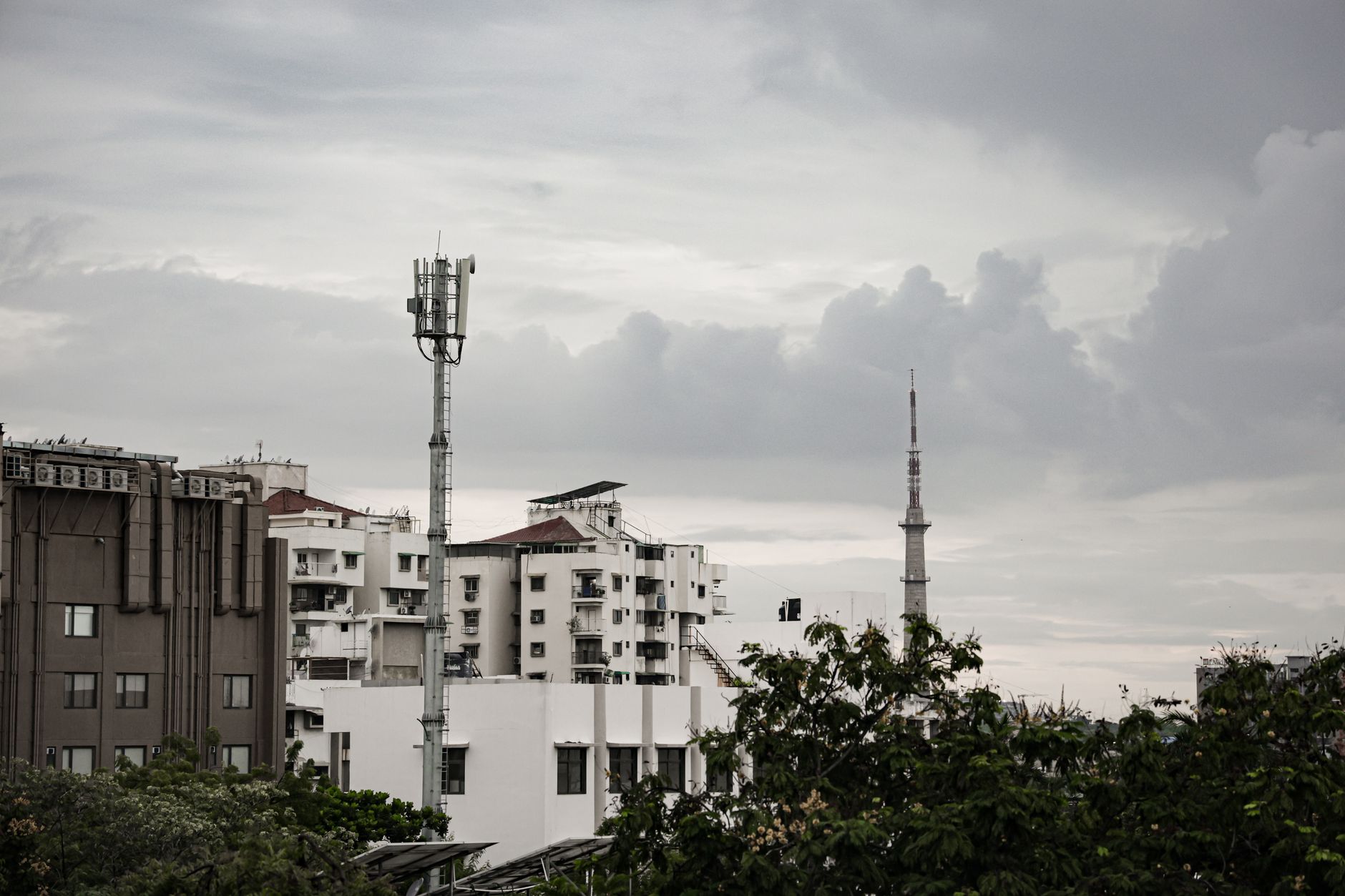
Photo by Sahil Padashala on Pexels
BSNL’s Hoshiarpur Enrollment Drive: A Microcosm of India’s Telecom Revival Story
Bharat Sanchar Nigam Limited (BSNL), India’s state-owned telecommunications provider, has announced a focused subscriber enrollment drive targeting the Hoshiarpur district of Punjab — a move that, while regional in scope, carries significant implications for the carrier’s nationwide comeback strategy. The campaign aims to onboard new customers, re-engage lapsed subscribers, and showcase the operator’s expanding network capabilities in semi-urban and rural geographies.
For a company that has spent the better part of a decade battling declining revenues, aging infrastructure, and aggressive pricing pressure from private players like Reliance Jio and Bharti Airtel, this kind of ground-level outreach represents something more than routine marketing. It is a statement of intent — and perhaps the early dividend of a multi-billion dollar government investment in BSNL’s turnaround.
The Strategic Context: BSNL’s ₹1.64 Lakh Crore Revival Package
To understand why an enrollment drive in Hoshiarpur matters, one must zoom out to the larger picture. The Indian government approved a massive revival package for BSNL in 2022, allocating approximately ₹1.64 lakh crore (roughly $19.7 billion USD) to revitalize the beleaguered public sector enterprise. Central to this revival is the deployment of indigenous 4G — and eventually 5G — network infrastructure developed by the Centre for Development of Telematics (C-DoT) in partnership with TCS and other domestic technology firms.
BSNL’s 4G rollout, while delayed compared to private competitors who launched 4G services nearly a decade ago, is now gathering momentum. The government has set ambitious targets for tower deployments across India, with particular emphasis on underserved regions where Jio and Airtel have thinner coverage footprints. Punjab, and districts like Hoshiarpur with mixed urban-rural demographics, represent precisely the kind of territory where BSNL believes it can carve out a defensible subscriber base.
Why Hoshiarpur? The Geography of Opportunity
Hoshiarpur district, nestled in the sub-mountainous Shivalik region of Punjab, presents an interesting case study in connectivity gaps. While it is not a tier-1 urban center, the district hosts a significant population spread across both town areas and rural hinterlands. Private operators have invested heavily in urban pockets but connectivity quality can degrade sharply as one moves toward more rural and hilly terrain — precisely where BSNL’s legacy wireline infrastructure and government-backed tower assets provide a structural advantage.
By staging an enrollment drive in such a location, BSNL is essentially leveraging its most durable competitive asset: geographic reach that commercial operators have little financial incentive to match. The drive reportedly includes door-to-door outreach, simplified SIM issuance processes, and promotional tariff plans designed to lower the barrier to entry for first-time or returning subscribers.
4G Momentum and the Road to 5G
BSNL’s indigenous 4G technology stack is central to its subscriber acquisition narrative. Unlike previous network generations where the company relied on foreign vendors like Nokia and Ericsson, the current 4G buildout is being executed using a fully homegrown technology stack — a point of national pride that the government has actively promoted as part of the broader “Atmanirbhar Bharat” (self-reliant India) initiative.
Reports indicate that BSNL has been progressively upgrading its 4G base stations across multiple states, with network performance benchmarks improving steadily. The company has targeted upgrading its 4G infrastructure to 5G-ready specifications, which means the current investment cycle is designed to be forward-compatible. For subscribers enrolling today, the pitch is clear: join a network that is actively being upgraded, backed by the full weight of the Indian government.
Competitive Pressure and Tariff Dynamics
The timing of BSNL’s enrollment push is also notable from a competitive pricing standpoint. Following a significant round of tariff hikes by Jio, Airtel, and Vodafone-Idea in mid-2024, a segment of India’s price-sensitive mobile subscribers began reconsidering their options. BSNL, which held off on implementing equivalent hikes, found itself in an unexpectedly favorable position — offering comparatively affordable plans at a moment when millions of consumers were experiencing bill shock.
Industry analysts estimated that BSNL saw a noticeable uptick in port-in requests following the private sector price revisions, a rare piece of good news for a carrier that has seen net subscriber losses for years. Enrollment drives like the one in Hoshiarpur are designed to capitalize on exactly this kind of market dislocation before consumer attention drifts back to the dominant private players.
Challenges That Remain
Despite the encouraging signals, BSNL faces genuine structural challenges that a regional enrollment drive alone cannot solve. Network quality perception remains a significant hurdle — years of underinvestment have left lasting impressions on consumers who associate BSNL with dropped calls and sluggish data speeds. Converting footfall at enrollment camps into long-term, loyal subscribers will require sustained improvement in actual network performance metrics, not just promotional incentives.
Additionally, the carrier’s 4G rollout timeline has faced criticism for moving slower than originally projected. If BSNL cannot deliver a consistently reliable 4G experience across enrolled districts within a reasonable timeframe, retention rates could offset any short-term subscriber gains.
Industry Outlook: A Cautious but Genuine Optimism
Telecom analysts tracking the Indian market are cautiously optimistic about BSNL’s trajectory. The combination of government financial backing, an indigenous technology stack, a competitive pricing position, and targeted ground-level outreach like the Hoshiarpur drive does constitute a more coherent strategy than BSNL has fielded in years.
Whether this translates into a genuine market share recovery — or remains a story of incremental progress against an entrenched private duopoly — will likely become clearer through 2025 and 2026 as 4G coverage targets are either met or missed. For now, every enrollment drive, in every district, is BSNL’s way of signaling that it is still very much in the game.
