
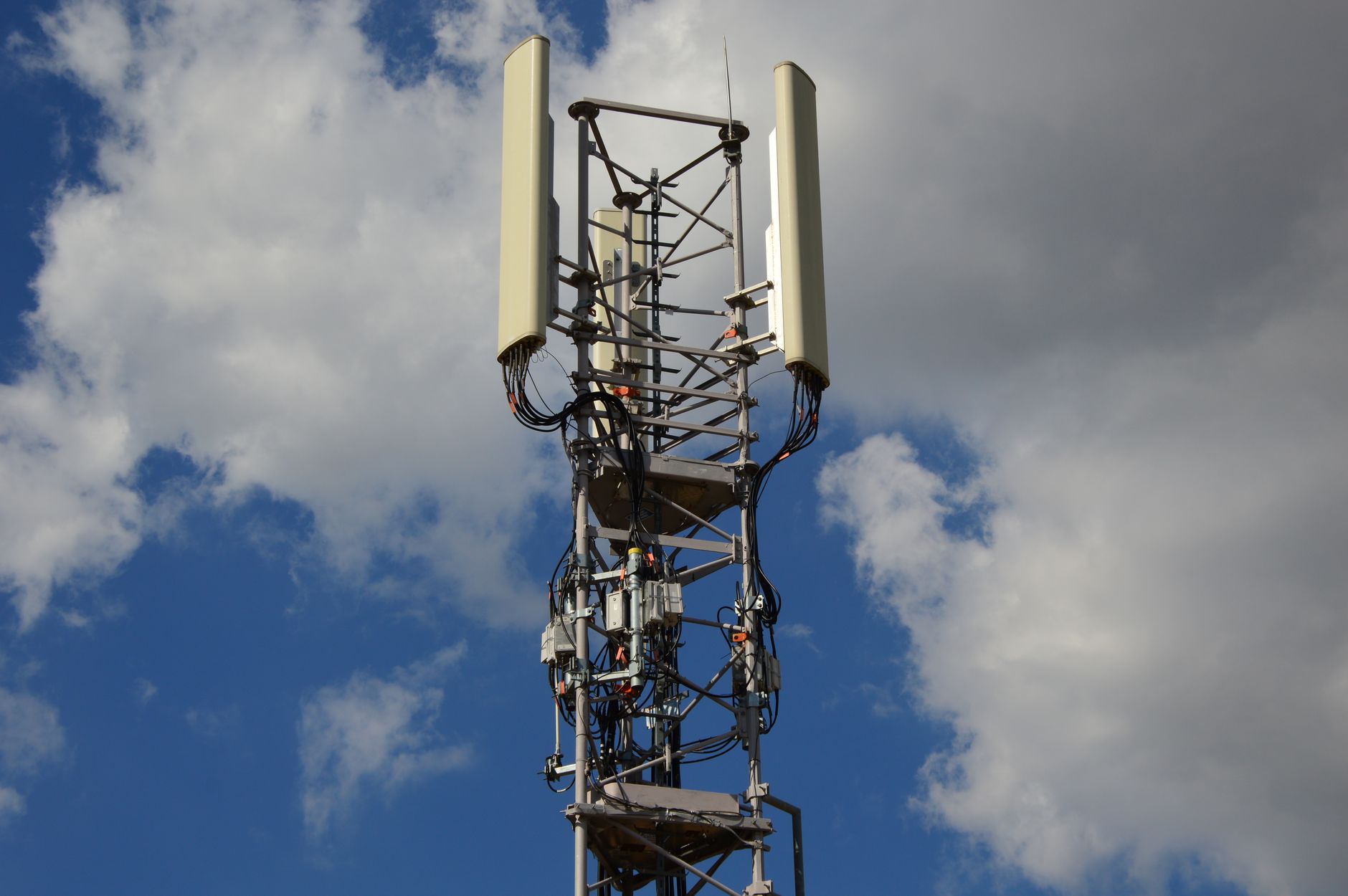
Photo by Ulrick Trappschuh on Pexels
The AI Skeptics Are Talking — But Telcos Aren’t Listening
Warnings about artificial intelligence — whether rooted in safety concerns, energy consumption, or return-on-investment doubts — have been growing louder in 2024. Prominent voices in tech and academia have questioned whether frontier AI models are delivering on their extraordinary promises, and financial analysts have begun probing whether the billions pouring into AI infrastructure will ever yield commensurate returns. Yet walk into any major telecommunications operator’s strategy meeting right now, and the mood is anything but cautious.
Far from pumping the brakes, the global telecom industry is accelerating its AI agenda with a sense of urgency that borders on competitive desperation. From network fault detection to AI-driven customer care bots, from predictive maintenance to dynamic spectrum allocation, operators are embedding AI deeper into their stacks than ever before. The question is no longer whether telcos should adopt AI — it’s whether they can afford not to.
The Economics Question: Real Concern or Market Noise?
It’s worth taking the skepticism seriously. Goldman Sachs analysts made waves earlier this year when they questioned whether the $1 trillion projected to be spent on AI infrastructure would generate sufficient economic returns. For telecommunications companies already navigating thin margins, capital-intensive 5G rollouts, and fierce price competition in consumer markets, those are not abstract concerns.
The critical distinction, however, is between generative AI — the frontier large-language model space where the economic debate is most intense — and the operational AI that telcos have quietly been deploying for years. Machine learning algorithms optimizing radio access networks, anomaly detection systems catching faults before they cascade, and AI-powered billing fraud prevention tools are not speculative bets. They are delivering measurable, auditable results today.
Where the ROI Is Already Proven
Network operations centers are perhaps the clearest example. Operators including Vodafone, Deutsche Telekom, and AT&T have reported significant reductions in mean time to resolution (MTTR) for network incidents following AI-assisted triage deployments. In some cases, AI systems now handle tier-one incident classification with accuracy rates exceeding 90%, dramatically reducing the burden on human network operations staff. Similarly, predictive maintenance programs — which use sensor data and historical fault patterns to flag hardware likely to fail — have helped operators reduce unplanned outages and the associated customer churn they inevitably trigger.
On the customer experience side, AI-driven virtual assistants have matured considerably. Early chatbot deployments were notoriously clunky, but second and third-generation conversational AI tools — many built on or fine-tuned from large-language model architectures — are resolving increasingly complex service issues without human escalation. For operators managing millions of subscriber interactions monthly, even marginal improvements in containment rates translate into tens of millions of dollars in operational savings annually.
5G and AI: An Inseparable Partnership
Perhaps the strongest argument against any AI slowdown in telecom is structural: the full promise of 5G simply cannot be realized without it. Advanced 5G use cases — network slicing for enterprise customers, ultra-reliable low-latency communications (URLLC) for industrial applications, and massive machine-type communications (mMTC) for IoT at scale — all require levels of network intelligence and real-time decision-making that human operators cannot physically deliver.
Radio Access Network (RAN) optimization is a prime example. Open RAN architectures, which are gaining significant traction globally, are explicitly designed to incorporate AI and machine learning at the RAN Intelligent Controller (RIC) layer. The near-real-time RIC (nRT-RIC) and non-real-time RIC (Non-RT-RIC) components defined by the O-RAN Alliance create standardized interfaces specifically so that AI applications — called xApps and rApps respectively — can dynamically optimize spectrum use, beam management, and interference coordination. Strip out the AI ambition, and Open RAN loses a significant portion of its value proposition.
Energy Efficiency: AI’s Sustainability Mandate
Interestingly, one of the strongest business cases for AI in telecom is also a response to one of the loudest critiques leveled at AI generally: energy consumption. Telecom networks are massive energy consumers — radio base stations alone can account for 70-80% of a network operator’s total energy footprint. AI-powered energy-saving features, which dynamically power down underutilized cells during low-traffic periods and intelligently scale resources to match real-time demand, are already deployed at scale by operators including Ericsson, Nokia, and Huawei customers worldwide. Independent assessments have credited these systems with energy savings in the range of 15-25% at the site level — numbers that matter both for sustainability commitments and the bottom line.
The Road Ahead: Cautious Optimism, Not Blind Faith
None of this is to suggest that every AI investment telcos are making will pay off. The rush to integrate generative AI into customer-facing and back-office workflows carries real execution risks, and operators will need rigorous measurement frameworks to separate genuine value creation from expensive experimentation. Vendor hype, meanwhile, remains a persistent hazard — and procurement teams are wise to demand proof-of-concept results before committing to large-scale deployments.
But the broader narrative of an AI slowdown simply does not map onto the telecommunications landscape as it exists today. The industry’s AI investments are grounded in operational necessity, competitive pressure, and the technical requirements of next-generation network architectures. Safety debates and macroeconomic skepticism may reshape how frontier AI develops — but for telcos in the trenches of network management, the AI engine is running at full speed, and the fuel gauge shows no sign of dropping.
As one senior network architect at a major European operator put it recently: “We’re not investing in AI because it’s fashionable. We’re investing because without it, we simply cannot run the network we’ve promised our customers.”
