
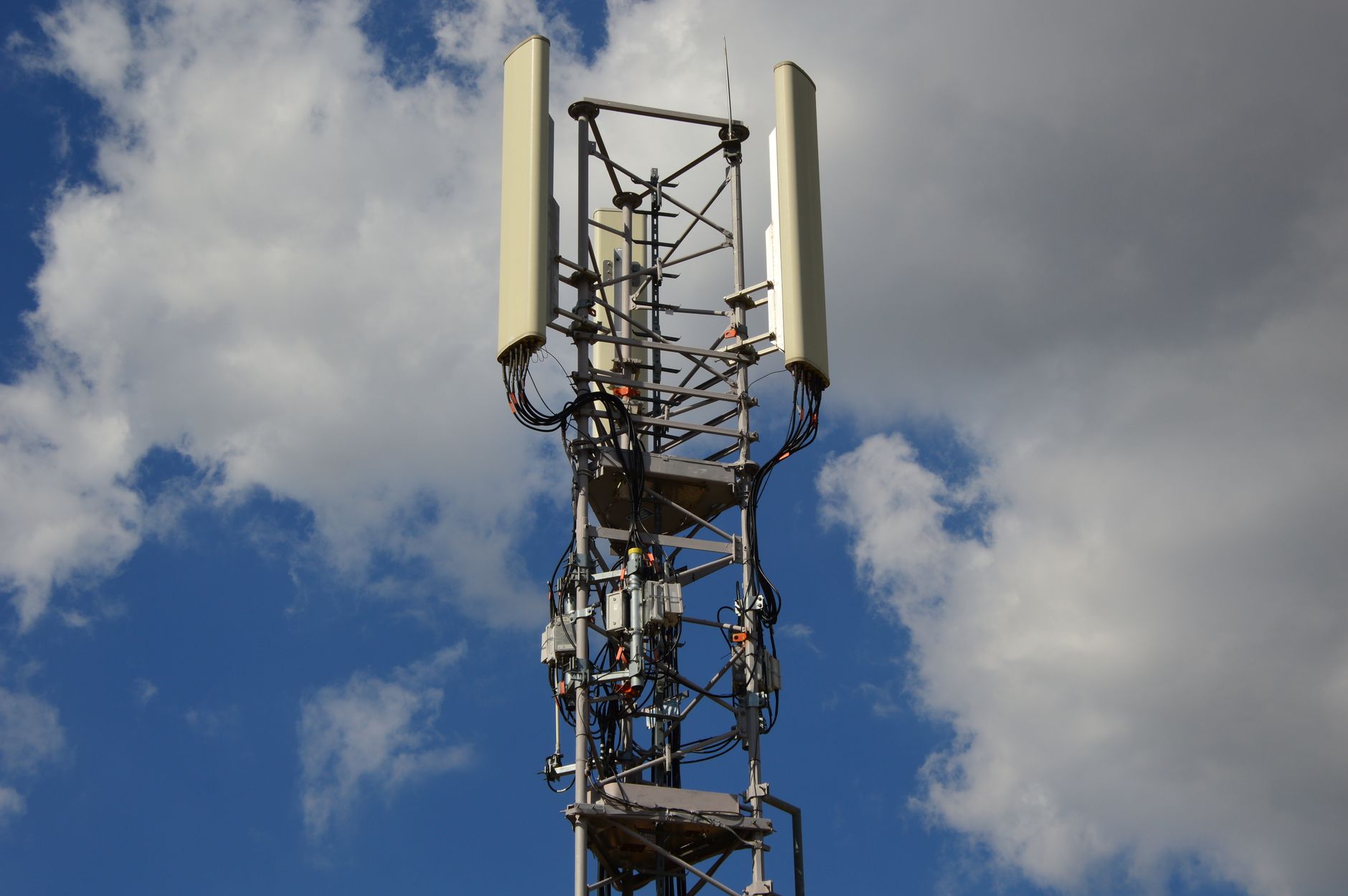
Photo by Ulrick Trappschuh on Pexels
Huawei Positions AI as the Central Engine of Telecom’s Next Revenue Frontier
At MWC Shanghai 2026, Huawei delivered one of the event’s most closely watched keynotes, presenting a sweeping AI-centric network roadmap that reframes how mobile operators should think about infrastructure investment, service differentiation, and long-term monetization. The message was pointed and urgent: the era of passive connectivity is ending, and operators who fail to architect their networks around artificial intelligence risk being outpaced by a new class of digital competitors already monetizing intelligent services at scale.
Huawei’s executives argued that the proliferation of AI applications — from real-time generative AI interfaces and autonomous agents to multi-modal interaction platforms — is creating a fundamentally different traffic profile than anything mobile networks were originally engineered to handle. Unlike traditional data consumption, AI workloads are highly latency-sensitive, demand consistent uplink performance, and require deterministic quality of service guarantees that current network architectures can struggle to deliver under load.
From Bandwidth Pipes to Intelligent Fabric: A Structural Shift
Central to Huawei’s roadmap is the concept of networks evolving from passive data conduits into what the company describes as an “intelligent fabric” — a distributed, self-optimizing infrastructure capable of dynamically allocating resources based on the contextual needs of AI workloads in real time. This vision encompasses radio access networks, transport layers, and core network elements all operating under unified AI-driven orchestration.
On the radio access side, Huawei highlighted advances in 5G-Advanced (5G-A, also known as Release 18 and beyond) as critical enablers. Technologies such as uplink-centric network design, enhanced massive MIMO with AI-assisted beamforming, and sub-millisecond scheduling optimization were cited as the building blocks operators need to deploy today to remain competitive as AI application demand surges over the next 18 to 36 months.
Transport Networks Under the AI Microscope
Huawei also placed significant emphasis on transport network transformation, an area sometimes overshadowed in public 5G discourse but critical to end-to-end AI performance. The company outlined next-generation optical transport and IP backbone solutions capable of offering ultra-low latency slices specifically designed for agentic AI traffic — scenarios in which autonomous software agents are continuously exchanging small, time-critical data packets rather than streaming large media files.
This distinction matters enormously from a network planning perspective. Traditional QoS models optimized for video streaming or web browsing are poorly suited to the bursty, low-latency, high-reliability requirements of AI agent communication. Huawei’s proposal involves rethinking traffic classification, queuing algorithms, and SLA enforcement mechanisms from the ground up to accommodate these new interaction models.
Monetization: Turning Network Intelligence Into Operator Revenue
Perhaps the most commercially significant element of Huawei’s presentation was its monetization framework. The company proposed a tiered service architecture in which operators expose network capabilities — latency guarantees, bandwidth reservation, edge compute access — through programmable APIs to enterprise customers and AI application developers. This positions mobile operators not merely as connectivity providers but as platform enablers within the broader AI ecosystem.
The framework draws on the growing Network-as-a-Service (NaaS) movement and aligns with GSMA Open Gateway initiatives, which seek to standardize how network capabilities are made accessible to third-party developers. Huawei argued that operators sitting on 5G-Advanced infrastructure and intelligent transport assets have a genuine competitive window — but only if they move quickly to develop the software layer and commercial models needed to package those capabilities into developer-friendly products.
Edge AI and the Role of On-Device Intelligence
Huawei further addressed the growing interplay between on-device AI processing and network-delivered intelligence. As smartphones and IoT endpoints integrate increasingly powerful neural processing units, the network’s role evolves from primary computation host to a high-performance synchronization and augmentation layer. This hybrid edge-cloud model, Huawei suggested, requires operators to invest in multi-access edge computing (MEC) deployments that are tightly integrated with their RAN infrastructure rather than bolted on as an afterthought.
Industry Implications and Competitive Context
Huawei’s roadmap arrives at a pivotal moment for global telecom. Operators across Asia, the Middle East, and parts of Europe are actively evaluating capital expenditure priorities for the 2026-2028 cycle, with AI integration featuring prominently in most strategic plans. The timing of MWC Shanghai positions Huawei to influence a significant portion of those decisions, particularly among Asia-Pacific operators where the company retains substantial market share despite ongoing geopolitical headwinds in Western markets.
Competitors including Ericsson and Nokia have articulated similar visions — network AI, autonomous operations, and developer-facing APIs are themes appearing across virtually every major vendor’s portfolio strategy this year. What distinguishes the current moment is that these concepts are transitioning from roadmap slides to live deployments, with early commercial cases emerging in South Korea, China, and the Gulf region.
Outlook: The Window Is Open, But Not Indefinitely
Industry analysts observing MWC Shanghai 2026 noted that while Huawei’s vision is technically coherent and commercially logical, execution remains the defining challenge for operators. Building AI-native network capabilities requires not just capital investment but deep changes in operational culture, software talent, and partner ecosystem development — areas where many traditional telcos continue to lag behind.
The broader consensus emerging from the event is that the operators who will successfully monetize the AI era are those treating network intelligence as a product discipline rather than an infrastructure upgrade. As AI applications continue their rapid proliferation across enterprise and consumer markets, the pressure on telecom networks — and the opportunity for those prepared to meet it — will only intensify through the remainder of the decade.
