
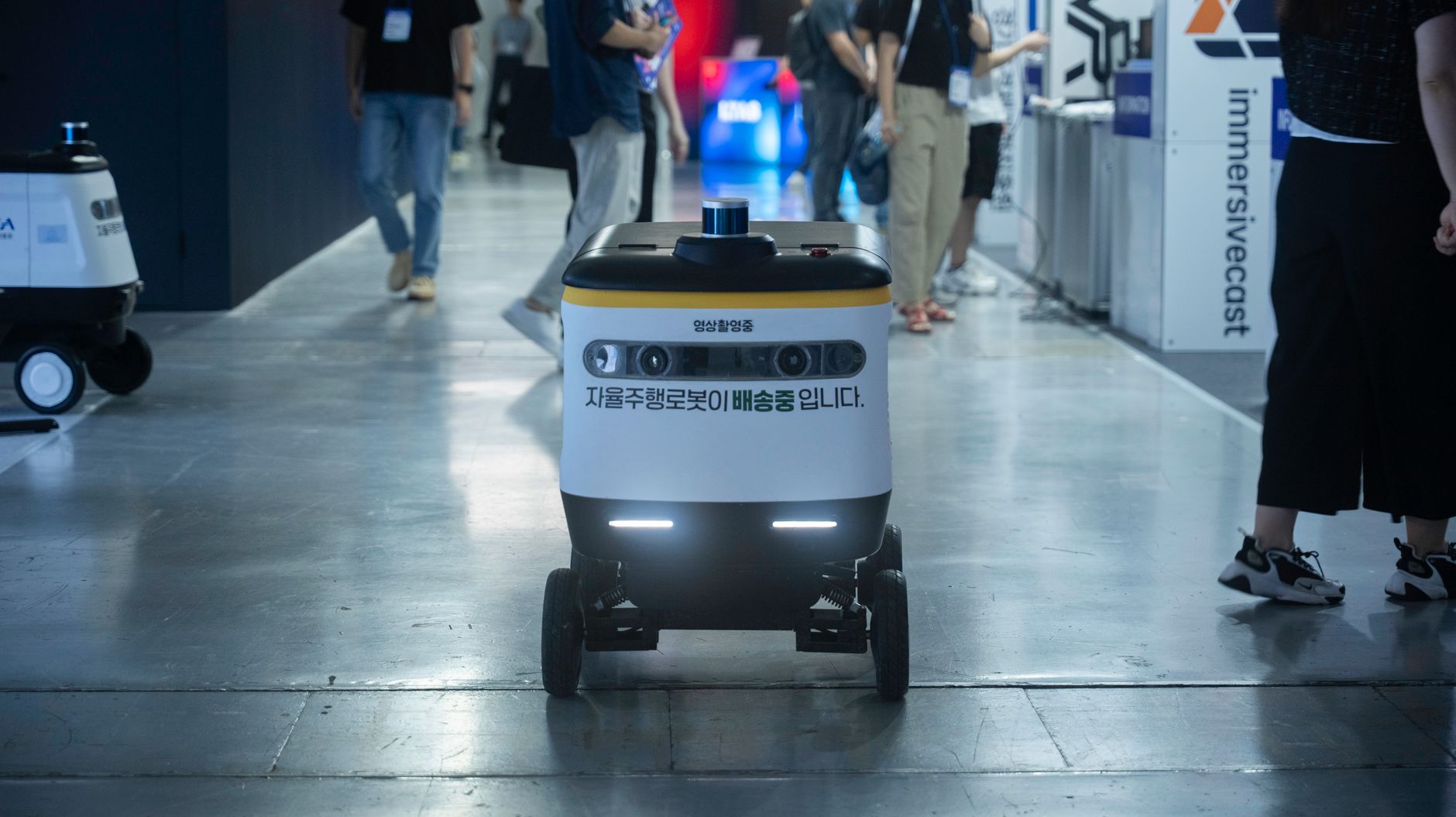
Photo by Youn Seung Jin on Pexels
South Korea Launches Landmark AI-RAN Initiative with Dual-Consortium Strategy
South Korea is making a bold declaration of intent in the race to define the next era of wireless connectivity. The South Korean government has officially selected two industry-leading consortia — one helmed by SK Telecom and the other by KT — to spearhead the development and demonstration of what it is calling Hyper AI Network Infrastructure, a nationally funded project designed to embed artificial intelligence deeply into the country’s radio access network (RAN) ecosystem.
The initiative, widely referred to as the AI-RAN project, represents one of the most aggressive government-backed efforts globally to operationalize AI within mobile network architecture. With South Korea already holding a reputation as one of the world’s most advanced 5G markets, this latest program is seen as a critical step toward establishing a competitive edge in the pre-6G landscape.
What Is Hyper AI Network Infrastructure?
The “Hyper AI Network Infrastructure” concept goes far beyond simple network automation or predictive maintenance — areas where AI has already gained a foothold in telecom. Instead, the South Korean framework envisions AI as a foundational layer of the network itself, influencing real-time radio resource management, spectrum optimization, interference mitigation, and dynamic traffic orchestration at the RAN edge.
In practical terms, this means deploying AI models that can process and respond to network conditions in sub-millisecond timeframes — a requirement for industrial applications such as autonomous robotics, smart manufacturing, and advanced logistics. The “Hyper” designation reflects the ambition to push AI inference capabilities directly into the distributed units (DUs) and centralized units (CUs) of Open RAN-compliant architectures, reducing latency and enabling truly autonomous network behavior.
SK Telecom’s Consortium: An AI-Native Approach
SK Telecom, which has been vocal about its AI-first telecommunications strategy under the banner of “AI Company” transformation, is leading one of the two selected consortia. The operator has previously partnered with global technology firms including NVIDIA and Ericsson to explore AI-RAN workloads running on GPU-accelerated infrastructure. SK Telecom’s consortium is expected to focus heavily on AI model training pipelines that can operate within the RAN environment itself, leveraging on-device learning rather than relying solely on centralized cloud-based AI processing.
This approach aligns with broader global momentum around disaggregated, Open RAN-based deployments where compute resources are distributed across the network edge. Combining O-RAN interfaces with AI inference engines running natively on radio hardware could dramatically reduce the signaling overhead and round-trip latency associated with cloud-dependent AI.
KT’s Consortium: Industrial AI and Network Slicing
KT’s consortium is reported to place significant emphasis on industrial AI use cases — particularly those that require guaranteed service-level agreements (SLAs) for mission-critical applications. Network slicing, a technology that allows a single physical network to be partitioned into multiple virtual networks, is expected to play a central role in KT’s demonstration architecture. By combining AI-driven slice management with real-time performance monitoring, KT aims to deliver on the promise of ultra-reliable low-latency communications (URLLC) for factory automation and smart city deployments.
KT has been expanding its B2B enterprise connectivity portfolio aggressively, and this project provides a government-backed proving ground for technologies that could be commercialized across South Korea’s extensive industrial base.
Strategic Timing: Why AI-RAN Matters Now
The launch of this initiative comes at a pivotal moment in global telecom evolution. The industry is grappling with a fundamental question: how do operators monetize the enormous capital investments made in 5G infrastructure? AI-RAN offers a compelling answer — by enabling networks to self-optimize and support high-value enterprise workloads with unprecedented efficiency, operators can unlock new revenue streams beyond traditional consumer connectivity.
Globally, firms including Ericsson, Nokia, Samsung, and a wave of Open RAN vendors have been investing in what they variously call “AI-native” or “intelligent RAN” platforms. The O-RAN Alliance has established working groups specifically tasked with standardizing AI/ML workflows within the RAN Intelligent Controller (RIC) framework, using both near-real-time and non-real-time control loops.
South Korea’s government-led program effectively accelerates domestic industry readiness for these standards, ensuring that SK Telecom and KT — and their respective vendor ecosystems — are positioned at the cutting edge when 6G standardization efforts intensify later this decade.
Implications for the Global Telecom Landscape
South Korea’s AI-RAN initiative is not occurring in a vacuum. It reflects a broader geopolitical and technological competition in which nations are increasingly treating next-generation network infrastructure as a matter of strategic national interest. Japan has its Beyond 5G program, the European Union is funding 6G research through the Hexa-X initiative, and the United States has directed significant funding toward Open RAN security and resilience through the CHIPS and Science Act framework.
What distinguishes South Korea’s approach is the speed-to-deployment philosophy embedded in the program. Rather than pure research, the Hyper AI Network Infrastructure project is explicitly oriented toward demonstration — real-world trials on live or near-live network infrastructure — compressing the timeline between laboratory innovation and commercial viability.
Industry Outlook
Analysts tracking the AI-RAN space broadly agree that the technology holds transformative potential, but caution that integration complexity, compute costs at the edge, and AI model reliability in dynamic radio environments remain significant challenges. South Korea’s dual-consortium model is a smart hedge — allowing two distinct technical philosophies to compete and cross-pollinate, ultimately producing a richer body of evidence for what works in real deployment conditions.
If SK Telecom and KT can deliver credible, scalable demonstrations of Hyper AI Network Infrastructure within the program’s timeline, South Korea stands to export not just technology but a replicable national framework that other governments and operators will be eager to adopt. In the race to define intelligent networks for the next decade, South Korea has just moved decisively to the front of the pack.
