
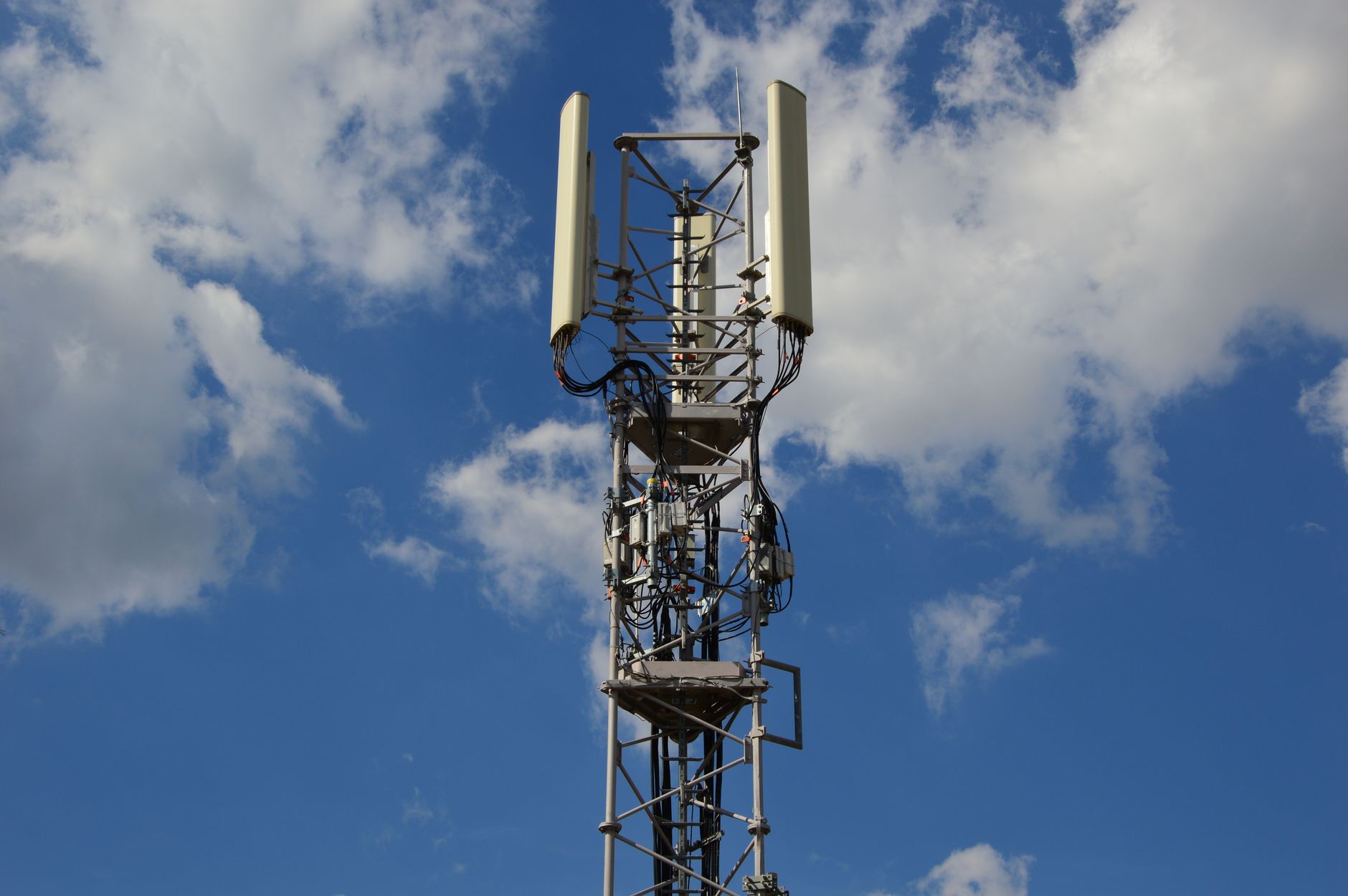
Photo by Ulrick Trappschuh on Pexels
There’s a familiar tension running through boardrooms at the world’s major telecommunications companies right now. On one hand, the explosion of artificial intelligence — from generative AI platforms to edge inference workloads — is making telecom infrastructure look more indispensable than it has in decades. On the other hand, actually converting that indispensability into sustainable revenue growth remains one of the industry’s most elusive goals. The long hike, as some industry observers have taken to calling it, continues.
AI’s Infrastructure Dependency: A Double-Edged Opportunity
The numbers tell a compelling story about telecom’s growing centrality. AI applications — whether large language models running in hyperscale data centers or real-time inference tasks pushed to the network edge — are extraordinarily hungry for bandwidth, low latency, and reliable connectivity. Global IP traffic is projected to grow at a compound annual rate exceeding 20% through 2027, driven in significant part by AI workloads, according to multiple industry forecasts. That kind of demand, in theory, is exactly what telecoms have spent billions building networks to serve.
Yet the fundamental challenge persists: much of that traffic growth doesn’t automatically translate into proportional revenue growth for network operators. The so-called “traffic-revenue decoupling” problem — where data volumes rise steeply while average revenue per user grows modestly or stagnates — has been a structural headache for carriers since the smartphone era began. AI is intensifying that demand curve without yet offering a clear mechanism to break the decoupling cycle.
The Network Modernization Imperative
To even position themselves to capture AI-era revenue, telecoms face a formidable capital expenditure mountain. 5G standalone (SA) core deployments, which enable the network slicing and ultra-low latency characteristics that AI-driven enterprise applications demand, are still far from universal. In the United States, the major carriers have made meaningful SA progress, but globally, many operators remain anchored to 5G non-standalone (NSA) architectures that rely on 4G LTE cores — limiting the quality-of-service differentiation that premium enterprise pricing would require.
Simultaneously, fiber densification — both for fixed broadband and as midhaul and backhaul for small cell networks — demands sustained investment at a time when interest rates have made capital more expensive. The RAN (Radio Access Network) modernization cycle, including Open RAN deployments that promise greater vendor flexibility and software-driven efficiency, is adding complexity and cost to network evolution timelines even as it holds long-term promise.
Where the Revenue Models Are Forming
Despite the structural headwinds, several monetization vectors are beginning to crystallize in the telecom-AI intersection, and industry strategists are watching them closely.
Network-as-a-Service and Private 5G
Enterprise private 5G networks represent one of the more tangible near-term opportunities. Factories, ports, airports, and healthcare campuses are deploying dedicated 5G environments for mission-critical applications — autonomous guided vehicles, real-time video analytics, and connected robotics — where AI inference happens at the edge and latency tolerances are measured in single-digit milliseconds. Telecoms that can deliver managed private network solutions, rather than simply selling raw connectivity, are positioning themselves higher in the value stack.
AI-Native Network Operations
Carriers are also increasingly deploying AI internally to reduce operational expenditure, with network anomaly detection, predictive maintenance, and automated traffic optimization emerging as genuine cost-reduction tools. While this doesn’t directly generate new revenue, it improves margin profiles at a time when investors are scrutinizing returns on 5G capital investments with growing impatience. Companies like Ericsson, Nokia, and Samsung are embedding AI-driven RAN optimization features that promise meaningful improvements in spectral efficiency and energy consumption — the latter being particularly significant as power costs escalate.
The Hyperscaler Partnership Question
Perhaps the most strategically loaded dynamic involves the relationship between telecoms and hyperscale cloud providers — Amazon Web Services, Microsoft Azure, and Google Cloud. These companies are simultaneously partners and competitive threats. Cloud-native network functions run on hyperscaler infrastructure; AI platforms that telecoms want to offer enterprises are largely built on hyperscaler tools. Negotiating the terms of these partnerships without becoming purely a dumb-pipe supplier to the cloud giants is a strategic challenge that will define the next decade for many carriers.
Regulatory and Spectrum Considerations
Layered atop the commercial challenges are regulatory environments that vary dramatically by market. Spectrum policy, infrastructure sharing mandates, net neutrality debates, and merger scrutiny all create planning uncertainty. In several major markets, regulators are actively reviewing whether consolidation should be permitted to give carriers the scale to invest adequately — a debate that cuts to the heart of whether the current industry structure is sustainable for the investment levels AI-era networks demand.
Industry Outlook: Endurance Over Speed
The consensus emerging from industry analysts and veteran telecom strategists is that the sector’s AI-era payoff is real but requires an endurance mindset rather than a sprint mentality. The operators most likely to emerge in strong positions are those investing methodically in network quality differentiation, building genuine enterprise solution capabilities beyond connectivity, and managing their hyperscaler relationships with clear-eyed strategic intent.
The long hike metaphor resonates precisely because it captures both the scale of the ascent and the fact that the destination — a telecom industry that is genuinely, lucratively central to the AI-powered digital economy — is visible on the horizon. Getting there will require sustained capital discipline, strategic patience, and the organizational agility to adapt as the AI landscape itself continues its own rapid evolution. For telecoms, the trail is steep, the pack is heavy, but the summit remains worth reaching.
