
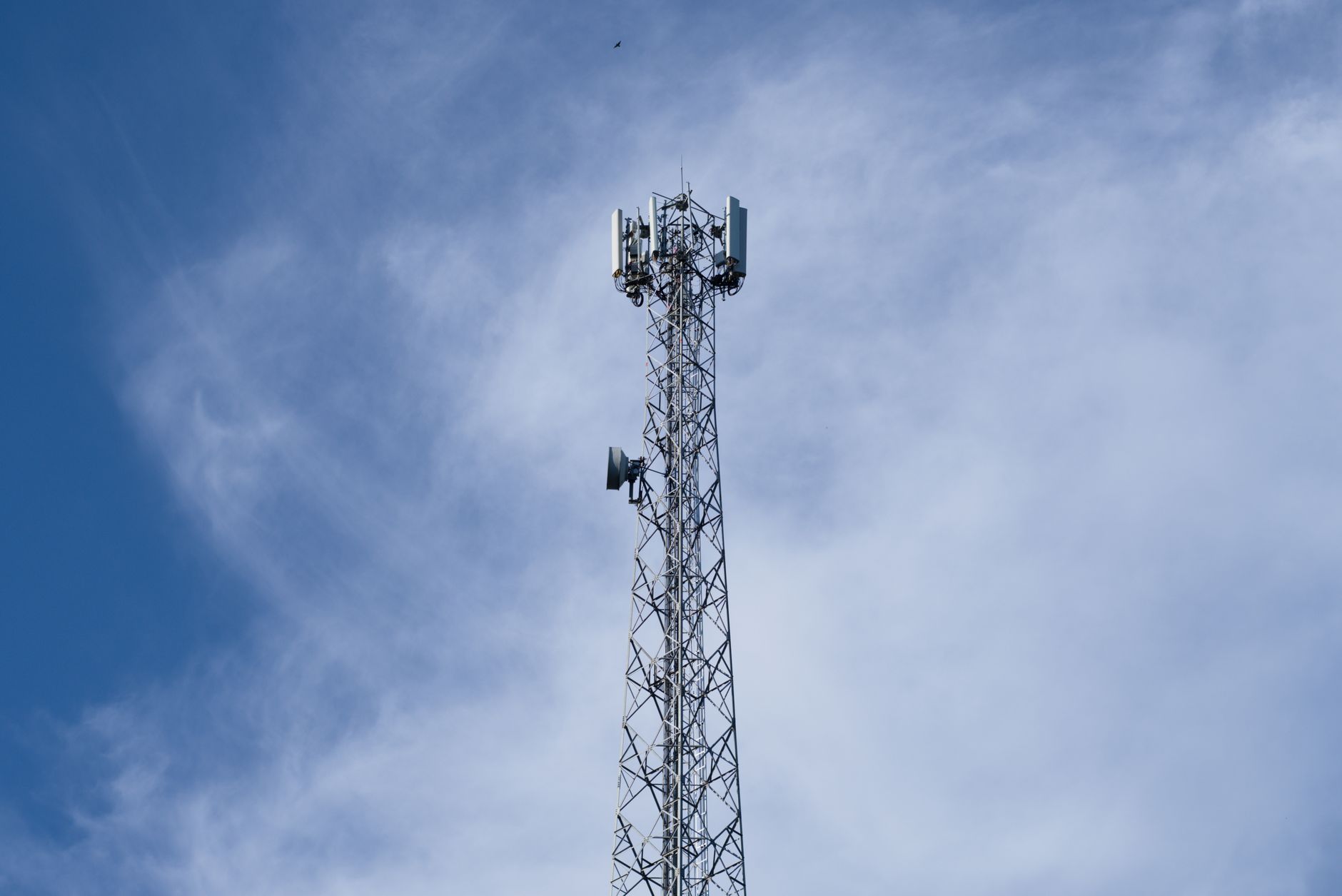
Photo by Qeis Ismail on Pexels
The Road to 6G Is Paved With Disagreements
The global race to define the next generation of wireless technology is accelerating — but so are the fault lines that could undermine it. Speaking at RCR Wireless News’ 6G Forum 2026, Stéphane Téral, founder and chief analyst at Téral Research, delivered a sobering assessment of the 6G standardization landscape, warning that disputes over spectrum policy and the role of artificial intelligence in network architecture are threatening to fragment what should be a unified global effort.
Téral noted that while the standardization process is advancing into its evaluation and consensus-building phases — a positive milestone on paper — the path forward is complicated by deepening geopolitical tensions, competing national interests, and fundamental technical disagreements that don’t have easy resolutions.
Spectrum: The Perennial Battleground Returns
At the heart of the fragmentation risk lies a familiar adversary: spectrum. For 6G, the stakes are even higher than they were for 5G, as proponents push into previously unexplored frequency ranges, including sub-terahertz bands between 100 GHz and 300 GHz, as well as continued competition for prime mid-band real estate that remains hotly contested from the 5G era.
Different regional blocs are pursuing divergent spectrum strategies. The United States, through the FCC and NTIA, has been navigating difficult negotiations around freeing up additional mid-band and high-band spectrum, while simultaneously contending with incumbent federal users who are reluctant to relocate. Europe, under the coordination of CEPT and informed by the European Commission’s ambitious connectivity targets, is exploring its own framework. Meanwhile, China — operating largely through its own regulatory apparatus — has already begun publishing 6G white papers and pursuing IMT-2030 requirements that reflect domestic priorities.
This tripartite dynamic, with additional complexity introduced by the positioning of countries like Japan, South Korea, and India, risks producing a patchwork of incompatible spectrum allocations — a scenario the industry saw glimpses of during early 5G deployments and one that dramatically increases device manufacturing costs and complicates global roaming.
The ITU’s Balancing Act
The International Telecommunication Union is working through its IMT-2030 framework to establish baseline requirements for 6G, targeting a peak data rate of 1 Tbps, sub-100 microsecond latency, and a 10x improvement in energy efficiency compared to 5G. However, the ITU’s consensus-driven model — its greatest strength for ensuring global interoperability — can also be its Achilles’ heel when member states arrive at the table with irreconcilable positions on spectrum bands.
Artificial Intelligence: Asset or Architectural Fault Line?
Perhaps the more nuanced — and in some ways more consequential — dispute involves the role of artificial intelligence in 6G networks. Unlike 5G, where AI was largely an operational add-on deployed at the network management layer, 6G is being architected from the ground up with AI and machine learning as native components. The question dividing standards bodies and industry stakeholders is not whether AI belongs in 6G, but how deeply and where it should be embedded.
One school of thought, backed by several Western vendors and operators, advocates for AI integration at the air interface level — fundamentally reimagining how signals are transmitted, received, and decoded. This approach, sometimes called AI-native air interface design, would represent a radical departure from decades of established wireless engineering principles. 3GPP is already studying AI-native air interfaces as part of its early Release 21 and beyond roadmap discussions.
Another camp argues for a more pragmatic approach, embedding AI primarily in network operations, resource management, and the core — preserving backward compatibility and reducing the risk of introducing systemic instability into critical infrastructure. China’s major vendors, including Huawei and ZTE, have published extensive research supporting deep AI integration, though their specific architectural proposals sometimes diverge from those of Ericsson, Nokia, and Qualcomm.
Standards Bodies Under Pressure
For 3GPP — the primary standards body responsible for turning high-level IMT-2030 requirements into actual technical specifications — managing these competing visions while maintaining the organization’s hallmark of backward-compatible, implementable standards is an enormous challenge. The body is expected to begin formal 6G specification work around Release 21, anticipated in the 2028-2029 timeframe, with commercial deployments realistically targeting 2030 and beyond.
The concern raised by analysts like Téral is that if consensus is not achieved on foundational elements — spectrum and AI architecture chief among them — the industry could end up with regional variants of “6G” that bear the same name but are technically incompatible, mirroring the fragmentation seen in early broadband and even early cellular standards generations.
Industry Outlook: Urgency Without Panic
The warning signs are real, but the industry retains meaningful tools to address them. Operators, vendors, and governments have strong economic incentives to avoid the cost of fragmentation — global interoperability unlocks economies of scale in chipsets, devices, and infrastructure that no single market can replicate alone. Industry forums like the Next G Alliance in North America, the 6G-IA in Europe, and the Beyond 5G Promotion Consortium in Japan are actively working to align national research priorities before formal standards lock-in.
What the 6G Forum 2026 made clear, however, is that the window for achieving that alignment is narrower than comfortable. As Téral’s assessment underscores, the evaluation and consensus phase now underway is precisely the moment when foundational decisions are made — and where unresolved disputes harden into permanent architectural divergences. The telecom industry built one of humanity’s most remarkable communication systems by agreeing on common standards. The 6G era will test whether that cooperative instinct can survive an era of strategic competition.
