
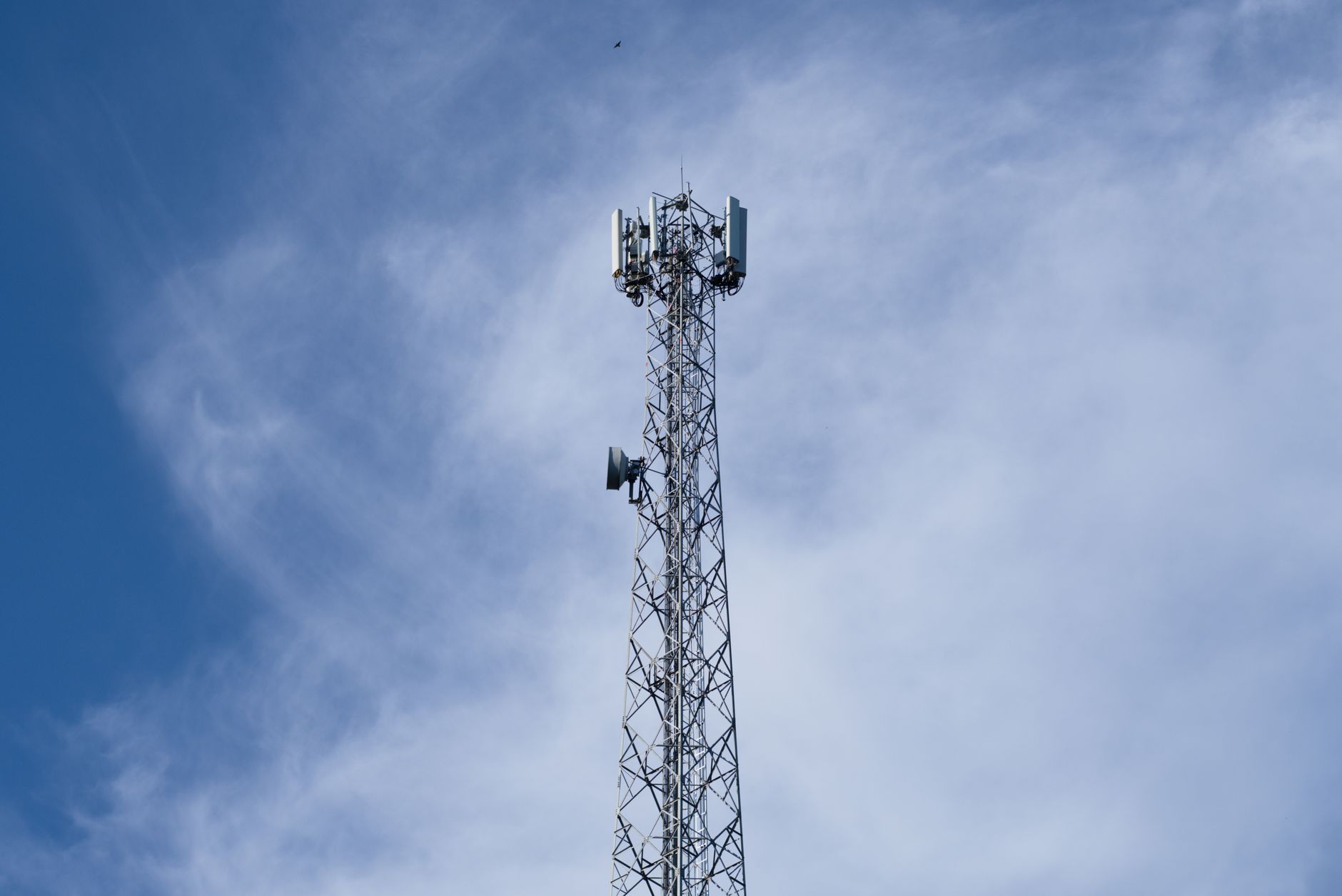
Photo by Qeis Ismail on Pexels
The Uplink Revolution: Why Mobile AI Is Rewriting the Rules of 5G Investment
For most of the 5G era, network investment conversations have centered on downlink speed — how fast content can be delivered to a device. But a seismic shift is underway. As artificial intelligence moves from the data center to the smartphone, and as applications increasingly require devices to send data rather than merely receive it, uplink performance has emerged as the critical — and historically underserved — dimension of mobile network quality.
Huawei and China Unicom Beijing are making a high-profile bet on that shift. The two companies have announced the commercial deployment of what they describe as the world’s largest 5G-A (5G Advanced) 100 MHz GigaUplink network, a milestone that industry observers say could redefine capital expenditure priorities for mobile operators globally over the next several years.
What Is GigaUplink — and Why Does It Matter?
GigaUplink is a next-generation uplink enhancement architecture built on the 5G-A standard framework, sometimes referred to as 3GPP Release 18 and beyond. At its core, the technology combines several advanced uplink techniques — including Uplink Carrier Aggregation (UL CA), Supplementary Uplink (SUL), and enhanced MIMO configurations — to dramatically increase uplink throughput and reduce latency on the upload path.
In practical terms, achieving 100 MHz of aggregated uplink spectrum in a commercially deployed network is a substantial engineering feat. Traditional 5G deployments have often allocated far less spectrum to the uplink compared to the downlink, reflecting an internet-era assumption that users consume far more data than they generate. Mobile AI is breaking that assumption decisively.
The AI Driver: From Passive Consumers to Active Data Generators
The catalyst behind this uplink investment wave is the rapid proliferation of on-device and cloud-assisted AI applications. Real-time video analysis, AI-powered content creation, cloud gaming with AI-rendered graphics, augmented reality collaboration tools, and large language model (LLM) interactions all share a common characteristic: they require robust, low-latency uplink connections to function effectively.
Consider an enterprise worker using an AI assistant to analyze live video feeds from a mobile device, or a surgeon collaborating remotely using AR-enhanced visuals. These are not hypothetical scenarios — they are emerging use cases that operators and device manufacturers are actively building toward. Without a capable uplink infrastructure, the promise of mobile AI remains tethered to Wi-Fi environments and enterprise fixed connections.
Huawei has been explicit in framing GigaUplink as the foundation layer for what it calls the “Mobile AI Era,” arguing that just as the rollout of high-speed downlink networks unlocked mobile video consumption in the 4G era, robust uplink networks will be the enabling infrastructure for AI-driven mobile services in the 5G-A and eventual 6G era.
China Unicom Beijing Deployment: Scale and Significance
The commercial network launched by China Unicom Beijing represents a large-scale, real-world validation of the GigaUplink architecture. Covering a major metropolitan area with one of the highest concentrations of enterprise and consumer mobile users in the world, Beijing serves as an ideal proving ground for next-generation uplink performance.
The deployment leverages 100 MHz of aggregated uplink bandwidth — a figure that sets it apart from earlier, more limited GigaUplink trials. Achieving this at commercial scale requires sophisticated spectrum management, upgraded baseband units capable of handling the increased processing load, and tightly coordinated interference management across a dense urban cell grid.
Technical Architecture: Beyond Simple Spectrum Addition
Industry engineers note that simply allocating more spectrum to the uplink is insufficient without corresponding advances in network architecture. The China Unicom Beijing deployment reportedly integrates AI-driven interference coordination at the network level, allowing the system to dynamically optimize uplink resource allocation based on real-time traffic patterns — a capability that becomes increasingly important as AI application traffic proves less predictable than traditional video streaming loads.
Huawei’s radio access equipment in this deployment is understood to incorporate its latest generation of massive MIMO antennas optimized for uplink beamforming, alongside AI-native scheduling algorithms embedded in the baseband software stack. This combination allows the network to maintain GigaUplink-class performance across varying user densities and mobility scenarios.
Global Market Implications: A New Capex Narrative for Operators
The announcement arrives at a moment when mobile operators worldwide are grappling with how to justify continued 5G capital expenditure to investors skeptical about monetization timelines. The GigaUplink narrative offers a compelling answer: mobile AI represents a genuinely new category of revenue-generating services that requires infrastructure investment to unlock.
For operators in Europe, North America, and Southeast Asia watching the China Unicom Beijing deployment closely, the key question is whether the uplink investment thesis translates to their own market conditions. Spectrum holdings, regulatory frameworks, and the pace of AI application adoption vary significantly across regions — but the underlying technical and business logic is increasingly hard to argue against.
Analysts at several research firms have noted that uplink enhancement technologies are already appearing in RFP documents from European and Asian operators planning their 5G-A upgrade cycles for 2025 and 2026, suggesting the GigaUplink conversation is moving rapidly from proof-of-concept to procurement reality.
Looking Ahead: Uplink as the 5G-A Differentiator
As the telecommunications industry prepares for 6G standardization discussions to accelerate through the late 2020s, the investments being made today in uplink infrastructure are likely to serve as the architectural foundation for future network generations. The commercial deployment by Huawei and China Unicom Beijing is more than a product launch — it is a statement about where mobile network value will be created in the coming decade.
For operators, equipment vendors, and enterprise customers alike, the message is clear: in the age of mobile AI, the network that wins will not simply be the fastest at delivering content down — it will be the one most capable of moving intelligence up.
