
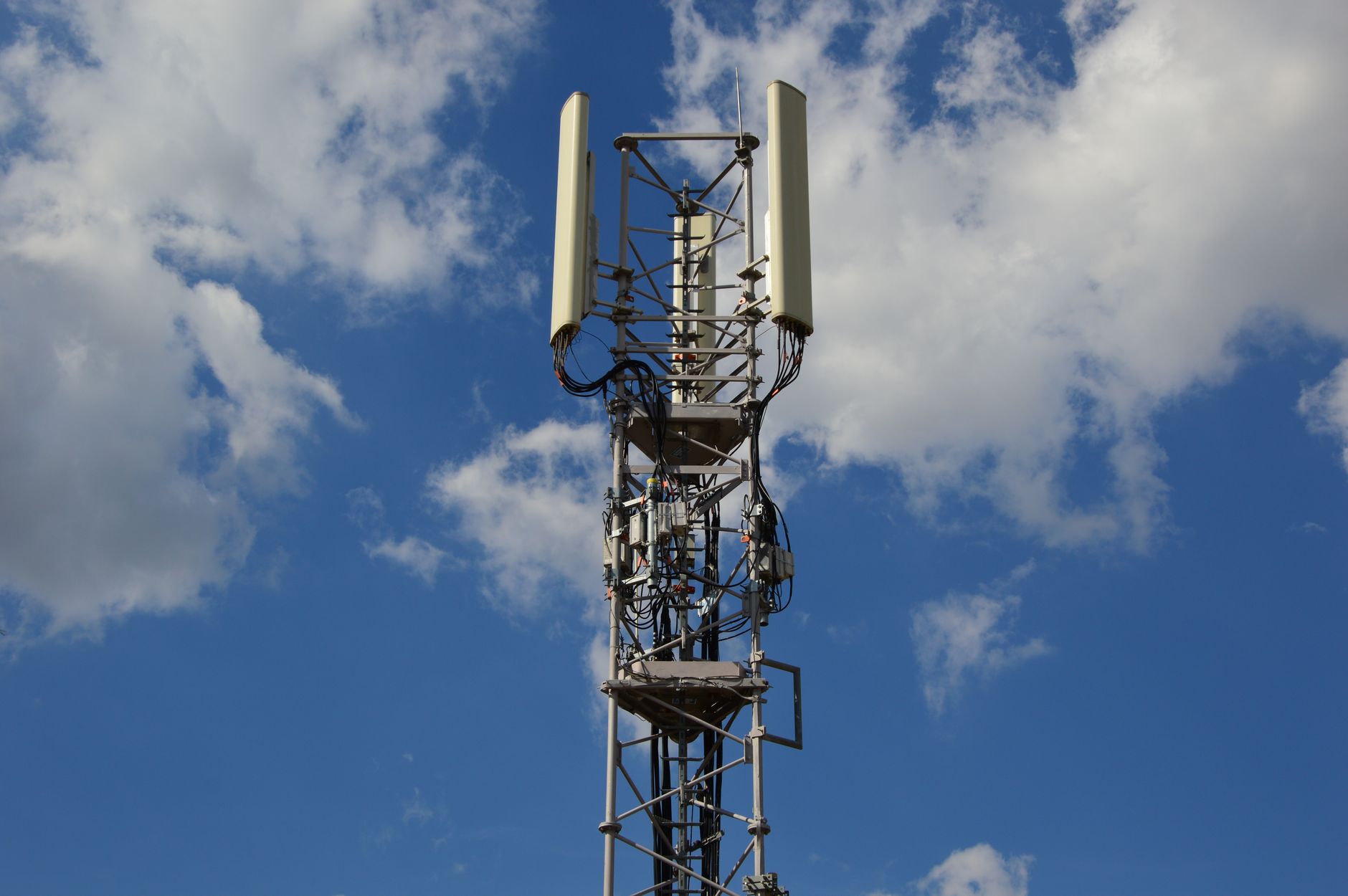
Photo by Ulrick Trappschuh on Pexels
Vi Makes Bold 5G Push Across India’s Telecom Landscape
Vodafone Idea (Vi), India’s third-largest telecom operator by subscriber base, has taken a significant step forward in its long-anticipated 5G rollout, announcing expanded coverage across 400 cities and towns spanning 17 key telecom circles. The announcement represents one of the most ambitious network expansion efforts in the company’s recent history and signals that Vi is not ready to cede ground to its better-capitalized rivals, Reliance Jio and Bharti Airtel.
The expansion comes at a pivotal moment for the operator, which has spent the better part of the last two years working through financial restructuring, government equity conversion, and securing fresh capital to fund its network modernization ambitions. With this latest rollout, Vi is sending a clear message to both subscribers and investors: its 5G journey is well and truly underway.
Coverage Footprint: What 17 Circles and 400 Cities Actually Means
India’s telecom landscape is divided into 22 licensed service areas, commonly referred to as “circles,” covering everything from densely populated metros to remote rural districts. Vi’s 5G deployment across 17 of these circles indicates a broad geographic strategy that stretches well beyond the top four or five metro markets that many operators initially prioritized during early 5G rollouts.
The 400-city milestone is particularly noteworthy because it moves the conversation beyond the Tier-1 city narrative that has dominated India’s 5G story since commercial launches began in late 2022. By pushing into Tier-2 and Tier-3 towns, Vi is targeting a subscriber segment that is increasingly smartphone-savvy, data-hungry, and potentially more loyal to operators that bring premium connectivity to underserved markets first.
Spectrum Holdings and Technology Deployment
Vi’s 5G network leverages spectrum acquired during India’s landmark 5G spectrum auctions held in 2022, where the operator secured mid-band holdings in the 3.3 GHz range — widely regarded as the workhorse spectrum band for 5G due to its balance of coverage and capacity. The mid-band deployment enables Vi to offer meaningful 5G speeds while maintaining a coverage radius that makes large-scale urban and semi-urban rollouts economically viable without an excessive number of base stations.
Industry observers note that Vi has been deploying its network using a Non-Standalone (NSA) architecture, which anchors 5G new radio (NR) transmissions on its existing 4G LTE core — a pragmatic approach that accelerates time-to-market while the operator continues building out a full Standalone (SA) 5G core infrastructure. The NSA approach is consistent with the early-stage strategies used by both Jio and Airtel, though both competitors have been progressively transitioning certain segments of their networks to SA architecture to unlock more advanced 5G use cases.
The Competitive Pressure Driving Vi’s Urgency
To understand why this rollout carries such strategic weight, it’s essential to contextualize Vi’s position in the Indian telecom market. Reliance Jio crossed the threshold of 700 million subscribers while simultaneously rolling out 5G at a scale described as one of the fastest deployments in global telecom history. Airtel, meanwhile, has pursued a quality-first approach, selectively deploying 5G in locations where it can offer genuinely differentiated speeds and reliability.
Vi, which bled subscribers for years amid financial uncertainty, is now on something of a stabilization trajectory following a government bailout that converted a portion of its dues into equity, making the Indian state one of its largest shareholders. Fresh fundraising rounds and renewed vendor agreements with Ericsson and Nokia have helped the company re-energize its network capex pipeline — and the 400-city 5G milestone is a direct output of that renewed investment cycle.
Enterprise and Consumer Implications
Beyond the consumer segment, Vi’s expanded 5G coverage opens the door to enterprise opportunities — an area where both Jio and Airtel have been aggressively signing deals with manufacturing, logistics, healthcare, and smart city verticals. Network slicing, private 5G networks, and low-latency industrial IoT applications all require robust 5G infrastructure, and Vi’s broader geographic footprint now makes it a more credible contender in enterprise sales conversations.
For consumers, the practical experience of Vi’s 5G will depend heavily on device compatibility, network load, and local site density — factors that vary considerably across a 400-city deployment of this nature. Early user reports from circles where Vi 5G has been live suggest peak download speeds in the range of 300–600 Mbps under favorable conditions, with real-world average speeds expected to improve as the network matures and traffic engineering is optimized.
Industry Outlook: Can Vi Close the Gap?
The road ahead for Vi remains challenging but increasingly defined. Analysts tracking India’s telecom sector suggest that the operator needs to accelerate 5G site densification, invest in backhaul modernization, and aggressively market its improved network quality to convert fence-sitters back into active Vi subscribers.
What the 400-city expansion ultimately demonstrates is that Vi has moved from survival mode into execution mode — a distinction that matters enormously for a market watching closely to see whether India will sustain a viable three-operator ecosystem or consolidate further into a duopoly. For now, Vi’s 5G momentum offers a compelling argument that the third player in India’s telecom drama still has cards left to play.
