
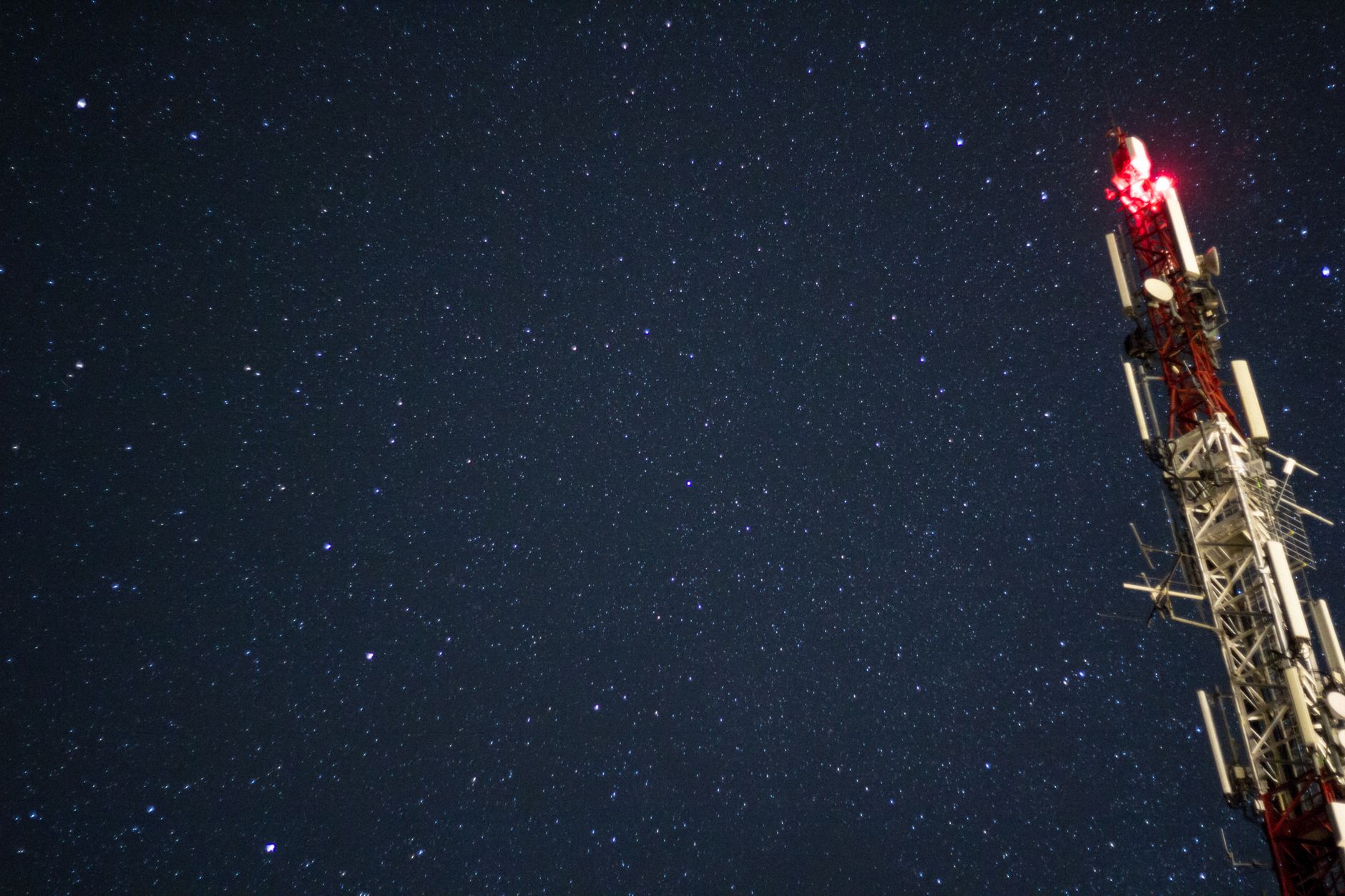
Photo by Axel Bonniot on Pexels
Amazon Kuiper Enters the D2D Arena — With a Telco-First Playbook
The direct-to-device (D2D) satellite race has been heating up for the better part of three years, driven largely by the splashy consumer-facing moves of SpaceX’s Starlink and AST SpaceMobile’s headline-grabbing cell tower-in-the-sky demonstrations. But Amazon’s Project Kuiper is now emerging as a serious contender — and it’s playing an entirely different game. Rather than positioning its planned 5,105-satellite low Earth orbit (LEO) constellation as a standalone consumer product, Amazon is actively courting mobile network operators, framing Kuiper as infrastructure that telcos can embed directly into their service offerings.
It’s a strategic pivot that could prove far more disruptive than it first appears — not because Amazon is trying to replace carriers, but precisely because it isn’t.
From Consumer Bypass to Carrier Partnership
The early narrative around satellite D2D was largely one of bypass: satellites would reach consumers directly, rendering terrestrial gaps irrelevant and, in some interpretations, threatening the relevance of mobile operators in rural and underserved areas. SpaceX’s deal with T-Mobile, which launched limited beta SMS services in 2024, began to complicate that story. But Amazon’s approach with Kuiper appears even more deliberately operator-centric from the outset.
Amazon has signaled that Kuiper’s D2D architecture is being designed with 3GPP Non-Terrestrial Network (NTN) standards compatibility in mind — a critical technical differentiator. NTN integration means that satellite connectivity can, in theory, function as a seamless extension of a 5G network rather than a siloed overlay. For mobile operators, this translates into a single SIM, unified billing, and consistent quality-of-service management across both terrestrial and satellite links — the holy grail of hybrid network architecture.
What 3GPP NTN Compliance Actually Means for Operators
The 3GPP Release 17 and Release 18 specifications laid the groundwork for NTN integration, defining how satellite systems — both geostationary (GEO) and non-geostationary (NGSO) — can interoperate with 5G New Radio (NR) frameworks. For LEO systems like Kuiper, the technical challenges are non-trivial: satellites traveling at roughly 7.5 kilometers per second introduce significant Doppler shift and propagation delay variability that standard terrestrial radio protocols weren’t built to handle. Amazon’s engineering teams are reportedly addressing these challenges through advanced signal processing and dynamic timing advance mechanisms built into Kuiper’s ground and space segment design.
For operators evaluating D2D partnerships, NTN compliance isn’t just a checkbox — it’s the difference between deploying a complementary network layer and managing a fundamentally separate technology stack. The former fits neatly into existing OSS/BSS systems; the latter creates operational complexity that few mid-tier carriers have the appetite or budget to absorb.
The Constellation Scale Advantage
Amazon has FCC authorization to deploy 3,236 satellites in its initial Kuiper constellation phase, with the full buildout encompassing 5,105 satellites across multiple orbital shell altitudes ranging from approximately 590 km to 630 km. This density matters enormously in the D2D context. Coverage continuity — particularly the ability to maintain an active data session as satellites pass overhead — requires sufficient orbital density to ensure seamless handoffs between birds. Sparse constellations can deliver emergency messaging or periodic IoT pings, but sustained broadband-quality D2D connectivity demands the kind of orbital real estate Amazon is methodically acquiring.
Amazon’s first production satellite launches aboard United Launch Alliance’s Vulcan Centaur and its own fleet of reserved Blue Origin New Glenn vehicles have begun in earnest through 2024 and into 2025, with commercial service ramp expected to accelerate significantly as constellation density crosses key coverage thresholds.
Competitive Landscape: Where Kuiper Fits
Amazon isn’t alone in pursuing the operator partnership angle. AST SpaceMobile has inked agreements with AT&T, Verizon, Rakuten, and a growing roster of international carriers. Its BlueBird satellites — featuring massive phased-array antennas spanning tens of square meters — are engineered specifically to communicate with standard unmodified smartphones using existing LTE and 5G bands. Apple’s satellite emergency SOS, powered by Globalstar, set an early consumer expectation benchmark, albeit in a highly limited use case. And SpaceX continues to expand its T-Mobile partnership toward broader data services.
What differentiates Kuiper in this field is the combination of Amazon’s hyperscaler infrastructure — including AWS ground station integration and edge computing capabilities — with a constellation scale that rivals Starlink’s. For operators who are also AWS customers, the integration pathways between Kuiper’s network management layer and existing cloud-based RAN or core deployments could represent a meaningful total-cost-of-ownership advantage.
Industry Outlook: Satellites as the Fifth Layer of the Network
The broader implication of Amazon’s telco-first D2D strategy is a reframing of where satellite fits in the network hierarchy. Rather than a last-resort backup or a niche rural solution, LEO D2D — particularly when NTN-integrated — begins to function as what some analysts are calling the “fifth layer” of mobile network coverage, sitting above macro cells, small cells, DAS, and WiFi offload in the coverage stack.
For operators, the appeal is straightforward: eliminate dead zones without deploying fiber or towers, meet regulatory universal coverage mandates, and differentiate premium service tiers with genuine anywhere connectivity. For Amazon, operator partnerships mean distribution scale that no direct-to-consumer satellite broadband product can match — and a recurring revenue stream embedded within contracts that telcos are already committed to.
The D2D race is no longer just about who gets to space first. It’s about who builds the deepest roots inside the world’s mobile networks. Amazon, characteristically, appears to have been thinking about the plumbing all along.
