
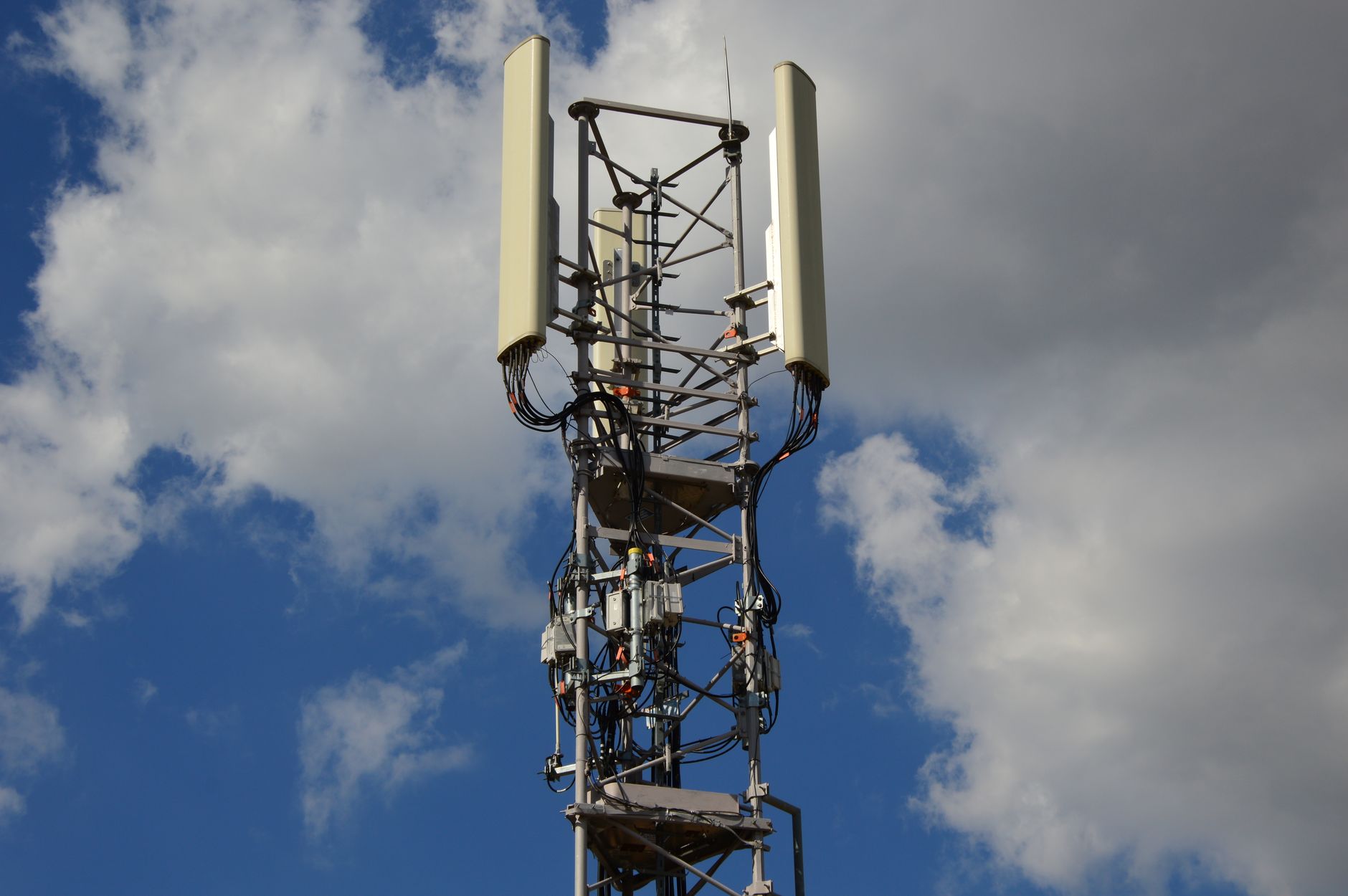
Photo by Ulrick Trappschuh on Pexels
AI-RAN Crosses the Threshold: Optus Claims Tangible Gains on Live 5G Network
For years, Artificial Intelligence applied to Radio Access Networks — commonly abbreviated as AI-RAN — has occupied an awkward middle ground between visionary roadmap slide and deployable technology. That gap appears to be narrowing rapidly. Australian telecommunications operator Optus has emerged as one of the most vocal early adopters reporting real, quantifiable improvements on a live commercial network, achieved in collaboration with infrastructure giant Ericsson. The results, highlighted at the Intelligent RAN Forum, are drawing significant attention from network engineers, vendors, and operators worldwide who have been watching the AI-RAN space with a mixture of cautious optimism and healthy skepticism.
What Optus Actually Achieved — And Why It Matters
The performance gains Optus is reporting span three critical RAN functions: link adaptation, coverage prediction, and coverage compensation. These aren’t peripheral optimizations — they sit at the core of how a modern mobile network manages radio resources and maintains service quality across a diverse and constantly shifting user environment.
Link Adaptation
Link adaptation governs how a base station selects modulation and coding schemes (MCS) for individual user connections based on real-time channel conditions. Traditional algorithms rely on predefined thresholds and channel quality indicators (CQI) reported by devices. AI-driven link adaptation, by contrast, can learn patterns across time, geography, device type, and network load — allowing the RAN to make more precise, proactive decisions that increase throughput while reducing retransmissions. Optus has indicated that deploying machine learning models at this layer produced measurable uplink and downlink throughput improvements without requiring hardware changes.
Coverage Prediction and Compensation
Coverage prediction uses AI models trained on drive test data, crowd-sourced measurements, and network telemetry to map signal quality with greater granularity than traditional planning tools. Where conventional coverage modeling relies heavily on static propagation models, AI-enhanced approaches can account for environmental variables — building reflections, foliage density, seasonal changes — that legacy tools routinely miss. The closely related function of coverage compensation then allows the network to dynamically adjust antenna tilt, transmit power, and beamforming parameters to fill identified gaps. Together, these capabilities allow operators to run tighter, more efficient networks without the costly and time-consuming process of manual RF optimization cycles.
The Ericsson Partnership: Software Intelligence on Existing Infrastructure
Central to Optus’s deployment is Ericsson’s AI-native RAN portfolio, which embeds machine learning models directly into baseband processing software. Rather than requiring a parallel AI compute layer or a rip-and-replace infrastructure overhaul, Ericsson’s approach integrates inference engines into the existing RAN stack — making it possible for operators like Optus to activate AI-driven features through software upgrades on already-deployed radio units and baseband hardware.
This software-centric model is strategically significant. One of the persistent barriers to AI-RAN adoption has been the capital expenditure concern: operators already carrying the debt of massive 5G rollouts are reluctant to invest in additional hardware platforms. By demonstrating live gains on existing infrastructure, the Optus-Ericsson collaboration directly addresses that objection and lowers the commercial risk threshold for other operators considering similar moves.
Scaling Remains the Defining Challenge
Despite the encouraging results, industry observers are quick to note that demonstrating AI-RAN gains on a subset of sites is a fundamentally different challenge from scaling those capabilities across tens of thousands of cells in a heterogeneous, multi-band, multi-layer network. Data pipeline integrity, model drift, retraining cadences, and the computational overhead of running inference at the cell level all become exponentially more complex at national scale.
There’s also the question of model generalization. An AI model trained on Optus’s Australian network topology — shaped by specific geographic features, device ecosystems, and traffic patterns — may not transfer cleanly to another operator’s environment without significant retraining. This raises longer-term questions about whether AI-RAN will ultimately be characterized by vendor-managed, continuously updated cloud models, or whether operators will develop in-house AI competencies to maintain control over their network intelligence.
Standardization bodies including 3GPP and the O-RAN Alliance are actively developing frameworks to address interoperability and data exposure requirements for AI-RAN, but the standards landscape remains a work in progress. O-RAN’s AI/ML workflow in the RIC (RAN Intelligent Controller) architecture continues to evolve, and aligning vendor implementations with open interfaces is an ongoing industry effort.
Industry Outlook: From Early Adopter to Mainstream Deployment
The Optus announcement is part of a broader acceleration visible across the global operator community. Carriers in Europe, Asia-Pacific, and North America are all advancing AI-RAN trials, with use cases expanding beyond link adaptation and coverage optimization into energy savings, predictive maintenance, traffic steering, and even security anomaly detection. Nokia, Huawei, and Samsung are all advancing comparable AI-native RAN capabilities alongside Ericsson, signaling that AI integration is fast becoming a baseline competitive differentiator rather than a premium add-on.
For the telecom industry, the Optus results represent more than a single operator’s success story. They serve as a proof point that AI-RAN is transitioning from experimental technology to operational reality — one that can deliver measurable ROI on existing network assets. As more live-network data accumulates and deployment playbooks mature, the conversation is shifting from “can AI improve RAN performance?” to “how quickly can we scale it, and who owns the intelligence that runs our networks?” Those are questions the industry will be answering in earnest over the next two to three years.
