
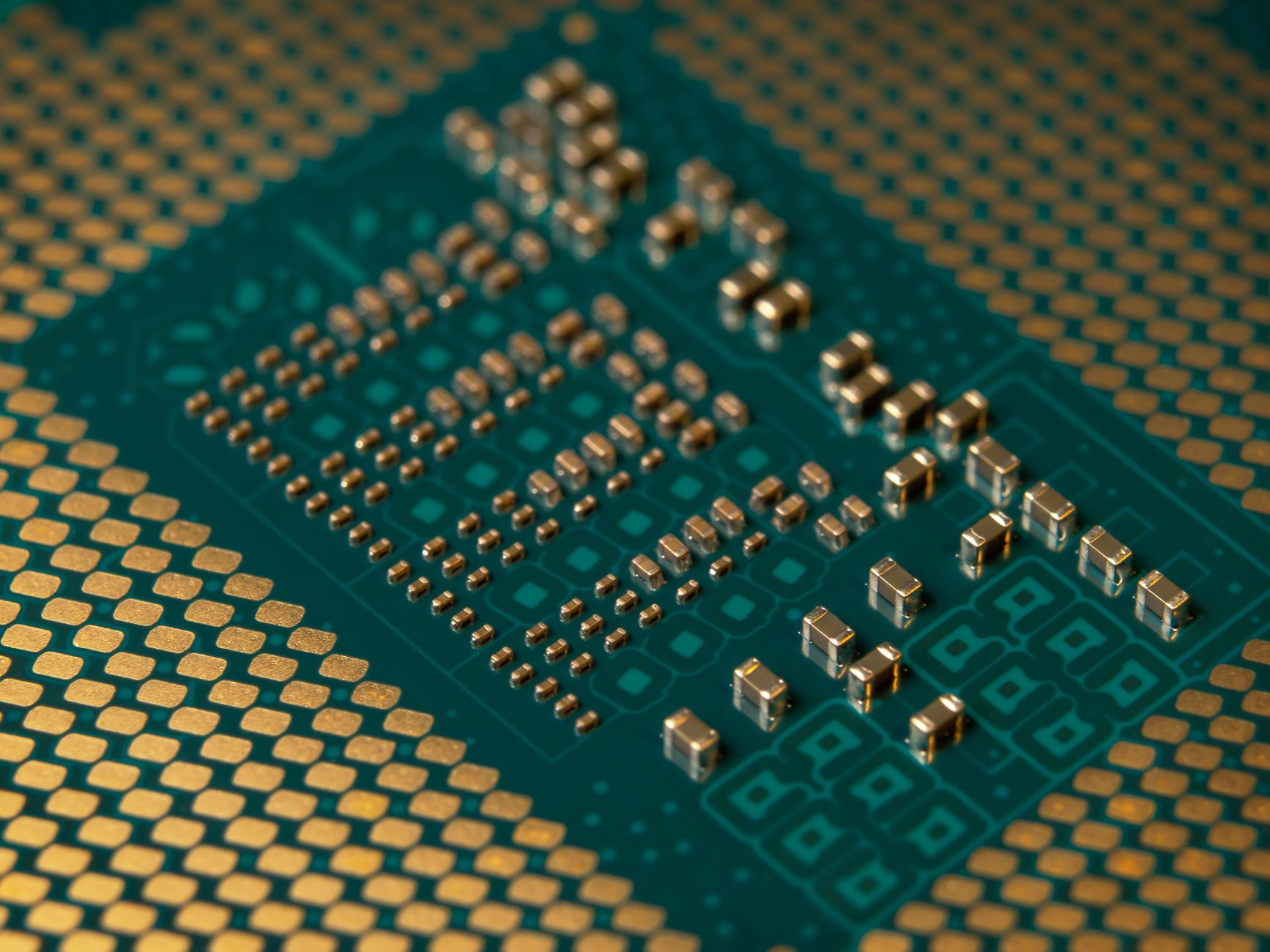
Photo by ed br on Pexels
From Pilot to Production: Rebellions’ ATOM-Max Chips Go Live at Scale
South Korean AI chip startup Rebellions has reached a pivotal commercial milestone, with its ATOM-Max neural processing units (NPUs) now actively powering four distinct consumer-facing artificial intelligence services at SK Telecom, one of South Korea’s largest and most technologically ambitious telecommunications carriers. The transition from pilot program to full production deployment marks a critical inflection point not just for Rebellions as a company, but for the broader ambition of building a competitive, homegrown AI semiconductor ecosystem in South Korea and across Asia.
The move is being watched closely across the global telecom and semiconductor industries. As carriers worldwide accelerate their investments in AI-driven services — from intelligent network management to personalized customer experiences — the question of which chips will power those services is becoming as strategically important as the services themselves.
What Is ATOM-Max and Why Does It Matter?
Rebellions’ ATOM-Max is the company’s flagship high-performance NPU, purpose-built for inference workloads — the process by which a trained AI model generates responses or predictions in real time. Unlike training chips that require enormous compute clusters running for days or weeks, inference chips must deliver low latency and high throughput under live production conditions, often handling millions of requests simultaneously.
This makes inference silicon an especially demanding proving ground. ATOM-Max is designed to handle large language model (LLM) inference efficiently, targeting the kind of AI assistant, recommendation, and conversational AI workloads that consumer-facing telecom services increasingly rely on. The chip competes in a space currently dominated by NVIDIA’s H100 and A100 GPUs, as well as emerging inference-focused silicon from companies like Groq, Cerebras, and Amazon’s Trainium and Inferentia lines.
Rebellions has positioned ATOM-Max as offering competitive performance-per-watt ratios for LLM inference tasks, a critical metric for operators who must balance AI capability against data center power and cooling costs — expenses that have ballooned industry-wide as AI adoption accelerates.
SK Telecom’s AI Ambitions Provide the Perfect Launchpad
SK Telecom has been one of the most aggressive telecom operators globally in building out AI-native services. The carrier operates its own AI assistant platform, A., and has made significant investments in AI infrastructure, partnerships, and research. Its relationship with Rebellions reflects a broader strategic push to reduce dependence on foreign chip suppliers — a priority that has intensified following global semiconductor supply chain disruptions and growing geopolitical tensions around chip technology access.
The four live services now running on ATOM-Max infrastructure represent real-world consumer touchpoints — including AI-powered conversational interfaces and personalization engines — giving Rebellions production-grade validation that no benchmark test can replicate. For a chip company that only a few years ago was operating largely in research and development mode, deployment at this scale within a Tier 1 carrier environment is a remarkable commercial signal.
Telecom Operators as AI Infrastructure Partners
The SK Telecom–Rebellions relationship also illustrates an emerging model in the telecom industry: carriers becoming active participants in AI infrastructure development rather than passive consumers of third-party cloud AI services. By deploying domestic NPU hardware, SK Telecom gains greater control over data sovereignty, latency optimization, and cost management — all critical factors when running AI inference at carrier scale.
This model is gaining traction globally. Carriers including Deutsche Telekom, NTT, and SoftBank have made similar moves to invest in or partner with AI chip and platform companies, seeking to internalize more of the AI value chain rather than ceding it entirely to hyperscalers like Microsoft Azure, Google Cloud, or AWS.
The Competitive Landscape: David vs. Goliath in AI Silicon
Rebellions is not operating in a vacuum. The global AI chip market remains heavily tilted toward NVIDIA, which controls an estimated 70–90% of the AI accelerator market depending on the segment. However, inference workloads represent a growing opportunity for challengers, particularly those with optimized architectures and strong regional partnerships.
South Korea’s government has also backed domestic semiconductor development as a national priority, providing a supportive policy environment for companies like Rebellions. With Samsung and SK Hynix as world-leading memory chip manufacturers, the country has the foundational infrastructure to support a more complete domestic AI silicon ecosystem — though the logic chip space remains a tougher climb.
It’s also worth noting that Rebellions announced a merger agreement with Sapeon, SK Telecom’s own in-house AI chip subsidiary, earlier this year. That consolidation, if completed, would create a more formidable combined entity with deeper integration across SK Telecom’s infrastructure stack — potentially accelerating deployment timelines and broadening the range of AI services that run on domestic silicon.
Industry Outlook: A Signal for Global Telecom AI Infrastructure
The successful production deployment of Rebellions’ ATOM-Max across SK Telecom’s consumer AI services sends a clear message to the global telecom industry: purpose-built NPU silicon from non-incumbent vendors can reach production viability at carrier scale. As telecom operators worldwide grapple with the cost and complexity of running AI inference workloads, the appetite for competitive, efficient, and strategically aligned chip alternatives will only grow.
For Rebellions, the SK Telecom deployment is both a commercial proof point and a reference architecture for future carrier customers. The next 12 to 18 months will be telling — whether the company can expand deployments, attract additional carrier partners, and scale manufacturing will determine whether this milestone represents the beginning of a genuine NVIDIA challenger or a successful but localized niche play. Either way, the era of telecom-native AI silicon has clearly arrived.
