
Photo by Ivan Chumak on Pexels
Ericsson Makes Its Case for Custom Silicon in the AI-RAN Race
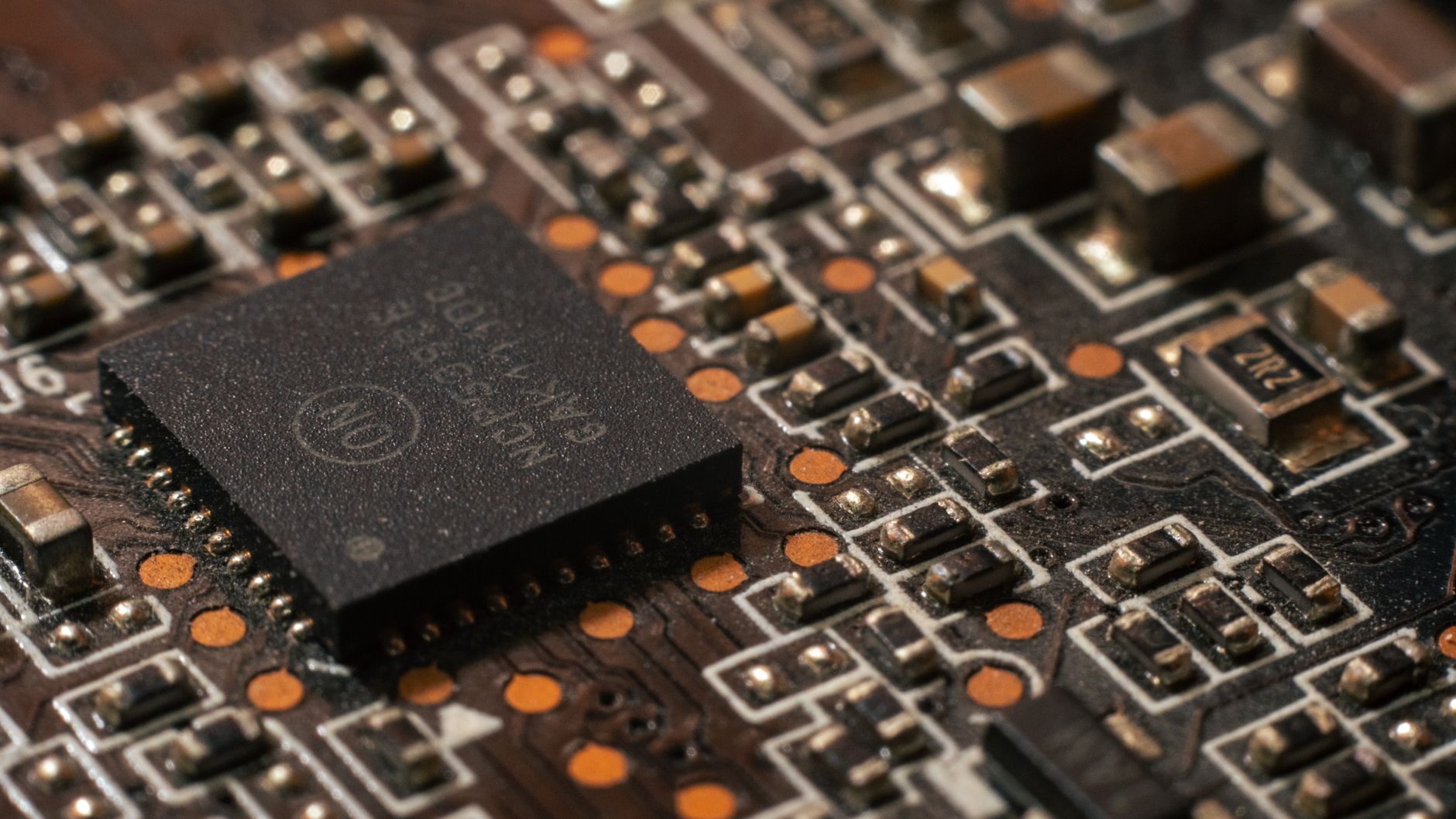
In an industry increasingly captivated by the promise of AI-native radio access networks, Ericsson is staking its claim — and its reputation — on custom application-specific integrated circuits (ASICs) as the foundational technology for delivering real-world AI-RAN value. Per Narvinger, Head of Networks at Ericsson, has come out swinging in defense of the company’s silicon strategy, pointing to tangible performance gains already being realized while carefully leaving the door open for GPU-based architectures down the road.
The debate over the right processing architecture for AI-RAN is one of the most consequential technology decisions facing the telecommunications industry today. And Ericsson, with its massive global installed base and R&D muscle, carries significant weight when it takes a definitive position — even a nuanced one.
The Custom ASIC Advantage: Speed, Power, and Efficiency
At the heart of Ericsson’s argument is a simple but powerful claim: custom ASICs are delivering results now. Narvinger has pointed to spectrum efficiency improvements of approximately 10% as evidence that purpose-built silicon optimized for AI inference workloads in the RAN is not just a theoretical exercise — it’s a commercially viable, deployable reality.
This is a significant distinction in a market often clouded by forward-looking hype. Spectrum efficiency is one of the most prized metrics in wireless networks, directly translating to greater network capacity, improved user experience, and better return on infrastructure investment for operators. A 10% improvement, delivered at scale across a global network, represents a meaningful and measurable competitive advantage.
Custom ASICs offer several inherent advantages over general-purpose processors like GPUs when deployed in RAN environments. First, they are designed from the ground up for specific computational tasks — in this case, the tight real-time processing loops that define radio signal processing and AI-driven beamforming, scheduling, and interference management. Second, ASICs deliver dramatically better power efficiency, a critical consideration as operators face mounting pressure to reduce energy consumption and carbon footprints. Third, their deterministic performance characteristics are well-suited to the low-latency demands of 5G and future 6G networks.
Why This Matters for Operators
For mobile network operators already navigating complex capex cycles and uncertain monetization paths for 5G, the ASIC argument resonates on practical grounds. Deploying AI capabilities that require massive GPU clusters — with their associated power demands, cooling requirements, and cost profiles — introduces significant operational complexity. Custom silicon embedded within existing radio unit architectures offers a more familiar, manageable upgrade path.
Ericsson’s strategy aligns closely with operators’ desire to extract more value from current infrastructure investments rather than undertaking wholesale architectural transformations. If AI-RAN gains can be achieved through silicon-level enhancements to existing base station hardware, the business case becomes considerably more straightforward.
Keeping the GPU Door Open: A Strategic Hedge
Despite the robust defense of its ASIC-first approach, Ericsson is notably careful not to dismiss GPUs entirely. Narvinger’s comments signal that the company views its current strategy not as a permanent ideological commitment, but as the most pragmatic path to near-term value — with GPU integration remaining a viable future option as the technology and use cases mature.
This is a shrewd position. The GPU ecosystem, led by NVIDIA, has become extraordinarily powerful in the AI space, and the O-RAN movement has catalyzed interest in more open, disaggregated RAN architectures where GPU-accelerated centralized processing could play a larger role. Companies like NVIDIA itself, along with hyperscalers such as Microsoft and AWS, have been actively courting telecom operators with GPU-based AI-RAN solutions, promising transformative capabilities in areas like predictive interference mitigation, dynamic spectrum sharing, and autonomous network optimization.
By acknowledging GPUs as a future option, Ericsson avoids painting itself into a corner in what remains a rapidly evolving technical landscape. It’s a classic platform strategy: establish leadership with a proven, optimized solution today while retaining the flexibility to integrate emerging technologies as they prove their value in production environments.
Competitive Landscape: How Does Ericsson Stack Up?
Ericsson’s ASIC-driven AI-RAN strategy stands in contrast to approaches being explored by some competitors and new entrants. Nokia has been investing in its ReefShark system-on-chip family with AI capabilities, while simultaneously exploring cloud-native RAN architectures. Meanwhile, open RAN proponents continue to advocate for software-defined, hardware-agnostic approaches that could theoretically leverage commodity GPUs or custom accelerators interchangeably.
The competitive dynamics also extend to hyperscaler partnerships. Operators in North America, Europe, and Asia-Pacific are actively evaluating AI-RAN roadmaps from multiple vendors, making Ericsson’s ability to demonstrate concrete, measurable results — rather than just compelling roadmaps — a genuine differentiator in sales conversations.
Looking Ahead: The AI-RAN Inflection Point
The broader AI-RAN market is approaching a critical inflection point. Analyst firm Dell’Oro Group has projected substantial growth in AI-enabled RAN infrastructure over the next five years, with multiple architectural approaches likely coexisting as operators balance performance, cost, and vendor relationships.
Ericsson’s dual narrative — ASIC strength today, GPU optionality tomorrow — may prove to be exactly the right message for an operator community that values proven technology while keeping a watchful eye on the horizon. If the company can continue to demonstrate real-world efficiency gains at scale, its custom silicon strategy could become the reference standard against which all AI-RAN claims are measured.
In an industry where the gap between vendor promises and network reality is often uncomfortably wide, Ericsson’s emphasis on deployable, measurable AI-RAN value through custom silicon is a bold and potentially market-defining bet. The next 18 to 24 months will be telling — for Ericsson, its competitors, and the operators betting their network evolution strategies on whoever gets AI-RAN right first.
