
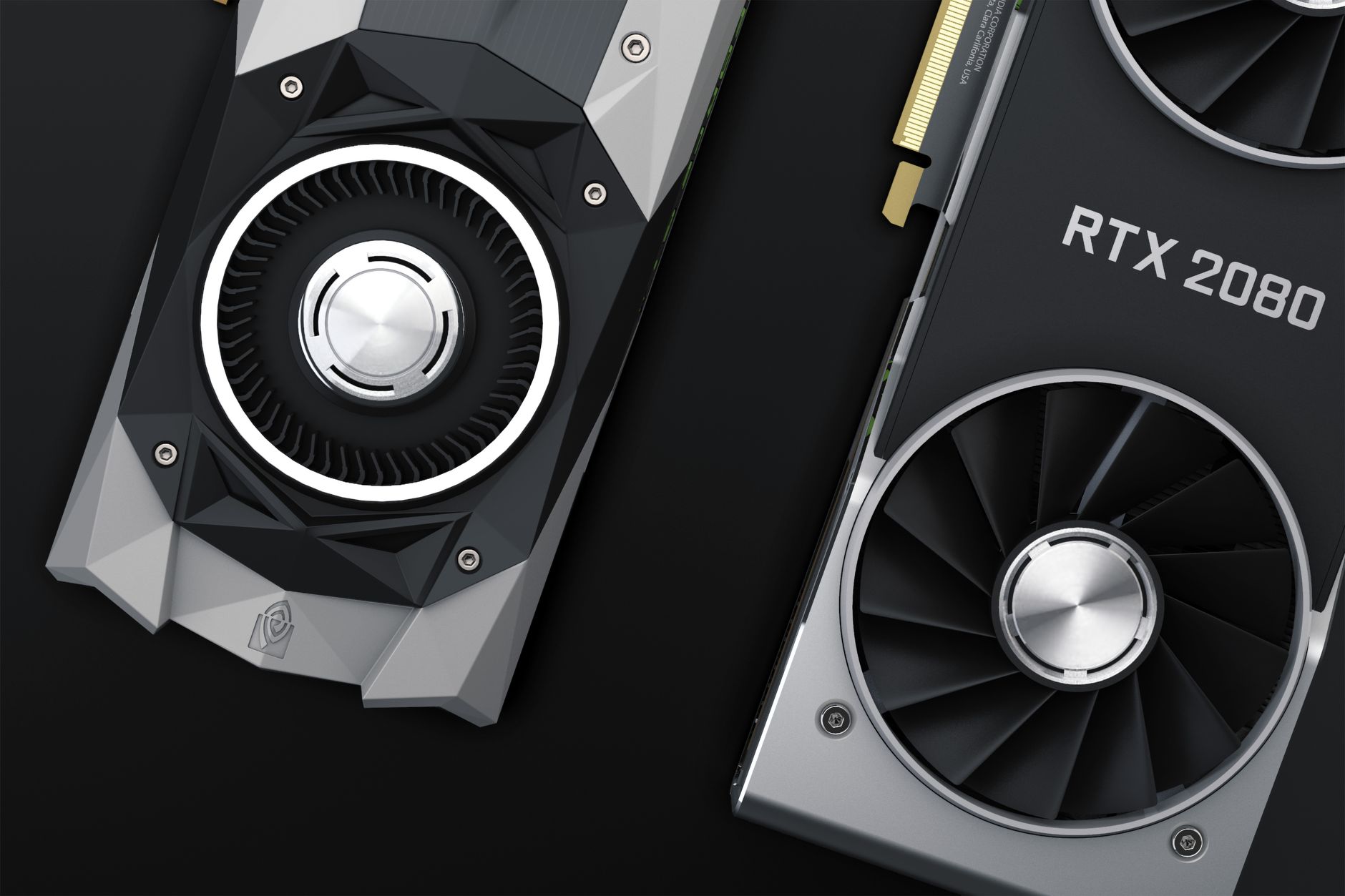
Photo by Nana Dua on Pexels
India’s Boldest AI Bet Yet: 20,000 NVIDIA Rubin GPUs Head East
In what is shaping up to be one of the most significant artificial intelligence infrastructure deals in Asia-Pacific history, NVIDIA is shipping 20,000 of its next-generation Rubin GPUs to India, destined for AM Intelligence — a company backed by the high-profile team behind Greenko, one of India’s largest renewable energy firms. The order underscores a seismic shift in how India is positioning itself on the global AI map, moving from a nation known primarily for IT services outsourcing to a serious contender in sovereign AI compute infrastructure.
The scale of this deployment is staggering. To put it in context, many hyperscale data center operators in mature markets like the United States and Europe have taken years to accumulate GPU clusters of this magnitude. India appears to be attempting to compress that timeline dramatically — and with NVIDIA’s most advanced silicon no less.
What Makes the Rubin GPU a Game-Changer?
NVIDIA’s Rubin architecture represents the company’s next evolutionary step beyond the current Blackwell generation. While full technical specifications remain partially under wraps, early disclosures from NVIDIA suggest the Rubin platform will deliver substantial improvements in memory bandwidth, interconnect speeds, and energy efficiency — all critical metrics for large-scale AI model training and inference workloads.
The Rubin GPU is expected to feature HBM4 memory, delivering significantly higher memory bandwidth than its predecessors, and will be paired with NVIDIA’s NVLink 6 interconnect fabric, enabling tighter GPU-to-GPU communication in dense cluster configurations. For AI training at scale — the kind of workloads required to develop frontier large language models (LLMs) and multimodal AI systems — these specifications translate directly into faster iteration cycles and lower operational costs per AI model trained.
Why HBM4 and NVLink 6 Matter for India’s AI Ambitions
Memory bandwidth has long been the bottleneck in large model training. HBM4 is projected to push bandwidth figures well beyond 4 TB/s per stack, allowing AI workloads to feed data to compute cores at unprecedented rates. Combined with NVLink 6’s enhanced chip-to-chip communication, a 20,000-GPU cluster built on Rubin architecture would theoretically rival the compute capacity of some of the world’s most powerful AI supercomputers — a remarkable proposition for a nation that, just five years ago, had minimal sovereign AI compute infrastructure.
AM Intelligence and the Greenko Connection
AM Intelligence is not a household name yet, but its backers certainly are. The company is supported by the founders and key stakeholders of Greenko Group, an Indian renewable energy giant with over 9 GW of clean energy capacity across wind, solar, and pumped hydro projects. That lineage is strategically important: powering a 20,000-GPU AI cluster at full utilization consumes enormous amounts of electricity — by some estimates, clusters of this size can draw 50–100 megawatts or more depending on workload density and cooling infrastructure.
Having access to Greenko’s renewable energy ecosystem could give AM Intelligence a significant competitive advantage in both operational cost management and sustainability credentials — increasingly important factors as global enterprises scrutinize the carbon footprint of the AI services they consume. This energy-AI nexus could become a defining feature of India’s AI infrastructure value proposition on the world stage.
Telecom Implications: AI at the Network Edge
For telecom professionals, this development is more than a data center story. India’s rapid accumulation of large-scale GPU compute has direct implications for the evolution of AI-native networks — a concept that is gaining serious traction as carriers globally prepare for 6G standardization discussions and next-generation RAN architectures.
Large GPU clusters located within India can accelerate the development and fine-tuning of AI models purpose-built for telecom applications: network optimization, predictive maintenance, AI-driven spectrum management, and real-time traffic engineering. Indian carriers like Reliance Jio, Airtel, and BSNL stand to benefit from having sovereign AI compute infrastructure that can be leveraged without the latency, regulatory complexity, or data sovereignty concerns associated with offshoring AI workloads to US or European cloud providers.
Data Sovereignty: A Strategic Imperative
India’s government has been vocal about its desire for data localization and AI sovereignty. A domestic GPU cluster of this scale gives Indian enterprises and government agencies a viable alternative to Western hyperscale clouds for sensitive AI workloads — a factor that will resonate strongly in sectors like defense, telecommunications, healthcare, and financial services.
India in the Global AI Race: Catching Up Fast
The geopolitical dimensions of this deal should not be overlooked. The United States, China, and the European Union are all engaged in an increasingly competitive race to secure AI compute dominance. India’s emergence as a significant player — with government initiatives like IndiaAI Mission committing billions toward AI infrastructure — signals that the subcontinent intends to be a principal, not a peripheral, actor in the AI era.
NVIDIA, for its part, has been actively expanding its partnerships across Asia, recognizing that the next wave of AI compute demand will come not just from Silicon Valley hyperscalers but from emerging economies with massive digital populations and ambitious national AI agendas. India, with 1.4 billion people and one of the world’s fastest-growing digital economies, represents exactly that opportunity.
Industry Outlook
Analysts tracking the global AI infrastructure buildout suggest that India could emerge as one of the top five nations by sovereign AI compute capacity within the next three to five years if current investment trajectories continue. The AM Intelligence-NVIDIA deal may well be remembered as the inflection point — the moment India stopped talking about AI ambition and started building the physical infrastructure to back it up. For the global telecom and technology community, one message is increasingly clear: India is no longer just a market. It is becoming a maker.
