
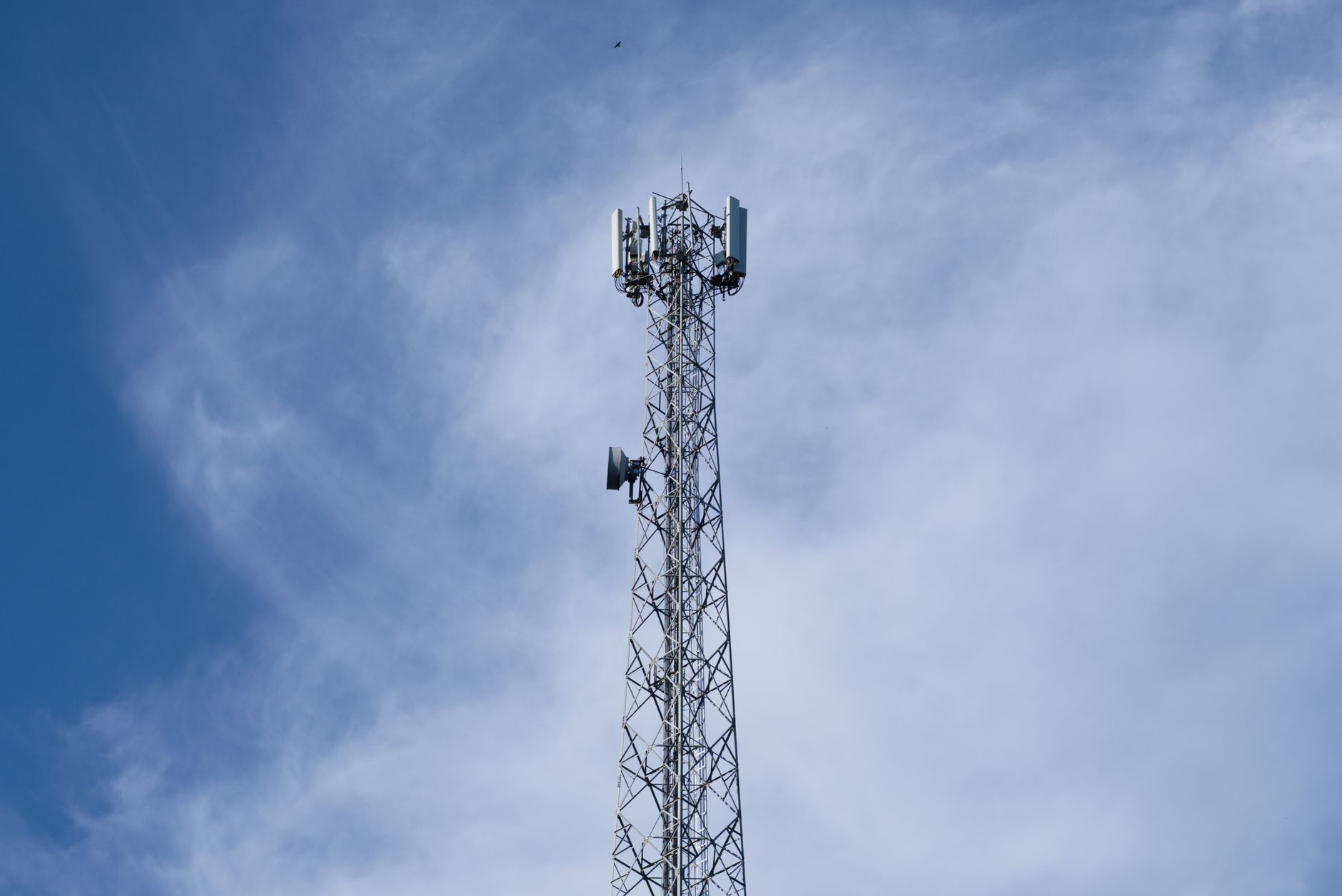
Photo by Qeis Ismail on Pexels
Verizon Doubles Down on Fundamentals as Satellite Hype Reaches Fever Pitch
In an industry increasingly captivated by the promise of low-earth orbit satellite connectivity and the relentless SpaceX Starlink publicity machine, Verizon is taking a notably different tone. The nation’s largest wireless carrier by revenue is drawing a sharp line in the sand, dismissing what it characterizes as inflated satellite internet expectations while pointing to its own methodical, infrastructure-driven execution as the only credible path forward.
The message from Verizon’s leadership has been blunt and unambiguous: there is no magic wand, no secret sauce, and no shortcut when it comes to building and sustaining a world-class communications network. And if the company’s latest financial results are any indication, the market is beginning to reward that philosophy.
Three Straight Quarters of Raised Guidance — and Counting
Verizon raised its full-year guidance for the third consecutive quarter, a streak that underscores a company operating with growing confidence in its strategic direction. While competitors and analysts have occasionally questioned Verizon’s pace on fixed wireless access (FWA) buildout and its C-band 5G deployment timeline, the carrier has responded by quietly and consistently delivering improving numbers.
Wireless service revenue growth, broadband net additions, and FWA subscriber momentum have all trended positively, reinforcing the argument that Verizon’s patient capital-allocation approach — prioritizing network quality over aggressive promotional spending — is gaining traction with both consumers and enterprise customers.
Fixed wireless access continues to be a particular bright spot. Verizon has added millions of FWA subscribers by leveraging its mid-band C-band spectrum assets, delivering home broadband speeds competitive with cable in many markets. That growth directly challenges the narrative that only satellite can serve the nation’s underserved and rural broadband needs.
The SpaceX Reality Check
Starlink has undeniably been a disruptive force in global connectivity conversations. SpaceX’s constellation now serves millions of subscribers across more than 100 countries, and its direct-to-cell partnership announcements with carriers like T-Mobile have generated significant industry buzz. But Verizon’s leadership is urging the industry not to conflate headline-grabbing demonstrations with ground-level network reliability, capacity, and economics.
The technical limitations of LEO satellite networks remain real and meaningful for dense urban and suburban environments. Latency, while dramatically improved from geostationary satellite predecessors — Starlink averages roughly 20-40ms compared to 600ms+ for traditional GEO systems — still lags behind terrestrial fiber-backed 5G networks. Capacity constraints in high-density population centers remain a structural challenge for satellite architectures, which are inherently spectrum-limited per orbital slot.
Verizon’s argument, essentially, is that satellite fills genuine coverage gaps in truly remote areas but does not represent an existential threat to well-capitalized terrestrial network operators with deep mid-band spectrum holdings and established infrastructure. The nuance matters: supplemental versus replacement technology is not a semantic distinction — it is a business model one.
$4 Billion AI Infrastructure Play Signals Verizon’s Next Chapter
Perhaps the most strategically significant development beneath the Starlink debate is Verizon’s reported signing of approximately $4 billion in AI infrastructure agreements. This positions the carrier not merely as a connectivity pipe but as an active participant in the AI infrastructure buildout sweeping the technology sector.
Hyperscale cloud providers, enterprise AI deployments, and edge computing platforms all share a common dependency: ultra-low latency, high-throughput connectivity. Verizon’s dense 5G network — particularly its ultra-wideband mmWave deployments in major metro areas and its expanding C-band mid-band footprint — is structurally well-suited to serve as the connectivity backbone for AI-driven workloads at the network edge.
This move echoes a broader industry trend in which major carriers are repositioning themselves as essential infrastructure partners in the AI economy rather than fighting a purely defensive battle against over-the-top competitors and satellite upstarts. For Verizon, the AI infrastructure pivot provides a high-margin, enterprise-focused revenue stream that complements its consumer wireless and broadband businesses.
The Broader Industry Implication
Verizon’s posture raises a question every major telecom operator is quietly wrestling with: how do you compete in an era of narrative-driven hype cycles without losing sight of the long-term network investments that actually determine competitive outcomes?
T-Mobile has aggressively leaned into its Starlink partnership to address rural coverage perception gaps. AT&T has focused heavily on fiber-first broadband expansion. Verizon, meanwhile, is making the case that C-band 5G plus FWA plus enterprise AI infrastructure is its own coherent and durable strategy — one built on physics, spectrum economics, and capital discipline rather than partnerships designed primarily to generate press releases.
What Comes Next
Analysts will be watching closely whether Verizon can sustain its guidance improvement trajectory into 2025 as competition for FWA subscribers intensifies and cable operators including Charter and Comcast mount increasingly sophisticated MVNO-backed wireless counterattacks. The AI infrastructure revenue pipeline will also face scrutiny — $4 billion in signed agreements is meaningful, but execution and margin profile will determine its ultimate strategic value.
What is clear is that Verizon is placing a deliberate, confidence-laden bet: that the telecommunications industry’s future belongs to operators who build relentlessly, invest in spectrum, and resist the temptation to chase every shiny object in orbit. In an age of satellite hype and AI-driven disruption narratives, “no shortcut” may be the most contrarian — and most compelling — strategy in wireless.
