
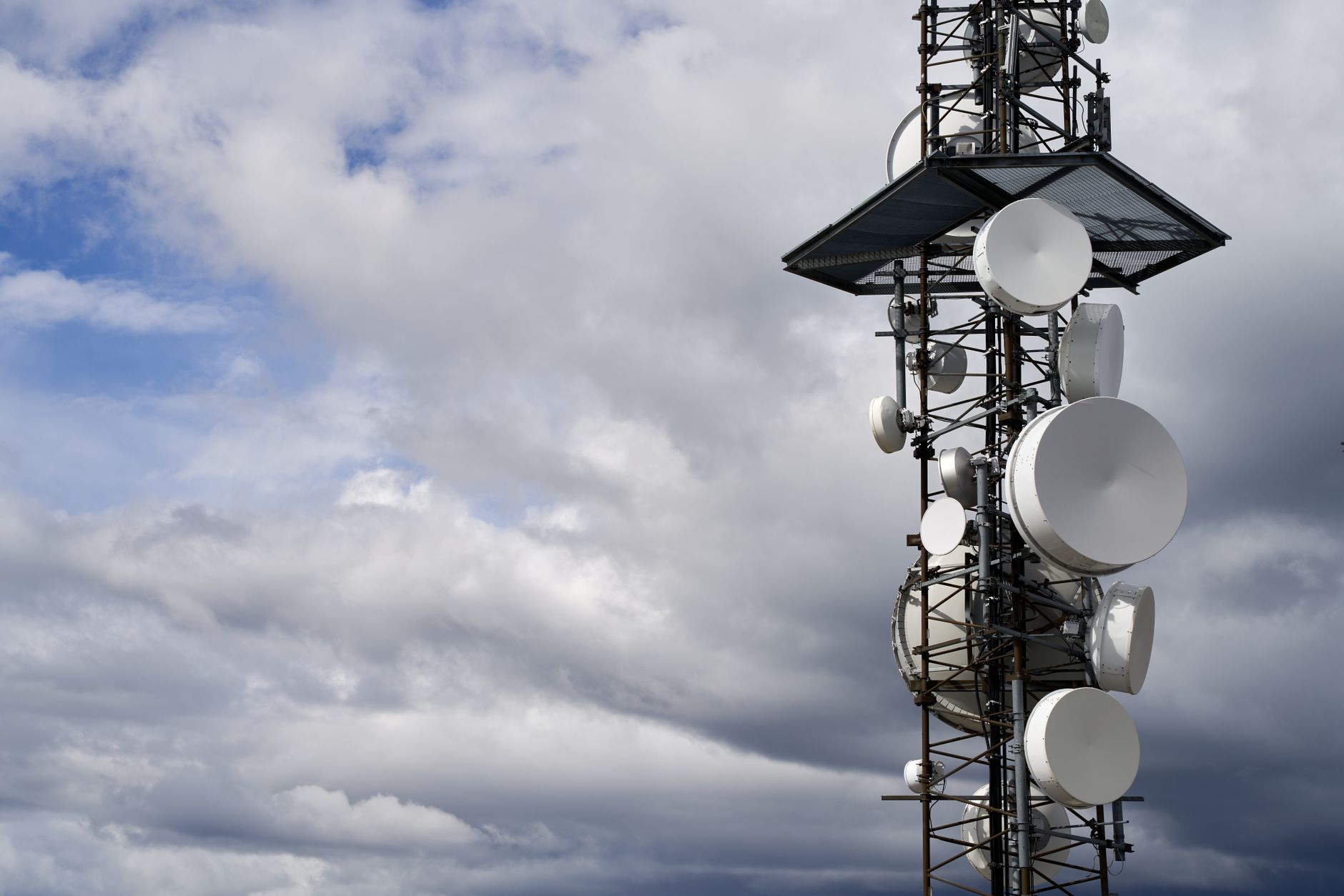
Photo by Barnabas Davoti on Pexels
The Sensing Revolution Exposing a Decades-Old Blind Spot
For decades, wireless engineers have designed, tested, and deployed cellular networks using standardized statistical channel models — mathematical frameworks that describe how radio signals propagate in “average” environments. Models like 3GPP’s TR 38.901 or the ITU-R family of standards have served the industry well through 3G, 4G, and even much of 5G’s rollout. But as the industry accelerates toward 6G, a fundamentally new capability is exposing the limits of this well-worn approach: Integrated Sensing and Communications, or ISAC.
Unlike traditional cellular systems that treat the physical environment purely as a source of interference or multipath distortion to be mitigated, ISAC-enabled 6G radios will actively interrogate that environment — bouncing signals off objects, surfaces, and even people to extract precise spatial and motion data. It’s this dual-function nature that is rendering statistical averaging not just imprecise, but potentially unworkable for next-generation system design.
What Statistical Models Were Built to Do — And Why ISAC Changes Everything
Statistical channel models are built on large-scale empirical measurements aggregated across many environments to produce “typical” propagation behavior. For communications-only systems, this approach is highly practical: a base station doesn’t need to know exactly where a wall is located — it just needs to deliver reliable data throughput in the presence of whatever multipath the environment creates. Averaged behavior is good enough when the goal is bit delivery.
ISAC flips this logic entirely. A 6G radio node performing environmental sensing needs to resolve physical objects with centimeter-level or even sub-centimeter accuracy. Whether a radar return is caused by a moving pedestrian, a parked vehicle, or a structural column in a factory hall isn’t an abstraction — it’s precisely the information the system is designed to extract. In this context, the “average” propagation environment described by statistical models is not just insufficient; it’s actively misleading.
“When you’re sensing the environment, you’re not trying to average it away — you’re trying to characterize it exactly,” is the core challenge researchers in the ISAC field consistently articulate. The channel is no longer just a medium to transmit through; it becomes the object of measurement itself.
Site-Specific Modeling: The Physics-Based Alternative
The solution gaining serious traction in the 6G research community is site-specific channel modeling, also called deterministic or physics-based channel modeling. Rather than relying on statistical distributions, these approaches use detailed geometric descriptions of a real or realistic environment — building layouts, material properties, surface geometries — combined with ray-tracing algorithms to simulate how electromagnetic waves actually propagate through a specific space.
Ray-tracing tools can account for reflection, diffraction, scattering, and transmission losses at the level of individual surfaces, producing a channel model that mirrors what a real radio would observe in that precise location. For ISAC system design, this fidelity is non-negotiable: sensing performance — including angular resolution, range accuracy, and clutter discrimination — is exquisitely sensitive to the specific geometry of a deployment environment.
The Computational Cost Challenge
The catch, of course, is computational complexity. Site-specific ray-tracing is orders of magnitude more resource-intensive than evaluating a statistical distribution. Generating a single high-fidelity channel realization for a complex urban or industrial environment can require significant processing time, making large-scale Monte Carlo simulations — the bread and butter of statistical model-based system design — expensive or impractical without purpose-built infrastructure.
This is where AI and machine learning are beginning to play a pivotal supporting role. Researchers are increasingly exploring neural network-based channel emulators that are trained on ray-traced datasets, enabling rapid generation of physically realistic channel realizations without re-running the full simulation for every scenario. This hybrid approach — physics-grounded, AI-accelerated — may define the standard methodology for 6G ISAC channel research through the remainder of this decade.
Industry and Standardization Implications
The shift toward site-specific modeling has significant implications for how 6G standards will be developed and validated. The 3GPP and ITU-R processes that underpin global cellular standards have historically relied on agreed-upon statistical models to ensure that different vendors’ equipment can be evaluated on a common baseline. If ISAC performance can only be meaningfully assessed in site-specific contexts, standard bodies will face hard questions about how to define reference environments that are both representative and reproducible.
Early signs suggest that 6G standards work — still in its pre-normative phase, with ITU-R IMT-2030 framework documents providing high-level direction — will need to define a family of canonical site-specific reference environments rather than a single statistical model. Expect industrial halls, dense urban street canyons, indoor office scenarios, and vehicular environments to each receive dedicated treatment in future 3GPP study items focused on ISAC channel modeling.
Vendor and Ecosystem Readiness
For equipment manufacturers and network operators, this transition demands early investment in ray-tracing simulation capability and high-fidelity digital twin infrastructure. Companies like Ericsson, Nokia, Huawei, Samsung, and a growing number of specialist simulation software firms are already positioning their digital twin platforms as foundational tools for 6G planning — not just for ISAC, but for the broader goal of AI-native network optimization that 6G envisions.
Outlook: Accuracy as the New Currency
The 6G era will demand a fundamental philosophical shift in how the wireless industry approaches channel modeling: from statistical comfort to physical accuracy. As radios evolve from passive communicators to active environmental sensors, the environments they operate in can no longer be abstracted into convenient mathematical distributions. The specific geometry of a warehouse, a stadium concourse, or a smart city intersection will matter — measurably and consequentially — to whether an ISAC system meets its performance targets.
The good news is that the tools to meet this challenge — from advanced ray-tracing engines to AI-driven channel emulation and high-resolution digital twins — are maturing rapidly. The harder work is embedding these tools into the standards, benchmarking processes, and engineering workflows of a global industry accustomed to the simplicity of statistical averages. That cultural and methodological transition may prove to be as significant as the technology shift itself.
