
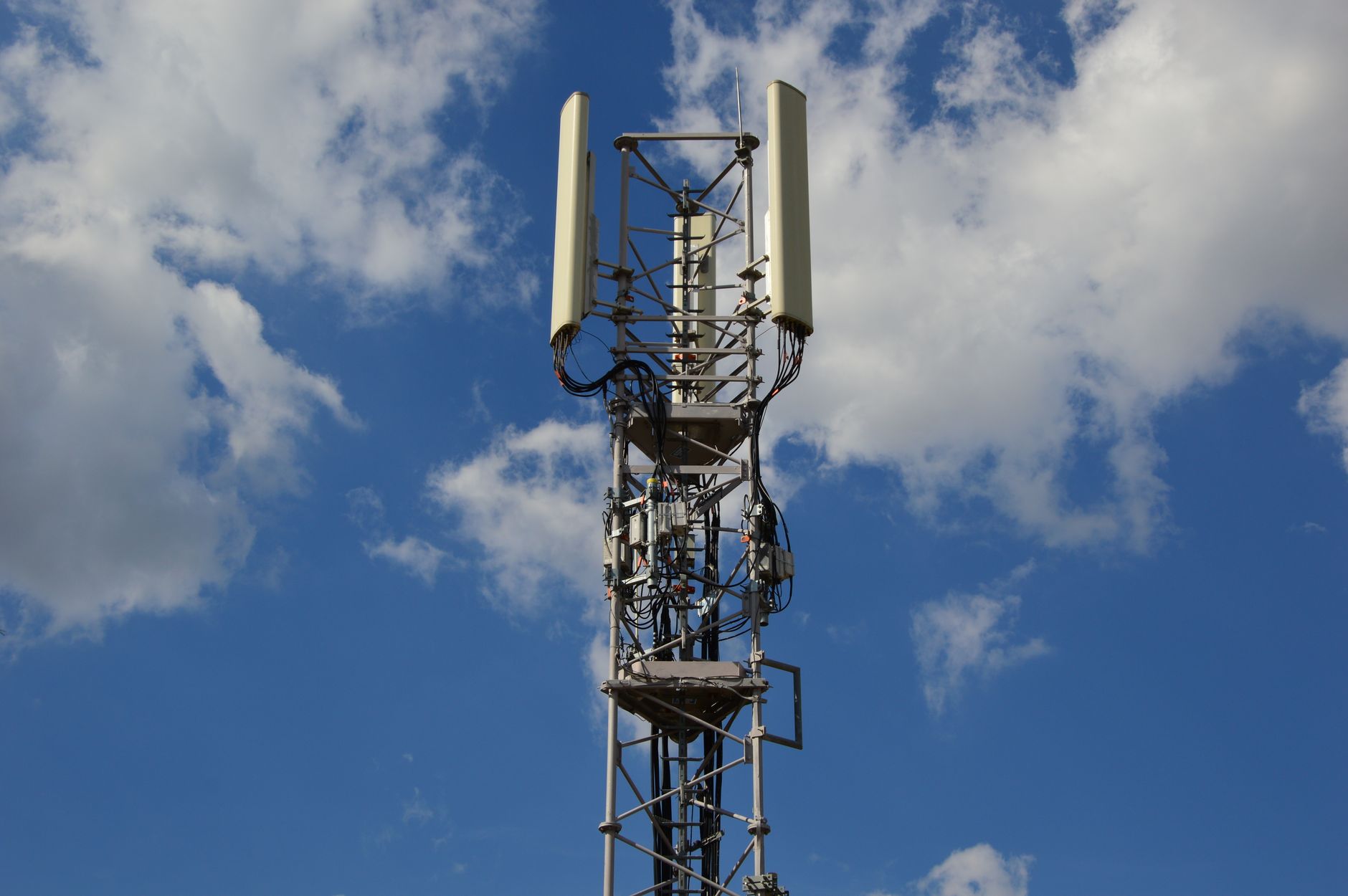
Photo by Ulrick Trappschuh on Pexels
T-Mobile Tops Earnings Estimates and Boosts Full-Year Outlook
T-Mobile US has once again demonstrated why it remains the most closely watched operator in North American wireless, delivering quarterly results that beat analyst forecasts across key metrics and prompting the company to raise its full-year guidance. The results underscore the continued momentum of America’s self-proclaimed “Un-carrier,” which has sustained post-merger integration gains from its 2020 Sprint acquisition while aggressively expanding its lead in 5G coverage and subscriber growth.
Customer additions remained robust, with postpaid phone net adds continuing to outpace rivals AT&T and Verizon. Revenues climbed year-over-year, driven by a combination of higher average revenue per user (ARPU), expanding fixed wireless access (FWA) penetration, and growing enterprise contract wins. The updated full-year guidance reflects management’s confidence that these tailwinds are durable — not merely cyclical.
But the earnings beat was arguably the least interesting part of T-Mobile’s quarter. What captured industry analysts’ attention was the forward-looking narrative the company laid out: a structured, multi-year investment thesis built on three interlocking pillars — spectrum, edge compute, and artificial intelligence.
AI Takes Center Stage in Network Strategy
From Buzzword to Balance Sheet Item
T-Mobile’s leadership made clear that artificial intelligence is no longer a peripheral talking point — it is becoming a core driver of network economics. The company detailed plans to deploy AI and machine learning tools across multiple layers of network operations, from predictive maintenance and automated fault detection to dynamic spectrum allocation and traffic engineering.
On the efficiency side, AI-driven RAN optimization tools are being used to fine-tune antenna configurations, beam management, and interference mitigation in real time — tasks that previously required costly manual drive testing and engineering cycles. The result, according to T-Mobile’s messaging, is meaningful capex and opex savings that allow the operator to do more with its existing infrastructure footprint while simultaneously improving end-user quality of experience (QoE).
Perhaps more strategically significant is T-Mobile’s intention to leverage AI to accelerate its positioning in the enterprise and B2B segments. Network slicing, combined with AI-based service assurance, is increasingly being pitched to large enterprise customers as a differentiated capability — one that competitors running more legacy-laden infrastructure will struggle to replicate quickly.
Spectrum Investment: Fueling the Next Phase of Growth
T-Mobile signaled that it is prepared to spend aggressively in upcoming spectrum auctions to maintain and extend its mid-band 5G advantage. The company’s current holdings in the 2.5 GHz band — inherited largely from the Sprint merger — gave it a significant head start in deploying high-capacity, wide-coverage 5G. However, with the FCC preparing future auctions in bands including the upper 3 GHz range and potential AWS-adjacent allocations, T-Mobile is positioning itself to add depth to its spectrum portfolio.
Industry observers note that mid-band spectrum remains the sweet spot for 5G economics: it offers far greater capacity than low-band while delivering meaningfully better coverage and building penetration than millimeter wave (mmWave). T-Mobile’s willingness to commit future capital to spectrum acquisition suggests it views spectrum depth as a structural moat — not just a technical asset.
Edge Computing: The Next Monetization Frontier
Building the Case for Distributed Infrastructure
The edge computing narrative at T-Mobile is evolving from proof-of-concept to investable infrastructure category. The company referenced ongoing work to build out multi-access edge compute (MEC) capabilities that would enable low-latency application hosting closer to end users — a critical enabler for use cases ranging from industrial automation and autonomous logistics to real-time video analytics and immersive AR/VR experiences.
The economics of edge compute remain a work in progress across the industry, but T-Mobile appears to be betting that owning the compute layer at the network edge — rather than ceding it entirely to hyperscalers like AWS, Microsoft Azure, or Google Cloud — will be essential to capturing enterprise value over the medium term. Partnerships with cloud providers remain part of the picture, but T-Mobile’s language suggests a desire to maintain meaningful infrastructure leverage in these arrangements.
Shareholder Returns and the Capital Allocation Debate
Even as T-Mobile maps out increased infrastructure spending, it continues to balance investor expectations around capital returns. The company reiterated its commitment to share buybacks and has maintained a disciplined approach to its balance sheet post-Sprint integration. Crucially, T-Mobile again deflected any suggestion that it is actively pursuing a major merger or acquisition at this stage — a topic that periodically resurfaces given speculation around consolidation in the U.S. cable and wireless markets.
This dual commitment — invest heavily in the network while returning capital to shareholders — is a tightrope act that will require the AI-driven efficiency gains to materialize as projected. If AI-powered opex savings are real and scalable, the math works. If they prove slower to realize, something will have to give.
Industry Outlook: Setting the Pace for AI-Native Telco
T-Mobile’s mid-term strategy positions it as the closest thing the U.S. has to an AI-native mobile operator — a carrier that is baking intelligence into network design from the ground up rather than retrofitting legacy systems. For the broader telecom industry, that’s a significant benchmark. Rivals AT&T and Verizon are pursuing their own AI and automation initiatives, but T-Mobile’s structural advantages in spectrum depth and a more consolidated network architecture may allow it to move faster and at lower cost.
For telecom professionals watching closely, the key metrics to track over the next several quarters will be whether AI-related opex reductions show up concretely in margin expansion, whether FWA subscriber growth continues to compensate for a maturing postpaid phone market, and how aggressively T-Mobile competes in the next spectrum auction cycle. The Un-carrier’s next act is being written in code, compute, and spectrum — and the industry is paying close attention.
