
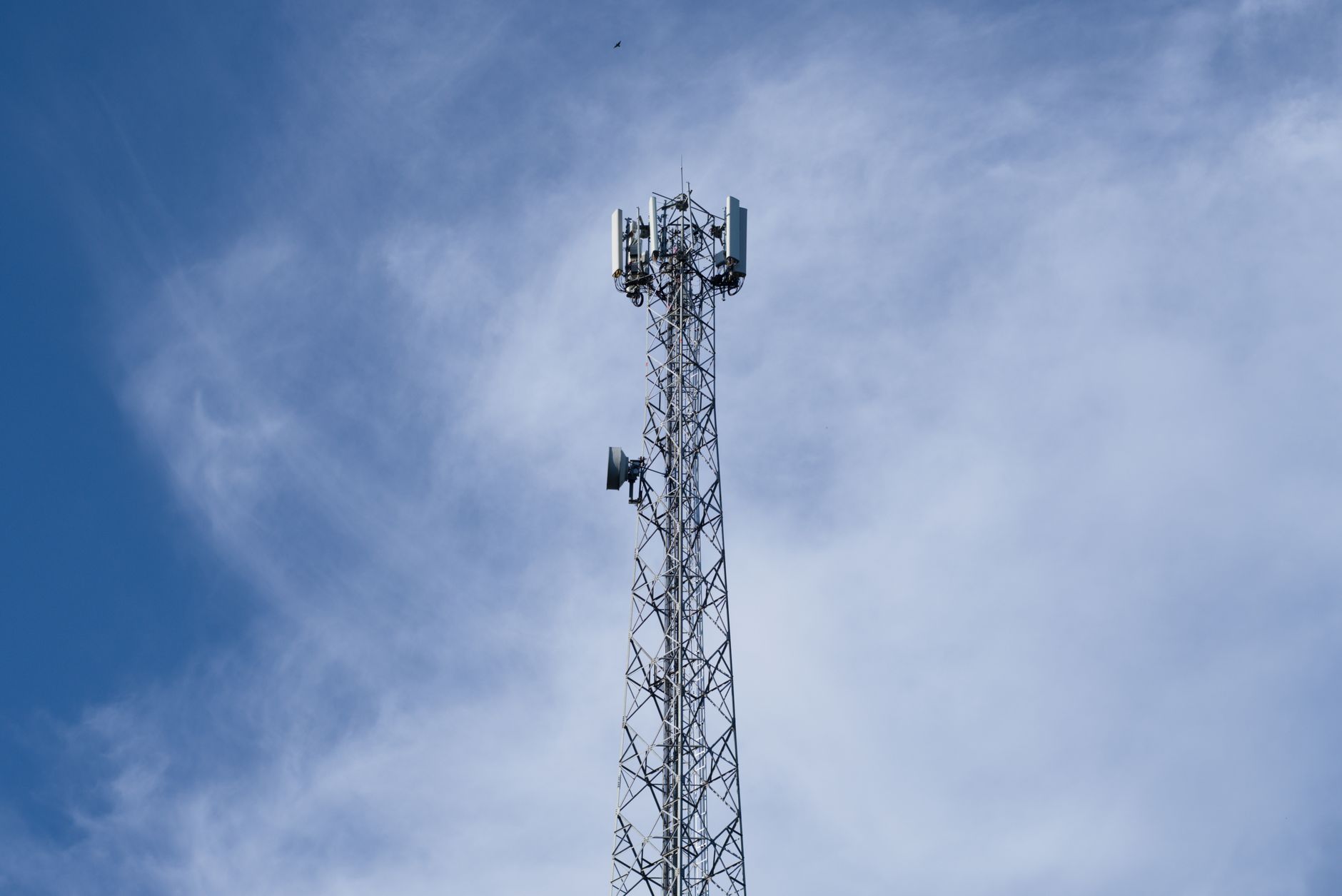
Photo by Qeis Ismail on Pexels
SpaceX has never been a company that thinks small. From reusable rockets to global satellite internet, Elon Musk’s aerospace giant has consistently redefined what’s possible in industries long considered mature. But its reported ambitions in the U.S. wireless market are running headfirst into one of the telecom industry’s most stubborn realities: you can’t build a nationwide carrier overnight, even if you own the sky.
According to reports from RCR Wireless and other industry sources, SpaceX has held preliminary talks with EchoStar about acquiring Boost Mobile or securing meaningful access to its subscriber base and spectrum assets. The goal, analysts believe, is to accelerate SpaceX’s path toward becoming a legitimate fourth facilities-based wireless carrier in the United States — a market currently dominated by AT&T, T-Mobile, and Verizon.
The Subscriber Math Is Brutal
To function as a true fourth carrier — one that can negotiate competitive network access agreements, attract device manufacturer support, and achieve the kind of scale that justifies infrastructure investment — industry analysts estimate SpaceX would need somewhere north of 7.2 million subscribers. That’s not an arbitrary number. It represents a threshold where unit economics begin to stabilize and where the carrier gains enough leverage to operate independently of wholesale MVNO arrangements.
Boost Mobile currently sits at roughly 3 to 4 million subscribers, a base that has steadily eroded since T-Mobile divested the brand as a condition of its Sprint merger in 2020. DISH Network — now operating under the EchoStar umbrella following a corporate restructuring — struggled mightily to transform Boost into the disruptive fourth carrier the FCC had envisioned. The network buildout stalled, deadlines were missed, and subscribers fled to better-resourced competitors.
For SpaceX, acquiring Boost wouldn’t instantly solve the subscriber gap — but it would provide a foundation: an existing customer base, retail distribution channels, and critically, access to a portfolio of licensed spectrum assets that took years and billions of dollars to assemble.
The AT&T and T-Mobile Dependency Problem
Here’s where SpaceX’s fourth-carrier ambitions get complicated. Even if the company closes a deal with EchoStar and brings Boost Mobile into its portfolio, it cannot immediately cut ties with the existing wireless infrastructure. Boost Mobile currently operates as an MVNO riding on AT&T’s network under a wholesale agreement, a legacy arrangement that dates back to the DISH-era restructuring.
That means SpaceX — a company that has repeatedly positioned itself as an outsider ready to upend incumbent industries — would find itself commercially dependent on two of the very carriers it aims to challenge. AT&T and T-Mobile would, at least in the near term, be the pipes through which SpaceX delivers service to its own wireless customers.
This isn’t an unusual situation for emerging carriers. The strategic playbook often involves acquiring an MVNO or sub-scale carrier to gain subscribers and spectrum while simultaneously investing in owned infrastructure to reduce wholesale dependency over time. T-Mobile itself used a variation of this approach during its own turnaround years. But for SpaceX, the optics create an interesting tension — and the financial exposure is real.
Starlink’s Role: Complement or Core?
The natural question is whether Starlink’s low-Earth orbit (LEO) satellite network can serve as the backbone for a SpaceX wireless offering, reducing or eventually eliminating the need for terrestrial carrier agreements. The answer, for now, is nuanced.
SpaceX has already demonstrated direct-to-device satellite connectivity through its partnership with T-Mobile, with limited text messaging capabilities launched in select areas. Future phases promise voice and data. But LEO satellite connectivity, while improving rapidly, is not yet a substitute for dense terrestrial 5G networks in urban environments where latency, throughput, and capacity demands are highest.
Starlink could play a meaningful complementary role — providing coverage in rural and underserved areas where terrestrial infrastructure is thin — but a mass-market wireless carrier built primarily on satellite infrastructure remains a future-state scenario, not a near-term operational reality. The physics of satellite communication, combined with the need to manage spectrum interference across tens of millions of simultaneous users, presents engineering challenges that even SpaceX hasn’t fully cracked for mobile broadband at scale.
Spectrum Is the Real Prize
Beyond subscribers, the most valuable asset in any potential EchoStar transaction may be spectrum. EchoStar holds licenses across multiple bands, including mid-band and millimeter wave holdings that are essential for 5G deployment. Mid-band spectrum — particularly in the 3.5 GHz Citizens Broadband Radio Service (CBRS) band and adjacent frequencies — is widely considered the workhorse of 5G networks, balancing coverage and capacity in a way that sub-6 GHz and mmWave alone cannot achieve.
Owning substantial spectrum assets would give SpaceX a credible path toward building out proprietary radio access network (RAN) infrastructure over time, progressively shifting traffic off wholesale agreements and onto owned facilities. That transition, however, would require capital investment measured in the tens of billions of dollars — and years of network buildout before meaningful independence is achieved.
Industry Outlook: Ambitious but Fraught
SpaceX’s wireless ambitions are real, and the company has the financial resources and engineering talent to pursue them seriously. But the telecom industry has a long history of humbling even well-capitalized entrants. DISH spent over a decade and accumulated massive spectrum holdings before ultimately failing to build a credible fourth carrier — a cautionary tale that looms large over any new entrant’s business plan.
What SpaceX brings that DISH did not is a vertically integrated satellite network with genuine global reach, a brand with unusual consumer resonance, and an operational culture built around rapid iteration. Whether those advantages are enough to overcome the structural barriers of the U.S. wireless market — entrenched incumbents, capital-intensive infrastructure, and the brutal economics of subscriber acquisition — remains the central question.
For now, SpaceX’s shortcut to the wireless market still runs directly through AT&T and T-Mobile. The irony is hard to miss. And in the telecom industry, irony has a way of being expensive.
