
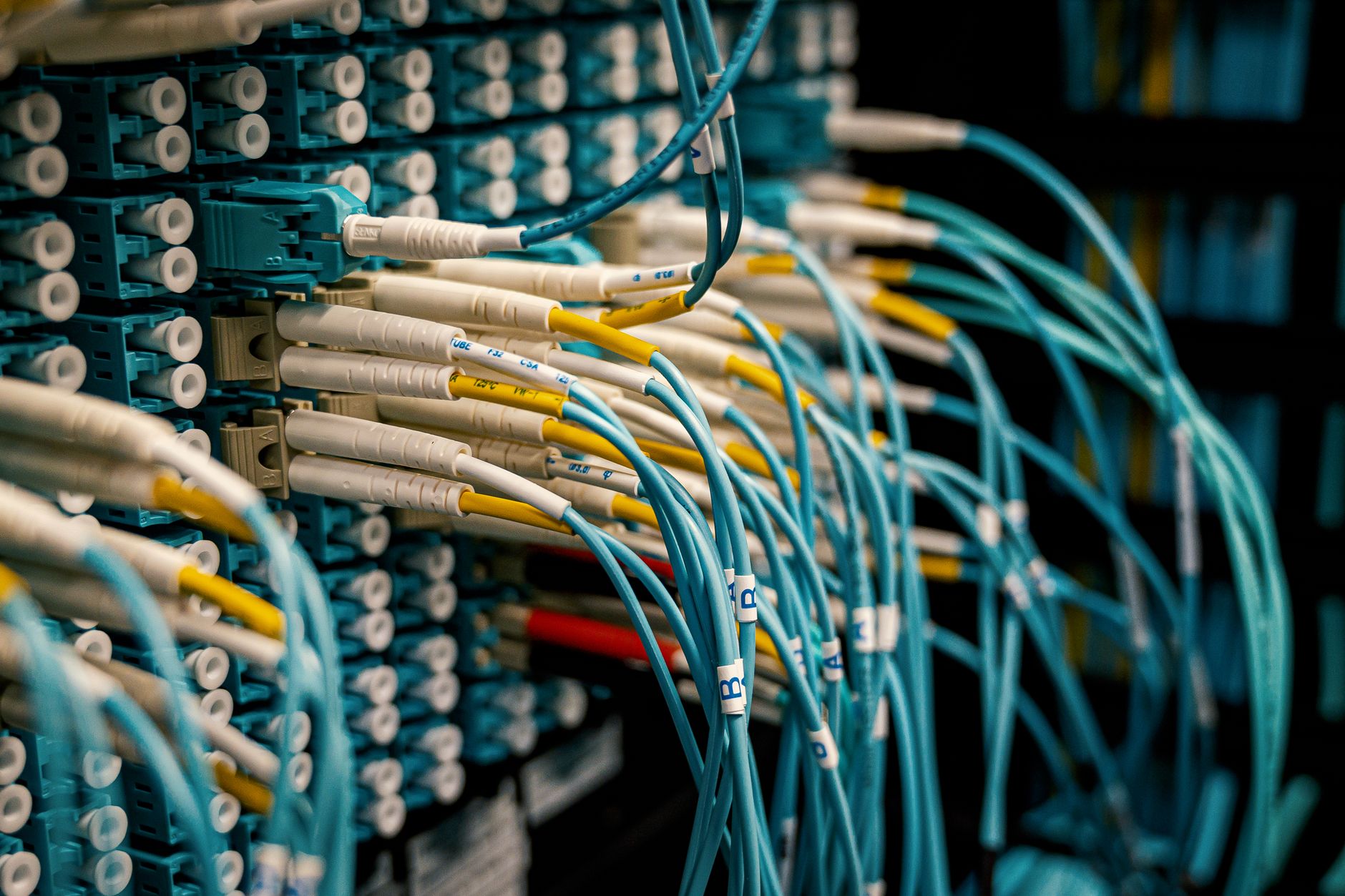
Photo by Brett Sayles on Pexels
Bell Canada Doubles Down on AI Infrastructure as Q2 Results Signal Strategic Pivot
Bell Canada is no longer just talking about artificial intelligence — it’s building it into the ground. Canada’s largest telecommunications provider used its second-quarter earnings update as a platform to signal a decisive shift in its AI data center (AIDC) strategy, with CEO Mirko Bibic telling investors that the company’s Bell AI Fabric initiative has moved firmly from the planning table into active construction. The message was clear: Bell is positioning itself not merely as a connectivity provider, but as a foundational player in Canada’s AI infrastructure ecosystem.
The timing is deliberate. As hyperscalers and enterprise customers scramble to secure AI-ready compute capacity across North America, Bell is betting that its unique combination of owned fiber infrastructure, spectrum assets, and nationwide network reach gives it a competitive edge that pure-play data center operators simply cannot replicate.
The Bell AI Fabric: From Concept to Construction
At the center of Bell’s AIDC ambitions is the Bell AI Fabric — an integrated infrastructure platform designed to deliver low-latency, high-throughput connectivity between AI compute clusters, enterprise customers, and cloud environments. Bibic confirmed to investors that construction is actively advancing at the company’s flagship AI campus, a purpose-built facility engineered from the ground up to support the demanding power, cooling, and networking requirements of modern GPU-accelerated AI workloads.
Unlike traditional data centers that were retrofitted to handle AI compute, Bell’s approach involves designing the physical and network layers simultaneously — a strategy that allows for optimized interconnection between compute nodes and minimizes the latency bottlenecks that can throttle large-scale AI model training and inference operations. The AI Fabric architecture is expected to leverage Bell’s dense fiber network as its backbone, enabling what the company describes as seamless, high-bandwidth pathways between AI infrastructure and end users.
Why Telcos Are Entering the AI Data Center Race
Bell’s aggressive AIDC push reflects a broader industry trend in which major telecommunications operators are leveraging their existing infrastructure assets to compete in the fast-growing AI infrastructure market. Traditional data center players and cloud providers have dominated this space, but telcos hold a structural advantage: they own the fiber, the spectrum, and the physical real estate that connects these facilities to businesses and consumers.
According to industry analysts, global AI data center capacity is expected to grow at a compound annual rate exceeding 30% through the end of the decade, driven by insatiable demand for generative AI applications, large language model deployment, and real-time inferencing at the edge. For carriers like Bell, this represents both a revenue diversification opportunity and a defensive play — capturing enterprise AI spending before it flows entirely to hyperscale cloud platforms.
Fiber as the Foundation: Q2 Network Expansion Highlights
Underpinning Bell’s AI infrastructure ambitions is a continued aggressive fiber rollout across Canada. Q2 results highlighted meaningful progress in the company’s fiber-to-the-premises (FTTP) expansion, with Bell extending its footprint into additional residential and commercial markets. Fiber isn’t just about consumer broadband for Bell — it’s the circulatory system for everything the company is building, from enterprise connectivity solutions to the low-latency backhaul required by its AI campus operations.
Bell’s fiber network investments also serve its growing enterprise AI services portfolio. Businesses adopting AI-driven applications — from automated customer service platforms to real-time data analytics — require the kind of consistent, high-bandwidth, low-latency connectivity that only fiber can reliably provide at scale. This creates a natural flywheel effect: as enterprise AI adoption grows, demand for Bell’s fiber-connected services grows with it.
Enterprise AI: A Growing Revenue Driver
Beyond the infrastructure layer, Bell reported strengthening momentum in its enterprise AI services segment during Q2. The company has been actively packaging AI-powered managed services, security solutions, and cloud connectivity offerings tailored to mid-market and large enterprise customers navigating their own digital transformation journeys. This vertical is increasingly viewed internally as a key growth engine, supplementing what has been a challenging period for traditional wireless and wireline revenue streams.
Bibic emphasized that Bell’s enterprise AI strategy is not about selling AI as a standalone product, but about embedding AI capabilities into network services — making Bell’s connectivity smarter, more responsive, and more valuable to business customers. This includes deploying AI-driven network management tools that can predict and resolve service disruptions before customers even notice them.
Competitive Landscape and Industry Implications
Bell’s AIDC and AI Fabric strategy puts it on a collision course — and in some cases, a collaboration path — with hyperscalers like Microsoft Azure, Amazon Web Services, and Google Cloud, all of which have been expanding their Canadian cloud regions. Rather than competing head-to-head with these giants on compute horsepower, Bell appears to be carving out a complementary niche: sovereign, carrier-grade AI infrastructure with guaranteed Canadian data residency, a growing regulatory and enterprise priority.
The approach could prove particularly attractive to Canadian financial institutions, government agencies, and healthcare organizations that face strict data sovereignty requirements and are wary of routing sensitive workloads through U.S.-headquartered hyperscalers.
Outlook: A Telco Redefined by Infrastructure Intelligence
Bell Canada’s Q2 narrative is ultimately a story about identity transformation. The company is methodically repositioning itself from a legacy telecommunications carrier into what it envisions as a full-stack AI infrastructure and services provider — one where fiber, wireless, compute, and intelligence are woven into a single, integrated platform.
Whether the Bell AI Fabric delivers on its ambitious promise will depend on execution speed, enterprise adoption rates, and Bell’s ability to attract the hyperscale and sovereign AI workloads needed to justify its capital commitments. But the strategic direction is unmistakable: in Canada’s emerging AI economy, Bell intends to be the infrastructure layer everything else runs on.
For the broader telecom industry, Bell’s trajectory offers a compelling template — and a challenge. As AI reshapes every sector of the economy, carriers that fail to evolve beyond bit-pipe connectivity risk being commoditized. Those that move boldly into AI infrastructure, as Bell is doing, may find themselves at the center of the next great technology build-out.
