
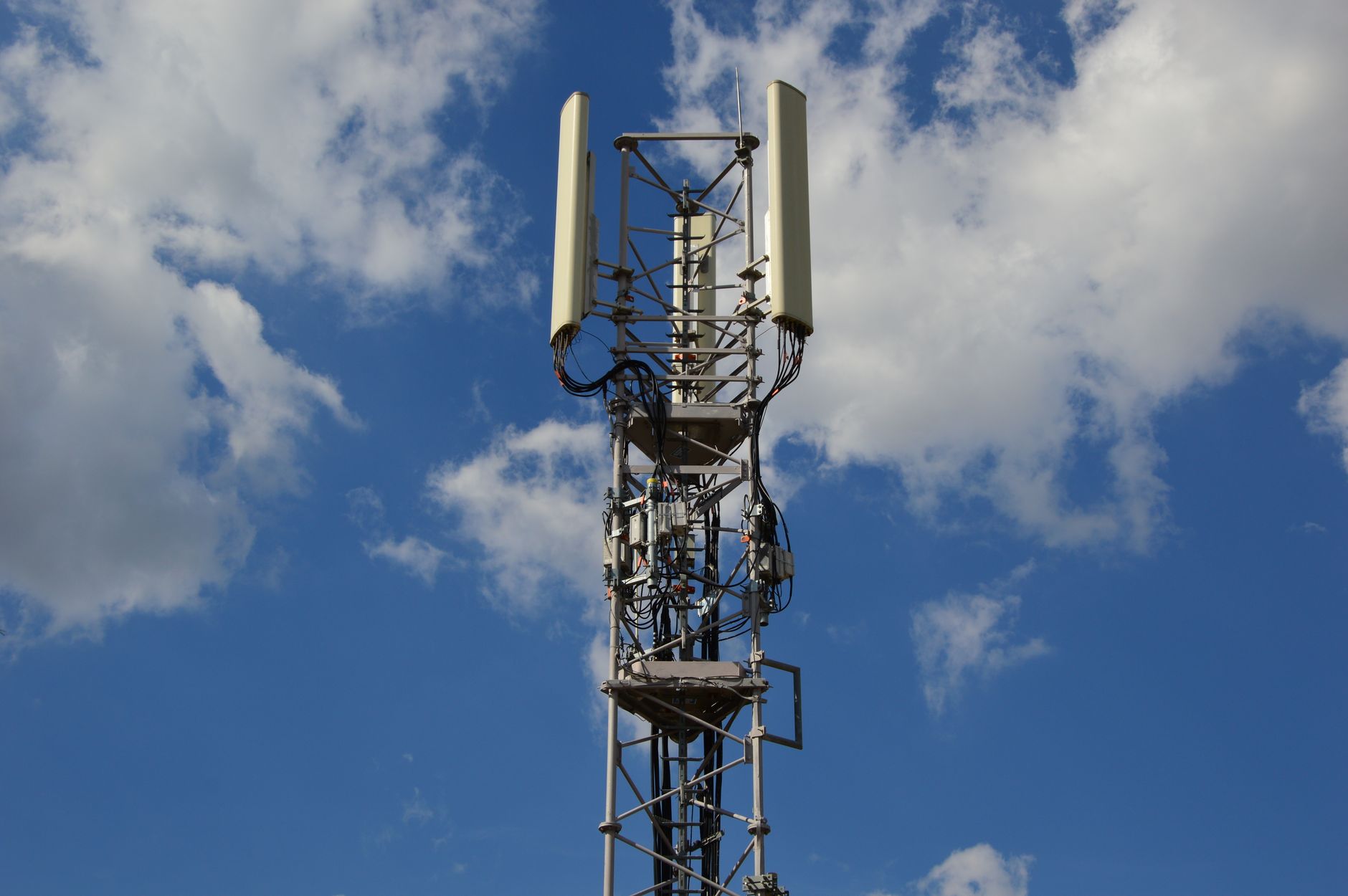
Photo by Ulrick Trappschuh on Pexels
The Next RAN Revolution Is Already Here — And It’s Powered by AI
For years, the telecommunications industry debated the merits of Open RAN, argued over the readiness of Cloud RAN, and cautiously experimented with AI-driven network management. Today, those three threads are weaving together into something far more significant: AI-RAN, a converged architecture that promises to fundamentally reimagine how radio access networks are built, operated, and optimized.
This is not simply a marketing rebrand or a minor technical upgrade. AI-RAN represents a structural shift — one that positions the RAN as a software-defined, intelligence-first platform capable of adapting in real time to the explosive and increasingly unpredictable demands of modern wireless communication.
Understanding the Convergence: What Is AI-RAN?
At its core, AI-RAN is the integration of artificial intelligence and machine learning directly into the RAN stack — not as an afterthought layered on top, but as a foundational element embedded throughout the architecture. When combined with the disaggregated, interoperable interfaces of Open RAN and the scalable compute resources of Cloud RAN, the result is a network that can sense, reason, and act autonomously across spectrum management, interference mitigation, traffic steering, and energy optimization.
The O-RAN Alliance has been central to enabling this vision. Its xApp and rApp frameworks, running on the Near-Real-Time RIC (Radio Intelligent Controller) and Non-Real-Time RIC respectively, provide the hooks through which AI models can influence RAN behavior at multiple timescales — from millisecond-level scheduling decisions to longer-horizon policy adjustments.
Open RAN as the Enabler
Open RAN’s disaggregated architecture — separating the Radio Unit (RU), Distributed Unit (DU), and Centralized Unit (CU) — is what makes AI-RAN tractable at scale. By exposing open interfaces and standardized data models, operators gain the visibility and control necessary to feed AI pipelines with meaningful, real-time telemetry. Without that openness, AI becomes a black box operating on opaque, vendor-siloed data — severely limiting its utility.
Operators like Rakuten Mobile, Dish Network (now EchoStar), and Vodafone have already demonstrated that Open RAN deployments can generate the rich data environments that machine learning models require. The lesson is clear: open interfaces are not just about vendor diversity — they are the data infrastructure that makes intelligent automation possible.
Cloud RAN Provides the Computational Muscle
Cloud RAN, which moves baseband processing workloads onto general-purpose, cloud-native compute infrastructure, is equally essential. Training and inferencing AI models at the network edge demands significant GPU and CPU resources — resources that traditional, hardware-locked RAN equipment simply cannot provide.
Hyperscalers are taking notice. NVIDIA’s Aerial SDK, designed specifically for accelerating RAN workloads on GPU hardware, has become a reference point for what AI-native baseband processing could look like. Meanwhile, partnerships between RAN vendors and cloud providers — such as Ericsson with AWS and Nokia with Google Cloud — signal that the cloudification of the RAN is not a distant ambition but an active commercial reality.
What AI-RAN Actually Delivers: Use Cases That Matter
The business case for AI-RAN extends well beyond technical elegance. Operators are under intense pressure to improve spectral efficiency, reduce energy consumption, and manage increasingly complex multi-band, multi-layer network deployments — all while controlling costs.
AI-driven beamforming optimization, for instance, can dynamically adjust antenna patterns based on real-time user location and traffic patterns, delivering meaningful capacity gains without additional spectrum investment. Similarly, AI-powered sleep mode algorithms can power down underutilized RAN components during low-traffic periods — a capability that could shave significant percentages off network energy bills, which represent one of operators’ largest operational expenses.
Predictive maintenance is another high-value application. By analyzing equipment performance data streams, AI models can flag potential hardware failures before they cause outages — a capability with direct and measurable impact on network availability SLAs.
Challenges: Integration Complexity and the Data Problem
Despite the promise, AI-RAN faces real headwinds. Integrating AI models across a disaggregated, multi-vendor network is extraordinarily complex. Ensuring that an xApp trained on one vendor’s RU data behaves correctly when deployed across another vendor’s hardware requires rigorous standardization and extensive testing — work that is still maturing within the O-RAN Alliance’s testing and integration frameworks.
Data quality and governance also remain unresolved challenges. AI models are only as good as the data they consume, and inconsistent telemetry formats, incomplete datasets, and latency in data pipelines can degrade model performance precisely when network conditions are most demanding.
Regulatory considerations around AI decision-making in critical infrastructure — particularly as AI-RAN moves toward more autonomous, closed-loop operations — will also require engagement with regulators who are only beginning to understand the technology.
Industry Outlook: The RAN as an AI Platform
The trajectory is unmistakable. The RAN of the next decade will not be defined by any single innovation — not openness, not cloud-nativeness, not AI alone — but by the intelligent synthesis of all three. Vendors, operators, and standards bodies that treat these as separate workstreams will find themselves architecturally outpaced by those who have embraced convergence as the defining strategy.
For telecom operators, AI-RAN is ultimately about transforming the RAN from a cost center into a programmable, self-optimizing asset — one capable of delivering new services, adapting to new spectrum bands, and scaling to meet the demands of 5G Advanced and eventual 6G architectures with far greater agility than any previous generation of radio technology.
The question is no longer whether AI-RAN will happen. It is already happening. The question now is how quickly the industry can align around shared standards, validated architectures, and proven deployment models to turn that promise into pervasive, commercial-scale reality.
