
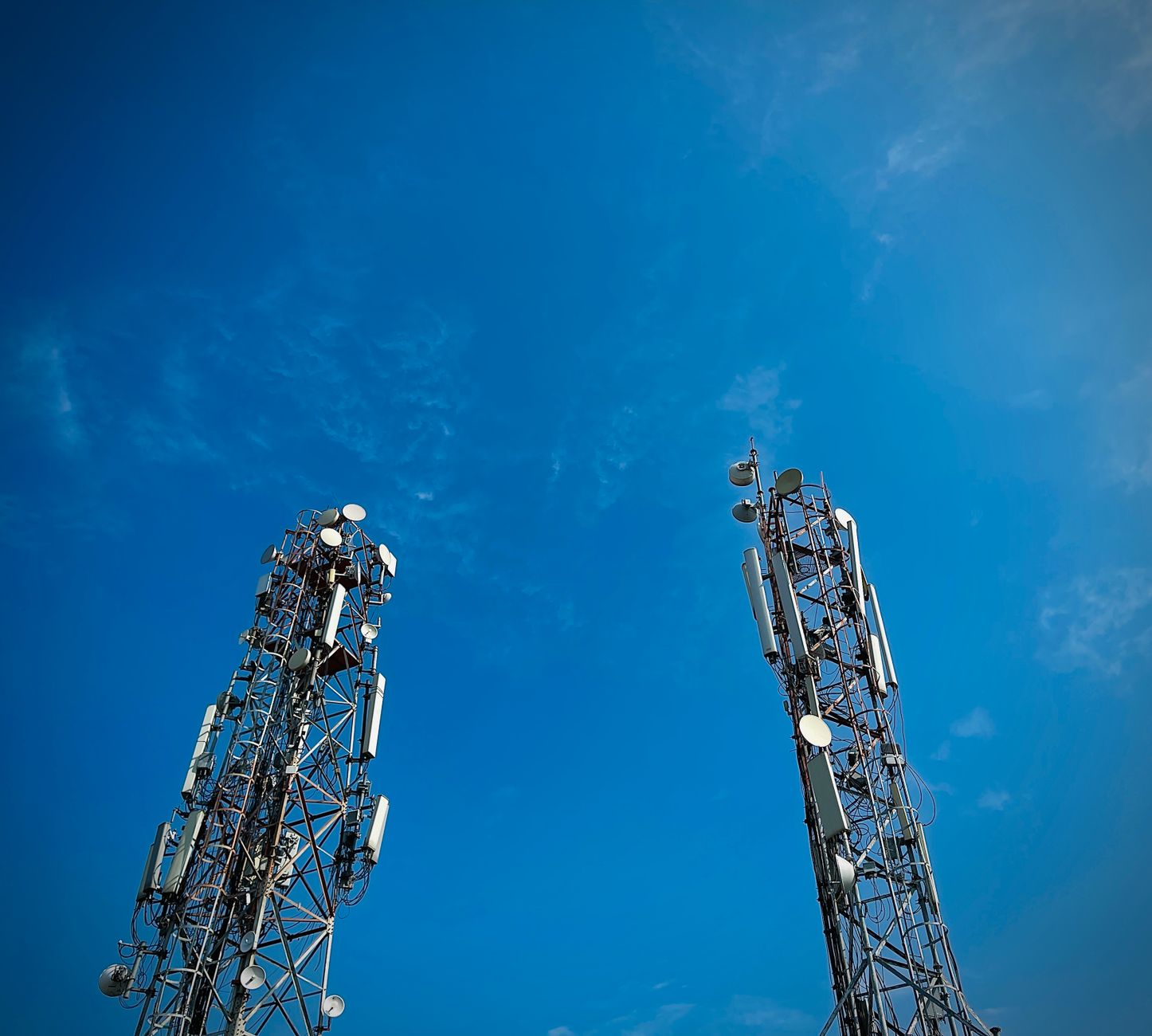
Photo by Nishant Aneja on Pexels
Chhattisgarh Pushes for Massive Tower Expansion to End Rural Connectivity Drought
In one of the most ambitious state-level telecom infrastructure requests in recent memory, the government of Chhattisgarh has formally petitioned the Union government in New Delhi to approve the installation of 2,305 new mobile towers under the Digital Bharat Nidhi (DBN) scheme. The proposal underscores a growing urgency to bring meaningful mobile connectivity to a state where dense forests, hilly terrain, and dispersed tribal settlements have long frustrated network expansion efforts by private operators.
If sanctioned, the tower deployment would represent a transformational leap for Chhattisgarh’s digital landscape — one that could unlock socioeconomic opportunities for millions of citizens who currently lack access to even basic voice calling services, let alone mobile broadband.
What Is Digital Bharat Nidhi and Why Does It Matter?
Digital Bharat Nidhi is the successor to India’s Universal Service Obligation Fund (USOF), restructured and rebranded under the Indian Telecommunication Act of 2023. The fund collects a mandatory contribution — currently set at 5% of Adjusted Gross Revenue (AGR) — from licensed telecom operators, channeling those resources into subsidized infrastructure rollouts in areas deemed commercially unviable by private players.
Unlike purely market-driven deployments, DBN-funded towers are designed to serve remote villages, forested corridors, and strategically sensitive border regions where telcos would otherwise have little financial incentive to invest. The scheme has already underwritten thousands of towers across northeastern India, Jammu & Kashmir, and other challenging geographies, establishing a proven model that Chhattisgarh is now looking to leverage at scale.
The Connectivity Challenge: Geography as an Obstacle
Chhattisgarh presents a uniquely difficult operating environment for telecom infrastructure. The state covers approximately 135,192 square kilometers — roughly the size of Greece — and is blanketed by the Bastar plateau, the Maikal hills, and vast swaths of Sal and teak forests that impede both line-of-sight signal propagation and physical access for tower construction crews.
Nearly 32% of the state’s population belongs to scheduled tribes, many living in remote pockets with poor road connectivity. Left-wing extremism in certain districts has historically made infrastructure deployment hazardous, further deterring private investment. The combination of terrain, population dispersion, and security challenges has left a significant portion of the state’s estimated 33 million residents underserved by mobile networks.
Current Network Penetration and Coverage Gaps
While India’s top operators — Reliance Jio, Bharti Airtel, and Vodafone Idea — have steadily expanded their 4G footprints across urban and peri-urban Chhattisgarh, hundreds of revenue villages across districts like Sukma, Bijapur, Narayanpur, and Dantewada remain entirely off-grid from a mobile standpoint. TRAI data has repeatedly flagged these districts among the lowest in network quality and penetration metrics nationally. Many residents in these zones rely on 2G signals at best, or travel several kilometers to access any signal — making everyday services like mobile banking, telemedicine, and government benefit transfers inaccessible.
Technical Scope of the Proposed Rollout
While granular specifications for the 2,305 proposed towers have not been officially disclosed, industry observers expect the deployment to primarily focus on 4G LTE infrastructure, consistent with DBN’s established framework for rural rollouts. Towers in such environments are typically configured as ground-based or monopole structures ranging from 30 to 60 meters in height, equipped with multi-band radio units capable of supporting both voice (including VoLTE) and broadband data services.
Backhaul — always a critical challenge in remote India — is expected to rely on a combination of microwave links and optical fiber where BSNL’s BharatNet infrastructure has already been laid. In areas where fiber penetration is still nascent, satellite-based backhaul solutions, including those leveraging ISRO’s GSAT satellites or emerging LEO constellations, could serve as interim options.
BSNL, as the government’s primary vehicle for rural telecom delivery, is likely to operate many of these towers, particularly as the state-owned carrier accelerates its own 4G rollout following the government’s ₹89,047-crore revival package approved in 2022.
Broader Implications for India’s Digital Inclusion Agenda
Chhattisgarh’s request arrives at a pivotal moment for India’s digital ambitions. The central government has set an aggressive target of achieving 4G coverage across all inhabited villages, and Prime Minister Modi’s administration has repeatedly cited rural broadband penetration as a cornerstone of its Digital India and Smart Villages initiatives.
Approving 2,305 towers for a single state would send a strong signal about New Delhi’s commitment to DBN as an active, well-funded mechanism rather than a passive reserve. It could also catalyze similar large-scale requests from other connectivity-deficient states including Jharkhand, Odisha, and Madhya Pradesh — all of which share comparable geographic and demographic challenges.
Economic Ripple Effects
Beyond connectivity metrics, the tower rollout carries significant economic weight. Research consistently shows that each percentage point increase in mobile broadband penetration in developing economies contributes between 0.5% and 1.5% to GDP growth. For Chhattisgarh — a state rich in mineral resources but lagging in human development indices — improved connectivity could accelerate e-commerce adoption, digital agricultural advisory services, remote education, and health monitoring programs already being piloted in tribal areas.
Industry Outlook
Telecom analysts watching India’s infrastructure build-out closely suggest that the Chhattisgarh proposal reflects a maturing understanding of connectivity as essential public infrastructure, not merely a commercial product. “States are no longer waiting for the market to solve the rural coverage problem,” noted one New Delhi-based industry consultant. “They’re actively engaging the DBN mechanism because they understand that connectivity is now as foundational as roads or electricity.”
With India targeting 1 billion internet users by 2026 and positioning itself as a global digital economy powerhouse, the approval — or otherwise — of Chhattisgarh’s 2,305-tower request will serve as an important barometer of how seriously the central government is willing to fund its own digital inclusion promises. The telecom community will be watching New Delhi’s response with considerable interest.
