
Photo by Giant Asparagus on Pexels
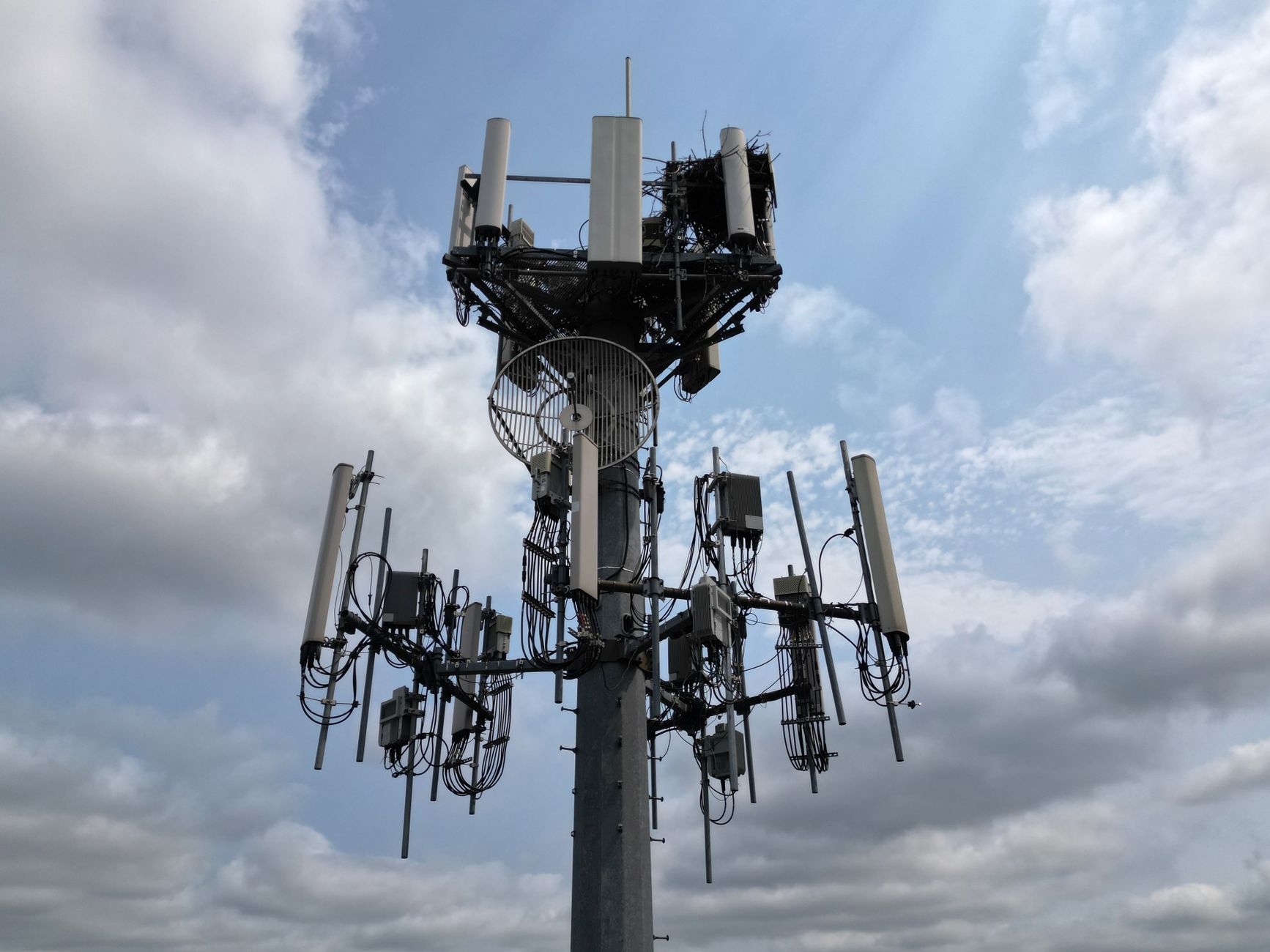
The global radio access network (RAN) market has weathered its post-5G deployment storm, but operators and vendors hoping for a dramatic rebound may need to temper their expectations. According to the latest long-range forecast from Dell’Oro Group, one of the telecom industry’s most closely watched research firms, the RAN market is projected to remain largely flat through 2030 — a sobering outlook that nonetheless carries a more nuanced and, for some players, genuinely exciting undercurrent: the rapid rise of AI-native RAN architectures.
The Post-5G Correction Is Finally Over
The RAN industry spent much of 2023 and 2024 absorbing a sharp correction that followed the frenzied 5G buildout cycle of the early 2020s. Major operators in North America, Europe, and parts of Asia-Pacific pulled back on capital expenditure as network densification slowed, spectrum deployments matured, and macroeconomic pressures squeezed infrastructure budgets. Vendors including Ericsson, Nokia, and Huawei all reported significant revenue declines in their networks divisions during this period.
The good news, according to Dell’Oro’s analysis, is that this correction has largely run its course. The market has stabilized, and the worst of the inventory drawdowns and deferred spending appear to be behind the industry. However, the recovery is not expected to translate into meaningful aggregate growth. Instead, the overall market cap for RAN spending is forecast to hover in a relatively tight band through the end of the decade.
For vendors and suppliers who built their growth models around a second wave of 5G-driven expansion, this forecast represents a fundamental strategic challenge. The pie isn’t getting significantly larger — which means winning requires taking someone else’s slice.
AI RAN: The One Bright Spot in an Otherwise Static Market
While the headline number is flat, the composition of that market is shifting in ways that could be transformative for the industry’s technology trajectory. Dell’Oro’s research points to AI-integrated RAN — often referred to as AI RAN or intelligent RAN — as the primary vector of growth within an otherwise stagnant overall market.
AI RAN broadly refers to the integration of machine learning and artificial intelligence capabilities directly into radio access network infrastructure, enabling real-time optimization of spectrum usage, interference management, beamforming, energy efficiency, and traffic prediction. Unlike traditional RAN software upgrades, AI RAN architectures embed intelligence at multiple layers — from the radio unit (RU) and distributed unit (DU) to the centralized unit (CU) — enabling closed-loop automation that was previously impossible at scale.
Why Operators Are Paying Attention
The business case for AI RAN is increasingly compelling. Operators under pressure to reduce operational expenditure while simultaneously improving network performance are finding that AI-driven optimization can deliver measurable gains in spectral efficiency, energy consumption, and user quality of experience — all without requiring new spectrum licenses or large-scale hardware upgrades.
Energy costs have become one of the largest line items in any operator’s budget, particularly as 5G’s dense antenna configurations and massive MIMO deployments consume significantly more power than their 4G predecessors. AI-powered sleep mode algorithms and dynamic power management systems have demonstrated energy savings of 15 to 30 percent in live network trials, a figure that resonates strongly with CFOs and sustainability officers alike.
The Vendor Landscape Is Shifting
The emergence of AI RAN as a discrete and commercially significant market segment is also redrawing competitive boundaries. Established RAN incumbents like Ericsson and Nokia are investing heavily in AI-native software platforms, but they now face competition from a new class of challengers — cloud-native startups, hyperscaler-backed ventures, and Open RAN software specialists — all positioning AI capabilities as their primary differentiator.
NVIDIA’s aggressive push into the telecommunications sector, offering GPU-accelerated computing platforms purpose-built for AI RAN workloads, has brought a powerful new entrant to the ecosystem. Meanwhile, companies like Mavenir, Rakuten Symphony, and a growing cohort of xApp and rApp developers are building intelligent application layers on top of Open RAN’s RIC (RAN Intelligent Controller) framework to deliver AI-driven optimization as a service.
Open RAN’s Role in the AI-Driven Transition
The O-RAN Alliance’s open, disaggregated architecture has proven to be a critical enabler of AI RAN’s commercial viability. By separating the RAN software stack from proprietary hardware and introducing standardized interfaces, O-RAN creates the conditions under which AI applications — delivered via xApps and rApps running on the near-real-time and non-real-time RIC — can be developed, tested, and deployed independently of the underlying hardware vendor.
This architectural openness is accelerating the pace of AI RAN innovation, but it also introduces integration complexity and interoperability challenges that operators must carefully manage. Ensuring that AI applications from third-party developers perform reliably across multi-vendor RAN environments remains an ongoing industry challenge.
What This Means for the Decade Ahead
Dell’Oro’s flat-market forecast through 2030 is not necessarily a death knell for the RAN industry — it is, rather, a signal of maturation. The era of growth driven by new generation rollouts alone is giving way to a more sophisticated market where value is created through software intelligence, operational efficiency, and differentiated user experiences.
For operators, the strategic imperative is clear: extracting more value from existing RAN infrastructure through AI-driven optimization is not optional — it is the primary lever available in a capex-constrained environment. For vendors, the race to own the AI RAN software layer may prove more commercially significant over the next five years than any hardware refresh cycle.
The RAN market may be flat in volume, but in terms of technological ambition and competitive intensity, the decade ahead promises anything but a quiet ride.
