
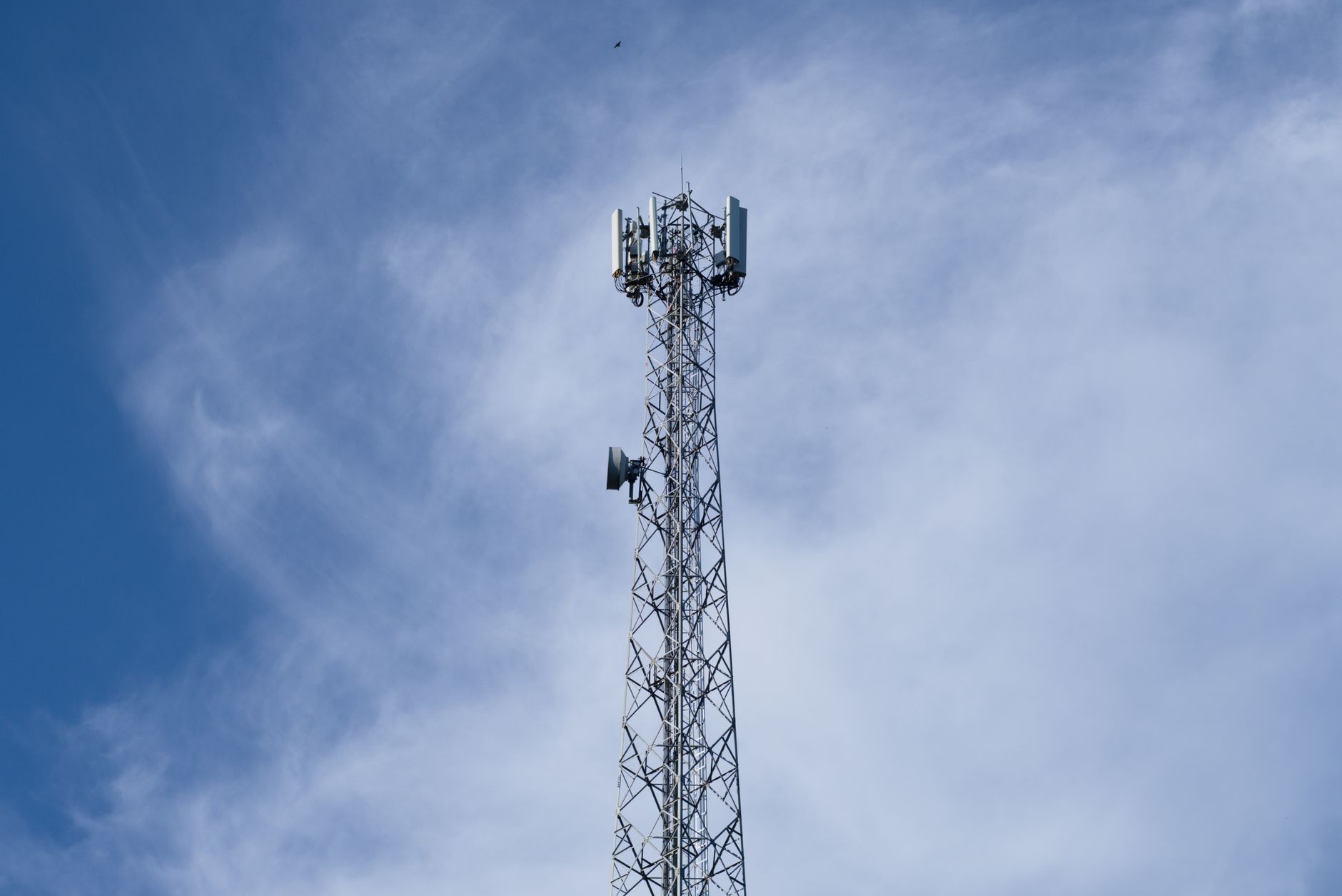
Photo by Qeis Ismail on Pexels
SBA Communications Points to AI, Spectrum, and 6G as Pillars of Long-Term Wireless Investment Growth
In an industry where short-term fluctuations can often obscure long-term trajectories, SBA Communications is keeping its eyes firmly on the horizon. The tower infrastructure giant’s president and CEO, Brendan Cavanagh, recently offered a measured but optimistic assessment of the wireless investment landscape, noting that while U.S. carrier activity in the third quarter came in slightly below first-half 2024 levels, the broader picture remains compelling — and arguably, more exciting than it has been in years.
The convergence of three powerful technological forces — new spectrum availability, artificial intelligence-driven network demands, and the early stirrings of 6G research and standardization — is creating what industry observers are increasingly calling an extended wireless infrastructure investment supercycle. For tower companies like SBA Communications, American Tower, and Crown Castle, this translates into sustained leasing activity, increased co-location demand, and meaningful opportunities for network densification well into the next decade.
Q3 U.S. Activity: A Soft Patch, Not a Structural Decline
Cavanagh was careful to contextualize SBA’s Q3 U.S. performance, emphasizing that the slight dip in domestic carrier activity was broadly in line with the company’s expectations. Major U.S. carriers — AT&T, Verizon, and T-Mobile — have been navigating a complex balancing act in 2024, managing capital expenditure discipline while simultaneously pushing forward on mid-band 5G densification and C-band deployment buildouts.
T-Mobile, flush with spectrum assets from the Sprint merger, has maintained a relatively aggressive network investment posture. Meanwhile, AT&T and Verizon have signaled ongoing commitments to 5G infrastructure spending, even as both companies prioritize fiber broadband expansion in parallel. The result is a carrier spend environment that, while not at peak frenzy levels, remains structurally healthy for infrastructure providers.
Industry analysts have noted that tower amendment activity — where existing tenants add new equipment configurations, antennas, or radios to already-leased tower space — continues to be a consistent revenue driver for the major tower companies. This kind of densification work, often associated with carriers upgrading from low-band 5G to mid-band or adding MIMO antenna configurations, doesn’t always generate headline-grabbing capex announcements but represents steady, recurring infrastructure investment.
Spectrum: The Fuel Powering the Next Wave
Perhaps the most immediate catalyst in SBA’s bullish outlook is the pending release of new spectrum bands. The FCC’s efforts to free up additional mid-band spectrum — including potential bands in the 3.1–3.45 GHz range and upper mid-band frequencies around 7 GHz and 15 GHz — are expected to trigger another wave of tower modifications and new equipment deployments as carriers race to integrate fresh spectral capacity into their networks.
The anticipated AWS-3 and CBRS band expansions, alongside international spectrum harmonization efforts, also play into the hands of infrastructure providers. Each new spectrum tranche effectively requires carriers to revisit tower configurations, potentially adding new radio units, upgrading fronthaul connections, and deploying additional antenna arrays — all of which generate incremental tower revenue.
Cavanagh’s comments align with a broader industry consensus: spectrum scarcity, paradoxically, is both a challenge and an opportunity. As data consumption continues its relentless upward trajectory — driven by video streaming, cloud gaming, connected vehicles, and enterprise IoT — carriers have little choice but to continue investing in both spectrum acquisition and the physical infrastructure needed to put that spectrum to work.
AI’s Expanding Role in Network Infrastructure Demand
Artificial intelligence is rapidly becoming one of the most consequential demand drivers for wireless networks — and by extension, for tower infrastructure. The proliferation of AI-powered applications, from real-time language processing and edge inference to autonomous systems and smart manufacturing, is placing unprecedented demands on network latency, throughput, and reliability.
Carriers and hyperscalers alike are racing to push AI processing closer to the network edge, reducing round-trip latency and alleviating pressure on centralized data centers. This edge computing imperative is a natural complement to tower infrastructure, as cell sites increasingly serve as distributed compute nodes rather than purely transmission points. Tower companies with robust power infrastructure, fiber backhaul connectivity, and strategic site locations stand to benefit significantly from this architectural evolution.
Open RAN architectures, which disaggregate traditional base station functions and enable more flexible, software-defined radio access networks, are also gaining traction — further accelerating the deployment of AI-driven network optimization tools that require robust physical infrastructure as their foundation.
6G: Planting the Seeds of the Next Supercycle
While commercial 6G networks remain a mid-2030s proposition at the earliest, early-stage research, standardization work at bodies like the ITU and 3GPP, and government-funded initiatives in the U.S., Europe, South Korea, Japan, and China are beginning to shape the technical parameters of the next generation of wireless. Frequencies being explored for 6G — including sub-terahertz bands above 100 GHz — will demand extraordinarily dense network deployments, creating long-term infrastructure demand that makes today’s 5G buildout look modest by comparison.
For SBA Communications and its tower industry peers, the 6G horizon represents a generational opportunity. The fundamental physics of higher-frequency propagation means more sites, more equipment, and more infrastructure — the core business of every tower company on the planet.
Industry Outlook: A Runway Measured in Decades
Taken together, Cavanagh’s comments paint a picture of an industry with far more runway than skeptics might suggest. The wireless investment cycle, rather than approaching a natural conclusion as 5G matures, appears to be entering a new phase of acceleration — driven by AI-native applications, spectrum replenishment, and the foundational groundwork for 6G.
For infrastructure investors, telecom professionals, and technology strategists, the message from SBA Communications is clear: the era of wireless infrastructure investment is not winding down. It is, by virtually every meaningful measure, just getting started.
