
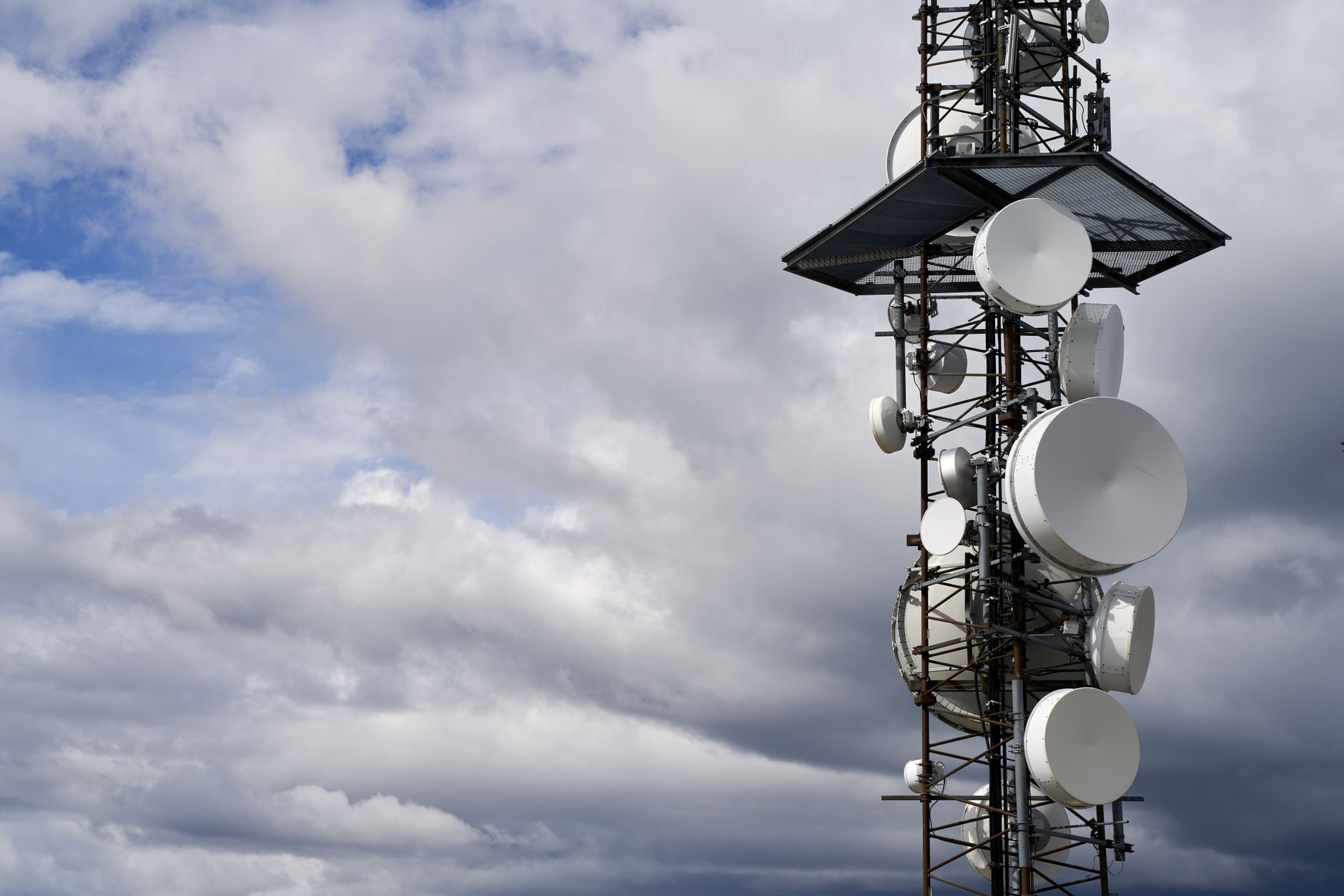
Photo by Barnabas Davoti on Pexels
SpaceX Breaks Cover on Terrestrial Mobile Ambitions — and the Big Three Should Be Paying Attention
For years, SpaceX has been laser-focused on dominating low Earth orbit with its Starlink constellation. But in a strategic pivot that could reshape the U.S. wireless landscape, the Elon Musk-led company has now publicly outlined plans to extend its connectivity ambitions firmly onto the ground — deploying a terrestrial small-cell network designed to integrate seamlessly with its satellite direct-to-device (D2D) service. The implications for incumbents AT&T, T-Mobile, and Verizon are significant and increasingly hard to ignore.
From Orbit to the Street Corner: The Terrestrial Play
SpaceX’s terrestrial network strategy centers on the deployment of small-cell infrastructure — compact, low-power base stations that can be mounted on street furniture, buildings, and utility poles to provide dense, high-capacity wireless coverage in urban and suburban environments. Unlike traditional macro cell towers that require significant real estate and capital expenditure, small cells allow for rapid, distributed rollout at comparatively lower cost.
The company’s dual-layer approach is architecturally elegant: Starlink satellites handle coverage in rural, remote, and underserved areas through its D2D service — currently being piloted in partnership with T-Mobile under a spectrum-sharing arrangement in the 1900 MHz PCS band — while a terrestrial small-cell layer addresses the high-density, high-throughput use cases that satellites alone cannot efficiently serve. Together, they form a hybrid non-terrestrial and terrestrial network (NTN+TN) architecture that standards bodies like 3GPP have been working to formalize under Release 17 and 18 frameworks.
Spectrum Strategy and Regulatory Positioning
The spectrum question remains central to SpaceX’s terrestrial viability. Its existing D2D collaboration with T-Mobile relies on licensed mid-band spectrum — a finite and fiercely contested resource. For an independent terrestrial build-out, SpaceX would need to either acquire its own licensed spectrum through FCC auctions, pursue additional MVNO-style agreements, or leverage unlicensed and lightly licensed bands such as CBRS (Citizens Broadband Radio Service) in the 3.5 GHz range. The CBRS ecosystem, with its three-tier access model, has already attracted non-traditional players into the wireless space, and SpaceX could find it a pragmatic entry point for small-cell densification without the multi-billion-dollar price tags of major spectrum auctions.
Regulatory watchers will also be monitoring how the FCC and NTIA respond to SpaceX’s terrestrial ambitions, particularly given ongoing debates around spectrum allocation for 5G Advanced and early 6G planning.
Physical AI: The Unexpected Demand Driver
Perhaps the most intriguing element of SpaceX’s terrestrial narrative is the explicit invocation of physical AI as a primary demand driver. Physical AI — broadly defined as AI systems that interact with and operate in the real world, including autonomous vehicles, robotics, drone logistics, smart manufacturing, and augmented reality platforms — places uniquely demanding requirements on network infrastructure. These applications require not just raw bandwidth, but ultra-low latency (sub-10ms in many cases), high reliability, and edge compute proximity.
Traditional satellite links, even LEO constellations like Starlink with their improved latency profiles of 20–40ms, still fall short for the most latency-sensitive physical AI workloads. A terrestrial small-cell layer changes that calculus entirely. By positioning compute at the network edge — co-located with or adjacent to small-cell nodes — SpaceX could theoretically offer a compelling multi-access edge computing (MEC) proposition aimed squarely at enterprise and industrial customers deploying AI-driven physical systems.
This positions SpaceX not just as a connectivity provider, but potentially as an edge infrastructure player, a role that hyperscalers like AWS (with Wavelength), Microsoft (with Azure Edge Zones), and Google have been aggressively cultivating in partnership with existing carriers.
Competitive Threat or Ecosystem Participant?
The framing of SpaceX as a direct rival to the Big Three carriers deserves nuance. In the near term, the company lacks the dense macro network infrastructure, the retail distribution, and the deep enterprise sales relationships that AT&T, T-Mobile, and Verizon have built over decades. However, the small-cell model inherently lowers the barrier to competitive entry, and SpaceX’s financial firepower — backed by both commercial revenue and government contracts — gives it unusual staying power as it builds scale.
Carriers themselves may also find opportunity rather than only threat in SpaceX’s terrestrial push. The existing T-Mobile D2D partnership demonstrates that hybrid commercial arrangements are possible. Should SpaceX choose a wholesale or neutral-host model for its small-cell infrastructure, it could actually serve as a complementary layer for carriers seeking to densify coverage in challenging environments without full capital ownership.
Industry Outlook: A New Competitive Paradigm
SpaceX’s terrestrial announcement signals a broader structural shift in the wireless industry — one where the boundaries between satellite, terrestrial, and edge compute are rapidly dissolving. Analysts tracking the convergence of NTN and 5G NR standards have long anticipated this collision point, but the pace of SpaceX’s ambitions appears to be accelerating the timeline considerably.
For telecom professionals, the immediate watch items are clear: FCC spectrum filings, any updates to the T-Mobile D2D agreement, and early indicators of small-cell vendor partnerships. Whether SpaceX ultimately disrupts the carrier establishment or becomes woven into it as critical infrastructure, one thing is certain — the U.S. wireless market just got considerably more interesting.
