
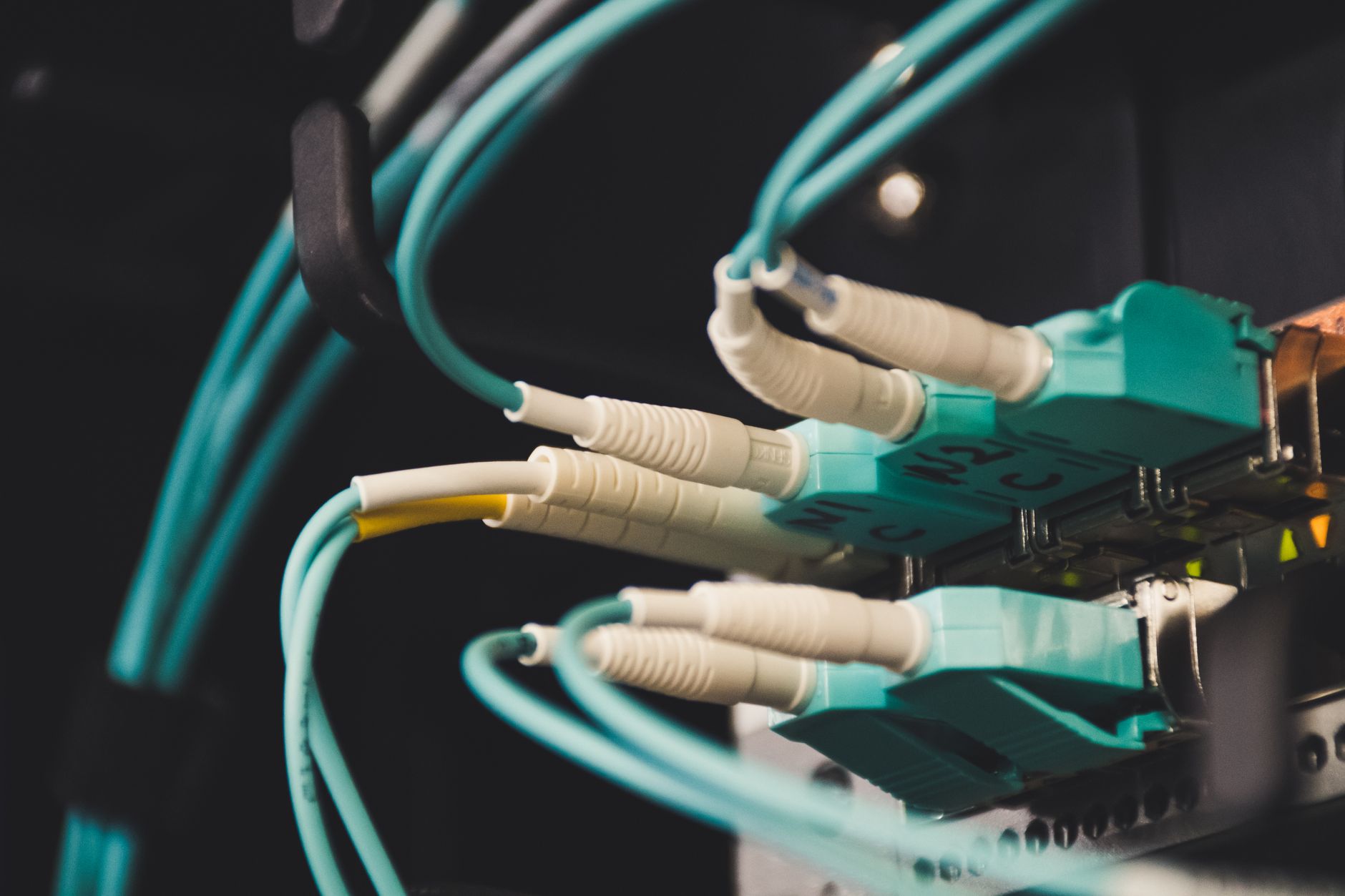
Photo by Brett Sayles on Pexels
TIM Charts a New Course: From Legacy Carrier to AI-Powered Network Operator
Telecom Italia (TIM) is making headlines on two fronts simultaneously — advancing its high-profile commercial agreement with Poste Italiane while laying out an ambitious roadmap that targets some of the most lucrative and technically demanding segments of the modern connectivity market. The Italian operator’s strategic vision now extends well beyond traditional voice and broadband services, reaching into artificial intelligence, national defense infrastructure, and next-generation data center ecosystems.
The Poste Italiane transaction, which involves leveraging TIM’s fixed-line network infrastructure to serve the state-owned postal and financial services giant, is being closely watched by European telecom analysts as a bellwether for how legacy operators can extract new value from existing network assets. But the deal is only one piece of a much larger strategic puzzle that TIM’s leadership is assembling.
The Poste Transaction: Strategic Value Beyond the Balance Sheet
At its core, the agreement with Poste Italiane represents TIM’s ability to monetize its sprawling national network infrastructure — a capability that becomes increasingly relevant as Italy continues its push toward digital transformation under the National Recovery and Resilience Plan (PNRR). Poste Italiane, with its vast network of post offices, logistics hubs, and financial service touchpoints across the country, requires robust, low-latency connectivity that TIM’s fiber and copper infrastructure is uniquely positioned to deliver.
The deal also reinforces TIM’s relevance as a wholesale network provider following the structural separation of its network assets into a distinct entity — a move that was part of the broader agreement involving KKR’s acquisition of TIM’s fixed network infrastructure through NetCo. With the enterprise-facing ServCo retained under the TIM brand, partnerships like the one with Poste Italiane validate the commercial viability of this bifurcated model.
Revenue Diversification Through Infrastructure Monetization
For investors and analysts who have scrutinized TIM’s debt-laden balance sheet for years, the Poste Italiane arrangement offers a tangible demonstration that the restructured company can generate stable, long-term revenue streams from anchor clients — the kind of predictable cash flows that underpin sustainable network investment cycles.
AI as the Next Frontier for European Telecom Operators
Perhaps more significant than the Poste deal itself is TIM’s declared intention to build meaningful capabilities in AI-enabled products and operational intelligence. European telecom operators are increasingly recognizing that AI is not merely a tool for internal network optimization — it is rapidly becoming a billable service layer that enterprise and government clients are willing to pay a premium for.
TIM’s AI ambitions align with a broader industry trend. Network operators are uniquely positioned to offer AI services that are tightly coupled with low-latency connectivity — think edge AI inference, real-time data analytics pipelines, and AI-driven network slicing for enterprise customers. Unlike hyperscalers, telcos can offer the combination of network proximity and compute resources that latency-sensitive AI applications demand.
This is particularly relevant in sectors like healthcare, manufacturing, and public safety, where milliseconds matter and data sovereignty requirements make cloud-only solutions impractical. TIM’s investments in edge computing infrastructure and its existing relationships with Italian public sector entities give it a credible foundation to compete in this space.
Defense and Mission-Critical Services: A Growing Market Opportunity
TIM’s identification of defense and mission-critical services as growth verticals is a strategic signal worth noting. Across NATO member states, there is growing investment in sovereign, secure communication networks that are resilient to cyberattacks, jamming, and physical disruption. Italy, as a NATO member with significant defense modernization commitments, represents a substantial addressable market.
Mission-critical communications — including technologies built on 3GPP standards such as MCPTT (Mission Critical Push-to-Talk), MCVIDEO, and MCDATA over LTE and 5G networks — are transitioning away from legacy TETRA systems toward broadband-enabled platforms. TIM’s 5G infrastructure positions it as a natural provider for public safety agencies, military logistics networks, and critical national infrastructure operators who require guaranteed quality of service and end-to-end security.
Data Centers as Connectivity Anchors
TIM’s focus on data centers completes the strategic triangle of connectivity, compute, and AI services. As demand for GPU-accelerated infrastructure surges across Europe — driven by generative AI adoption and the European Commission’s push for digital sovereignty — the ability to co-locate high-capacity data center operations adjacent to fiber backbone networks is a distinct competitive advantage. TIM’s real estate and fiber assets in major Italian urban centers make this a credible, if capital-intensive, growth avenue.
Industry Outlook: Europe’s Telcos Are Reinventing Themselves
TIM’s strategic trajectory mirrors moves being made by peers across Europe. Deutsche Telekom, Orange, and Vodafone are all investing in B2B services, edge computing, and AI platforms as organic mobile and broadband revenue growth plateaus in mature markets. The operators who will thrive in the next decade are those who successfully transition from connectivity pipes to full-stack digital service providers — and the early evidence suggests TIM is serious about making that transition.
What makes TIM’s story particularly compelling is the scale of the transformation underway. Few operators have navigated a network separation, a major infrastructure sale, a debt restructuring, and a strategic pivot to high-growth verticals simultaneously. The coming quarters will reveal whether TIM’s execution matches its ambition — but the strategic direction is clear, coherent, and commercially sound.
