
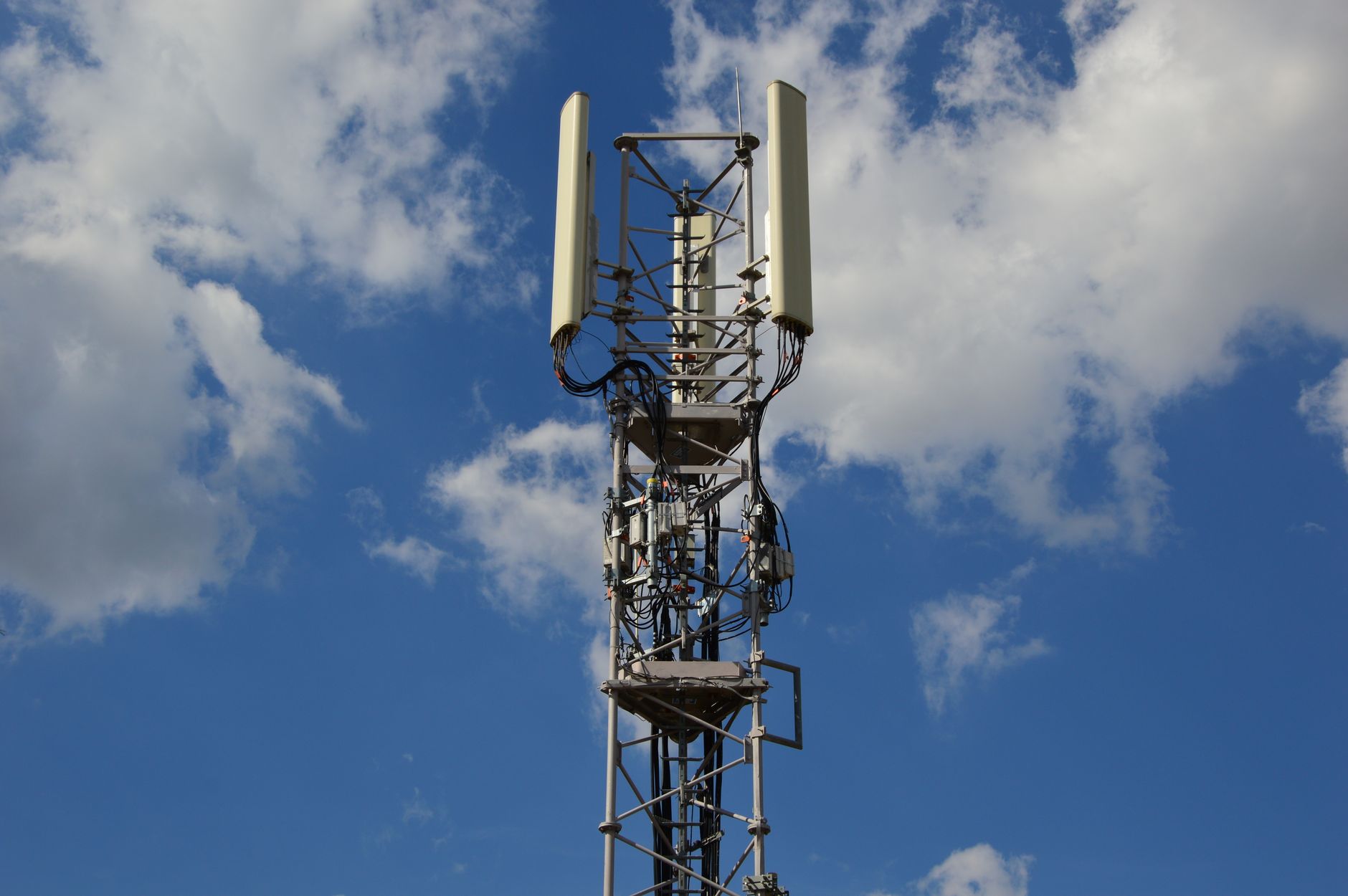
Photo by Ulrick Trappschuh on Pexels
Deutsche Telekom’s Wireless Ambitions Are Running on Full Power
Deutsche Telekom is not standing still. Fresh off a quarter that saw its U.S. operations generate a staggering €20.5 billion in revenue — a 9.1% jump year-on-year — Europe’s most valuable telecom operator is now sharpening its focus on what comes next in wireless. From spectrum strategy and 5G standalone deployments to the early groundwork for 6G research, the Bonn-based carrier is making moves that will shape the global telecom landscape well into the next decade.
The numbers tell a compelling story. While the European segment posted a more modest but still healthy 4.2% revenue increase to €3.3 billion, it is the U.S. arm — powered by T-Mobile US — that continues to serve as the company’s financial engine. That growth gap between the two regions raises important strategic questions: how does Deutsche Telekom translate T-Mobile’s U.S. playbook into competitive gains across its European footprint, and what wireless technologies will define its next chapter on both continents?
T-Mobile’s U.S. Engine: Still Firing on All Cylinders
T-Mobile US remains the crown jewel of Deutsche Telekom’s portfolio, and for good reason. The carrier has consistently outpaced rivals AT&T and Verizon in postpaid subscriber net additions over recent quarters, while simultaneously building out what it claims is the nation’s largest and fastest 5G network. With a mid-band spectrum portfolio anchored by its 2.5 GHz holdings — inherited from the Sprint merger — T-Mobile has been able to deliver both coverage and capacity that competitors have struggled to match.
The next frontier for T-Mobile in the U.S. involves the aggressive rollout of 5G Standalone (SA) architecture, which unlocks network slicing, ultra-low latency applications, and more sophisticated enterprise service offerings. Moving away from the Non-Standalone (NSA) model — which still relies on a 4G LTE core — represents a critical inflection point for monetizing 5G beyond simple speed upgrades. T-Mobile’s SA deployment progress gives Deutsche Telekom a live testing ground for technologies and business models that can eventually be replicated across its European operations.
Fixed Wireless Access: A Revenue Stream Worth Watching
One of the most significant contributors to T-Mobile’s revenue growth has been its Fixed Wireless Access (FWA) product, which has rapidly gained traction as a broadband alternative in suburban and rural markets underserved by traditional cable infrastructure. With millions of FWA subscribers already on its books and aggressive targets for further growth, T-Mobile has demonstrated that wireless networks can compete head-to-head with wireline providers — a proof of concept that is now informing Deutsche Telekom’s broader thinking about converged connectivity solutions.
The European Equation: Closing the Gap
While the U.S. segment dominates the revenue conversation, Deutsche Telekom’s European operations — spanning Germany, Poland, Hungary, Greece, and several other markets — represent a significant strategic pillar in their own right. The 4.2% revenue growth recorded in Q3 reflects steady progress, but the European telecom environment presents distinct challenges: more fragmented spectrum allocations, tighter regulatory frameworks, and intense price competition in several key markets.
Germany, Deutsche Telekom’s home market, is a particular focal point. The company has been investing heavily in both 5G infrastructure and fiber broadband expansion, recognizing that future network competitiveness will depend on a tight integration of fixed and mobile assets. Its domestic 5G network now covers a substantial portion of the German population, though mid-band capacity deployments continue to ramp up in densely populated urban corridors and key transport routes.
Spectrum and Infrastructure: The Building Blocks of Tomorrow’s Network
Spectrum strategy remains one of the most consequential decisions any carrier can make, and Deutsche Telekom is approaching upcoming European spectrum auctions with a clear-eyed understanding of what it needs to remain competitive. Beyond the mid-band frequencies that have proven so effective for 5G capacity, the company is also eyeing millimeter wave (mmWave) deployments for high-density venues and enterprise campuses, as well as monitoring developments in the 6 GHz band that could unlock significant new capacity for Wi-Fi offloading and future wireless applications.
On the infrastructure side, Deutsche Telekom has been exploring opportunities in Open RAN (O-RAN), the disaggregated network architecture that promises to reduce vendor dependency and drive down infrastructure costs. While O-RAN adoption across the industry has moved more slowly than early boosters predicted, Deutsche Telekom’s involvement in various O-RAN trials and industry working groups signals a long-term commitment to vendor diversity and network flexibility.
Looking Ahead: The Road to 6G and AI-Native Networks
Even as 5G deployments continue to mature, Deutsche Telekom is already positioning itself for the technologies that will define the 2030s. The company is an active participant in early 6G research initiatives at both the European and global level, contributing to standardization discussions that will shape the next generation of wireless connectivity. Internally, the company is also investing heavily in AI-driven network operations — using machine learning to optimize traffic management, predict network failures, and automate complex configuration tasks that once required significant human intervention.
The convergence of AI and telecom infrastructure is not just an operational efficiency play; it is increasingly central to Deutsche Telekom’s enterprise strategy. By offering AI-powered network slicing, edge computing capabilities, and intelligent connectivity services, the company aims to move up the value chain and capture a larger share of the enterprise and B2B market — a segment where margins are significantly higher than in traditional consumer wireless.
With its U.S. operations delivering exceptional financial results and its European footprint steadily expanding, Deutsche Telekom appears well-positioned to execute on an ambitious wireless roadmap. The challenge — and the opportunity — lies in converting that financial strength into the technological leadership that will define the next era of global telecommunications.
