
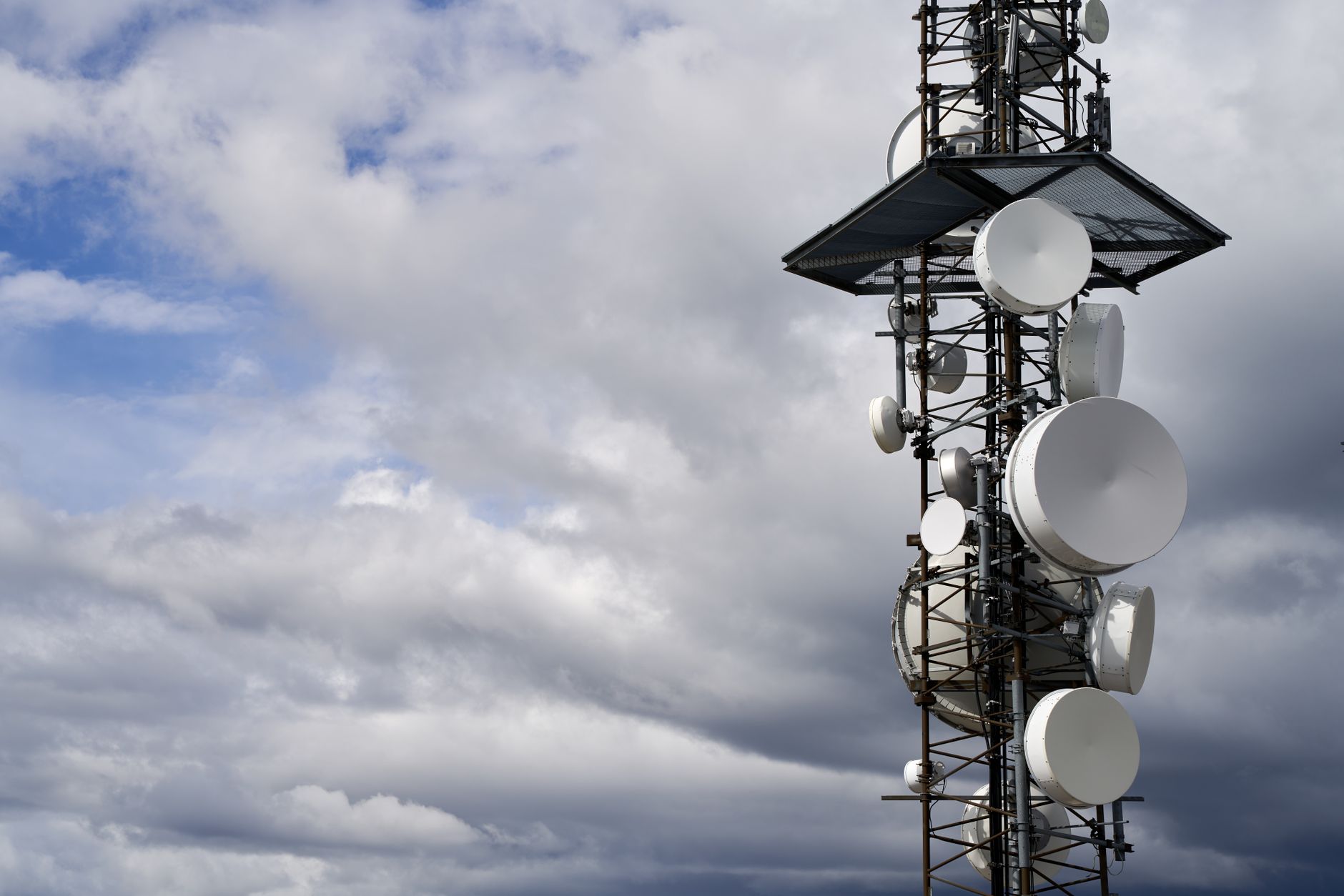
Photo by Barnabas Davoti on Pexels
The Speculation Is Deafening — But What Is SpaceX Actually Planning?
When SpaceX floats the idea of a terrestrial mobile network, the telecom industry doesn’t just take notice — it collectively holds its breath. Fresh off a wave of commentary following SpaceX’s recent signals about expanding Starlink into a ground-based mobile offering, analysts and industry insiders are now wrestling with a question that could reshape the competitive landscape of U.S. wireless: Is Elon Musk building a fourth major American carrier, or is this something even harder to categorize?
The short answer is: probably neither — and possibly both. The reality of what SpaceX appears to be constructing is more nuanced, more technically complex, and frankly more ambitious than a simple carrier play. To understand it, you have to look beyond the headlines and dig into spectrum strategy, network architecture, and SpaceX’s longer-term orbital ambitions.
From Orbit to the Ground: The Hybrid Network Theory
At its core, the emerging Starlink mobile concept appears to revolve around a tightly integrated satellite-terrestrial architecture — one that blurs the traditional boundary between mobile network operators (MNOs) and satellite service providers. SpaceX has already demonstrated meaningful progress on its Direct-to-Cell (DTC) initiative, which leverages its Gen2 Starlink satellites equipped with eNodeB payloads to communicate directly with standard LTE handsets without any specialized hardware on the user end.
The DTC service, currently operating in partnership with T-Mobile under a spectrum-sharing arrangement in the 1.9 GHz PCS band, is already live in a limited capacity for SMS messaging, with voice and data capabilities on the roadmap. But analysts are now questioning whether SpaceX is positioning this T-Mobile partnership as a stepping stone rather than a destination.
The Spectrum Question Nobody Wants to Answer
Any serious terrestrial mobile network ambition lives and dies on spectrum — and this is where the SpaceX play gets genuinely interesting. SpaceX does not currently hold a traditional FCC mobile spectrum license in the manner of AT&T, Verizon, or T-Mobile. However, the company has been aggressively pursuing spectrum access through multiple vectors: its existing satellite allocations, the T-Mobile partnership bandwidth, and reportedly exploring V-band and E-band millimeter wave frequencies for backhaul and access use cases.
If SpaceX were to pursue licensed terrestrial spectrum independently, it would face an enormously capital-intensive auction process and fierce incumbent opposition. A more likely scenario, according to several analysts, is that Starlink Mobile evolves as a network-of-networks play — using licensed partner spectrum for dense urban connectivity while Starlink’s LEO constellation fills in coverage gaps that no ground-based infrastructure can economically justify.
Fourth Carrier or Category Disruptor?
The “fourth carrier” framing, while compelling from a competitive narrative standpoint, may actually undersell what SpaceX is attempting. Traditional carriers are fundamentally infrastructure businesses constrained by towers, fiber backhaul, spectrum licenses, and regulatory overhead. SpaceX, by contrast, is a vertically integrated aerospace company that manufactures its own satellites, launches them on its own rockets, and operates the ground infrastructure end to end.
This vertical integration gives SpaceX a structural cost advantage that no terrestrial carrier can replicate — a point not lost on Wall Street or on the carriers themselves. The per-unit cost of launching Starlink satellites continues to decline with each Falcon 9 and Starship iteration, compressing the economics of adding orbital capacity in ways that have no terrestrial analog.
MVNO as a Trojan Horse?
One scenario gaining traction in analyst circles is that SpaceX could pursue an MVNO (Mobile Virtual Network Operator) model as an interim strategy — reselling capacity on existing carrier networks while simultaneously building out its own satellite-backed coverage layer. This would allow Starlink Mobile to offer consumer-facing wireless plans without the immediate need for a full terrestrial network buildout, using the MVNO chassis to acquire subscribers, build brand equity, and gather network usage data.
Over time, as DTC satellite coverage matures and potentially as SpaceX secures additional spectrum footholds, the reliance on host-network capacity could diminish — a classic platform expansion playbook executed at aerospace scale.
What the Incumbents Are Watching Closely
For AT&T, Verizon, and T-Mobile, the threat calculus is asymmetric and unsettling. None of them can easily replicate the satellite layer that gives Starlink its universal coverage story. Rural and underserved markets — long the Achilles heel of terrestrial network economics — become a genuine competitive battleground if Starlink Mobile can deliver reliable LTE or 5G NR connectivity from orbit at consumer-accessible price points.
T-Mobile’s existing DTC partnership with SpaceX is simultaneously a hedge and a vulnerability. It gives T-Mobile a near-term coverage marketing advantage, but it also means the carrier is actively helping SpaceX prove out the technology and build subscriber confidence in satellite-delivered mobile connectivity.
Industry Outlook: The Architecture of Ambition
What SpaceX is building with Starlink Mobile doesn’t fit neatly into existing telecom industry taxonomies — and that may be precisely the point. Whether it ultimately manifests as a standalone carrier, a wholesale satellite overlay, a disruptive MVNO, or some hybrid architecture not yet named, the strategic intent appears clear: SpaceX wants a direct relationship with the mobile end user, not just a B2B role supplying connectivity to existing operators.
For telecom professionals, the next 18 to 24 months will be critical. Watch for FCC filings, spectrum auction activity, and any evolution of the T-Mobile DTC partnership terms. The real story of Starlink Mobile won’t be told in press releases — it’ll be written in regulatory dockets, network architecture disclosures, and subscriber numbers that the industry may not see coming until it’s too late to easily respond.
