
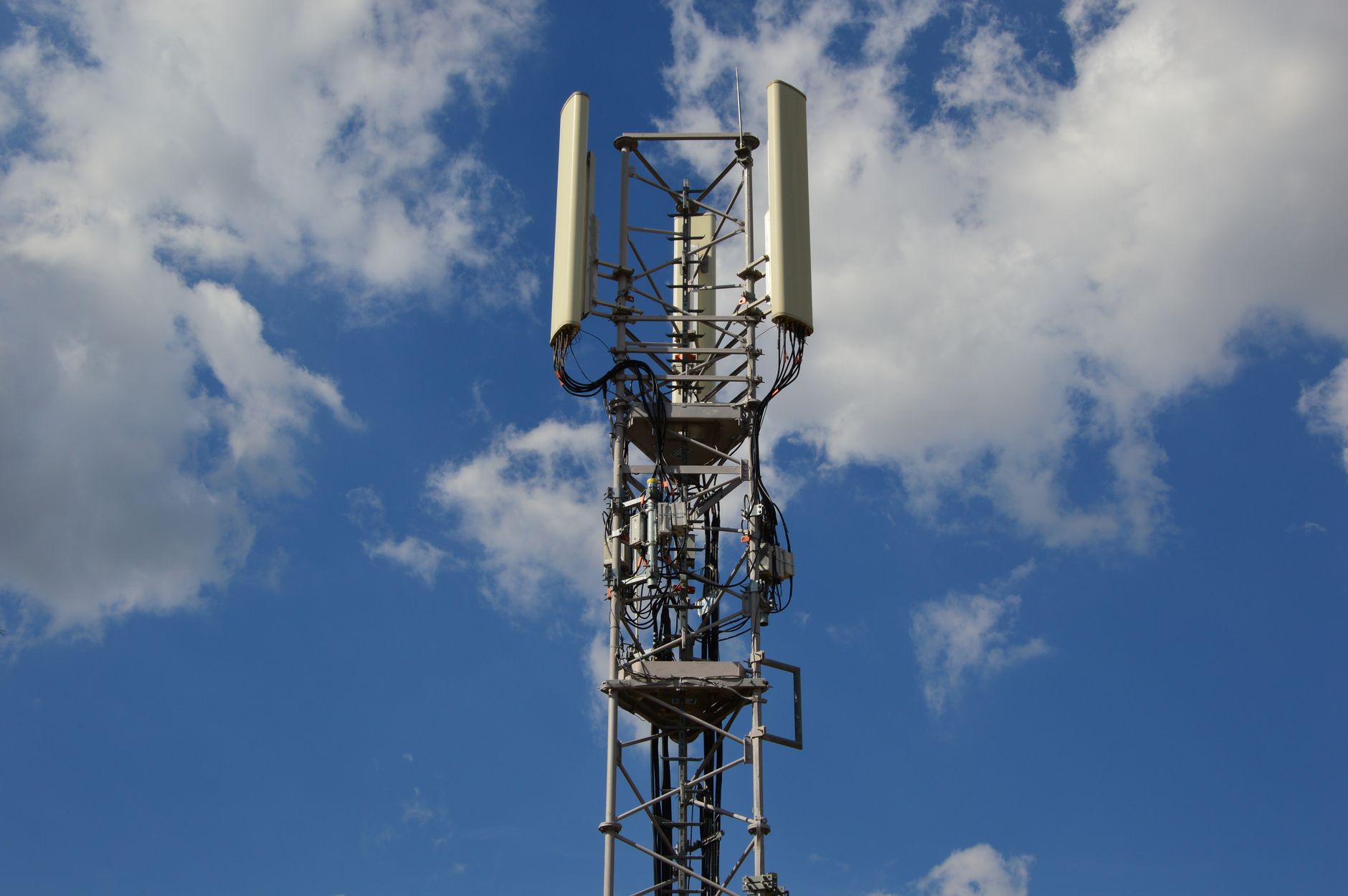
Photo by Ulrick Trappschuh on Pexels
The 5G Promise Meets Real-World Demands
For years, 5G was framed almost exclusively as a consumer technology story — faster downloads, smoother streaming, and eventually, self-driving cars. But a quieter, arguably more consequential transformation has been unfolding in the operational technology (OT) world, where utilities grid operators, first responders, and industrial enterprises are reimagining what connectivity can mean when lives and critical infrastructure are on the line.
Operations leaders across these sectors are increasingly vocal: 5G is no longer a future consideration. It is a present-day connectivity layer that is actively reshaping how mission-critical workflows are designed, monitored, and executed. Yet even the most enthusiastic adopters are quick to add an important caveat — 5G alone is not enough, and it was never meant to be.
Where 5G Is Delivering Real Operational Value
The case for 5G in mission-critical environments has strengthened considerably as network slicing, private 5G deployments, and edge computing have matured from whiteboard concepts into commercially deployable solutions. For utilities, this translates into high-bandwidth, low-latency links that support smart grid monitoring, drone-based infrastructure inspection, and real-time sensor telemetry across substations and distribution networks.
In public safety, 5G-enabled broadband capabilities are augmenting situational awareness in ways previously impossible. Body-worn cameras streaming live 4K video back to command centers, AI-assisted dispatch tools requiring constant data connectivity, and augmented reality systems that overlay building layouts onto a firefighter’s visor — these are no longer science fiction scenarios. They are live pilots and early deployments happening today across major metropolitan emergency services.
Private 5G: The Industrial Sweet Spot
Perhaps the most significant momentum is in private 5G networks, where industrial operators are standing up dedicated, enterprise-owned or managed cellular infrastructure within factories, ports, mines, and campuses. Unlike public network reliance, private 5G gives operations teams deterministic performance, customizable quality-of-service parameters, and the data sovereignty that regulated industries demand.
According to analyst forecasts from firms including IDC and ABI Research, the private LTE and 5G market is expected to surpass $15 billion globally by 2027, with energy and utilities alongside manufacturing representing the largest verticals. This growth is not accidental — it reflects a deliberate strategy by operations leaders who have identified specific workflow pain points that broadband connectivity can meaningfully address.
The Case for LMR: Why Resilience Still Rules
Despite the enthusiasm surrounding 5G, experienced operations leaders are unequivocal about one thing: Land Mobile Radio (LMR) networks are not going anywhere. The reasons are both technical and philosophical, rooted in decades of hard-won operational doctrine.
LMR systems — including P25, TETRA, and DMR standards — were engineered from the ground up for reliability in degraded conditions. They function during power outages, natural disasters, and network congestion events that would cripple commercial cellular infrastructure. Push-to-talk voice over LMR remains faster and more reliable than any over-the-top VoIP equivalent when seconds determine outcomes. And critically, LMR networks are purpose-built to operate independently of the internet backbone — a single point of failure that public 5G networks cannot entirely escape.
The Hybrid Network Architecture Imperative
What forward-thinking organizations are actively building today is not a replacement strategy but a complementary architecture. LMR handles the voice command and control layer — the irreducible core of coordinated emergency response and utility switching operations. Meanwhile, 5G broadband handles the data-intensive, higher-layer applications that enhance situational awareness and operational efficiency.
Vendors like Motorola Solutions have been particularly influential in articulating and building this hybrid vision, offering integrated platforms that bridge LMR voice infrastructure with broadband data capabilities through solutions like WAVE PTX and the CommandCentral ecosystem. The goal is interoperability — ensuring a firefighter’s radio and a dispatch supervisor’s broadband tablet are drawing from the same operational picture, regardless of which underlying network carries each data stream.
Standardization and Coverage Gaps Remain Key Challenges
Not everything in the hybrid 5G-LMR world is moving smoothly. Interoperability between proprietary LMR systems and standardized 5G infrastructure remains an engineering challenge requiring careful middleware and gateway design. Coverage parity is another persistent gap — FirstNet, the dedicated public safety broadband network built on AT&T’s infrastructure, has made substantial progress in the United States, but rural and underground coverage still falls short of what many operational scenarios demand.
Spectrum allocation also continues to be a geopolitical and regulatory battleground. The 4.9 GHz public safety band in the U.S. remains underutilized and contested, while internationally, nations are carving out varying spectrum strategies for critical communications that complicate cross-border interoperability for multinational operators.
The Road Ahead: Integration Over Replacement
The maturing consensus among operations leaders, network architects, and technology vendors points toward a nuanced future — one where the binary debate of “5G versus LMR” gives way to a more sophisticated conversation about layered, resilient communication architectures.
As 5G Release 17 and the forthcoming Release 18 standards introduce enhanced features specifically targeting mission-critical and industrial use cases — including improved mission-critical push-to-talk (MCPTT) specifications and direct device-to-device communication — the technical gap between broadband and dedicated radio networks will continue to narrow. But operational conservatism, regulatory requirements, and the unmatched proven resilience of LMR suggest that true replacement remains a distant prospect.
For utilities protecting aging grid infrastructure, for first responders coordinating disaster response, and for industrial operators running continuous processes where downtime is catastrophic, the message is consistent: embrace 5G’s capabilities where they deliver measurable value, but never bet your mission-critical communications backbone on a single technology layer. In the world of life-safety operations, redundancy is not a luxury — it is the entire point.
