
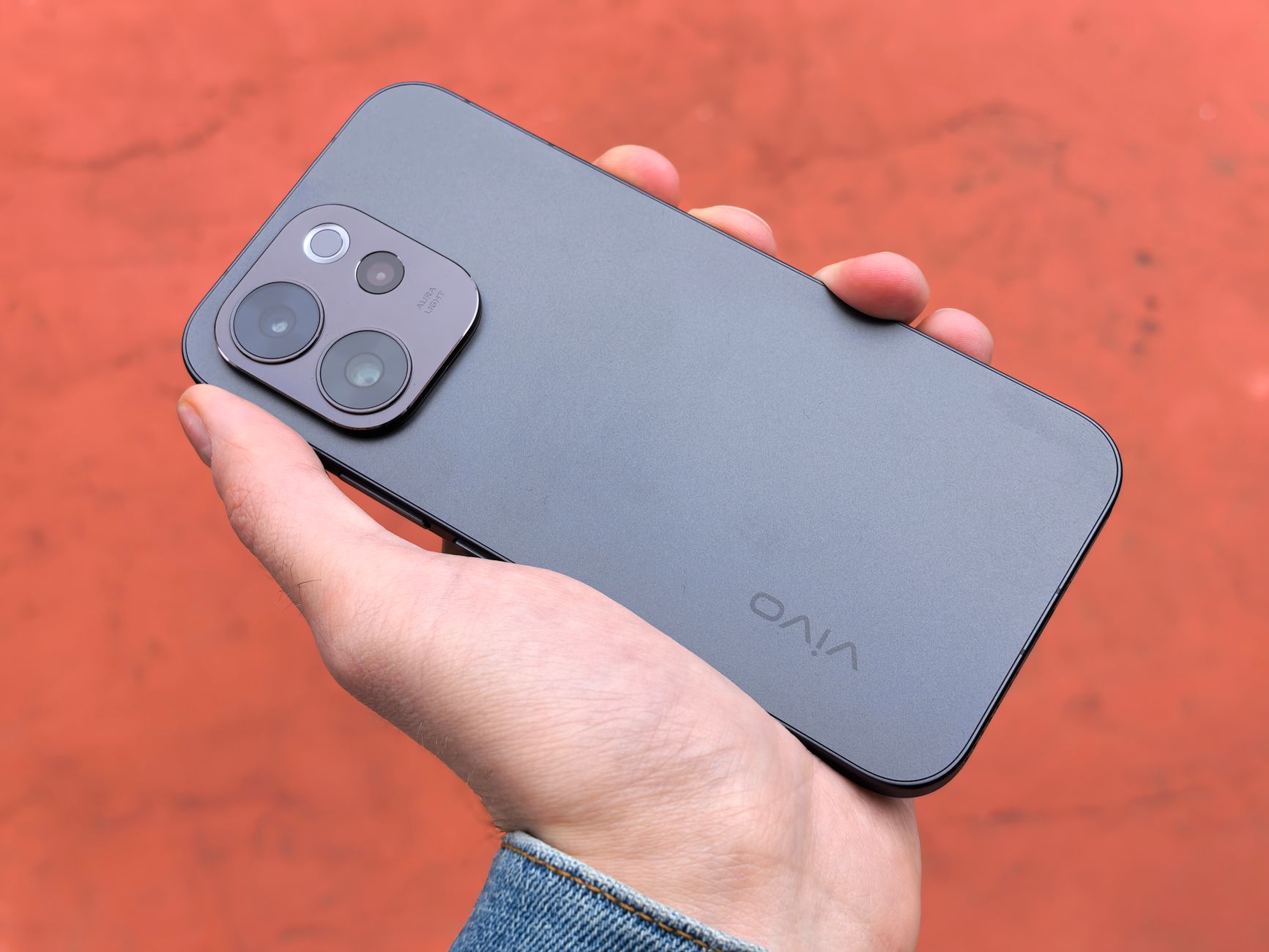
Photo by Andrey Matveev on Pexels
Vivo Sets the Stage for V80 5G with “Vivo Next 2026” Event
With India’s 5G rollout continuing to accelerate at a breathtaking pace, smartphone manufacturers are doubling down on devices that can make the most of next-generation connectivity. Vivo is the latest to make headlines, with a significant price leak revealing that its upcoming Vivo V80 5G will be priced at Rs 62,999 — a positioning that plants it firmly in the competitive mid-to-premium segment of the Indian market. The device is set to be officially unveiled at “Vivo Next 2026,” a marquee launch event scheduled for October 6, 2026.
The leak has already set social media and tech forums abuzz, with consumers and telecom professionals alike eager to see whether Vivo can deliver a 5G experience worthy of its price ambitions. As Indian telecom operators like Reliance Jio, Airtel, and BSNL continue to expand their 5G coverage to Tier 2 and Tier 3 cities, the timing of this launch could hardly be more strategic.
Breaking Down the Leaked Price: Where Does the V80 5G Sit in the Market?
At Rs 62,999, the Vivo V80 5G occupies an interesting — and increasingly competitive — niche in India’s smartphone landscape. This price bracket, roughly equivalent to $750–$760 USD, puts it in direct competition with heavyweights like the Samsung Galaxy A55 5G, the OnePlus 12R, and select offerings from Motorola’s Edge series. It also positions Vivo just below the flagship tier dominated by Apple and Samsung’s top-end models.
What makes this particularly significant from a telecom perspective is that consumers spending in this range are increasingly demanding Sub-6 GHz and mmWave 5G compatibility, multi-band carrier aggregation, and advanced antenna designs that can maintain stable connections even in dense urban environments. Industry analysts suggest that Vivo will need to deliver on all these fronts to justify the price point and differentiate from its own V70 predecessor.
5G Band Support: The Critical Question
While official specifications are still under wraps ahead of the October 6 reveal, industry insiders speculate that the Vivo V80 5G will likely be powered by either the Qualcomm Snapdragon 7s Gen 3 or MediaTek’s Dimensity 9200 chipset — both of which offer robust 5G modem capabilities. Support for India-specific 5G bands, particularly n78 (3.5 GHz TDD) used extensively by Jio and Airtel, will be a baseline expectation.
Beyond basic 5G connectivity, telecom professionals will be watching for support for SA (Standalone) 5G architecture, which enables true low-latency applications and network slicing — features that India’s carriers are beginning to commercialize in earnest. The device’s Wi-Fi 6E and Bluetooth 5.4 support are also expected, rounding out what should be a comprehensive wireless connectivity package.
Vivo’s V-Series Strategy and India’s 5G Ambitions
Vivo has long used its V-series lineup as a proving ground for camera innovation and premium design at relatively accessible price points. The V80, however, appears to represent an evolution in that strategy — leaning harder into connectivity performance and processing power alongside its traditional strengths in photography and display quality.
India is now home to over 100 million active 5G subscribers, a milestone crossed in record time, according to TRAI data. As 5G-capable devices become the norm rather than the exception, brands like Vivo must ensure their offerings do more than simply check the “5G-ready” box. Network-aware features, such as intelligent bandwidth management, enhanced VoLTE fallback, and real-time network switching, are becoming differentiators that sophisticated Indian consumers now actively seek.
The “Vivo Next 2026” Event: More Than Just One Device?
The branding of the launch event as “Vivo Next 2026” is itself telling. Rather than a simple product unveiling, the event name suggests Vivo may be using the October 6 platform to articulate a broader product and technology roadmap — potentially previewing future innovations in foldable 5G devices, AI-integrated network optimization, or even satellite connectivity features that are beginning to trickle into the premium Android ecosystem globally.
This would align with moves by competitors like Xiaomi and OPPO, which have similarly used flagship launch events to signal long-term commitments to next-generation wireless technologies, including early-stage 6G research partnerships and edge computing integrations.
Industry Outlook: What the V80 5G Launch Tells Us About India’s Telecom Trajectory
The Vivo V80 5G launch is more than a product announcement — it is a data point in India’s broader 5G maturation story. As handset prices in the Rs 50,000–Rs 70,000 bracket increasingly come standard with advanced 5G modems, carrier aggregation, and AI-powered connectivity features, the pressure on Indian telecom operators to deliver consistent, high-throughput 5G experiences will only intensify.
Telecom analysts at firms like Counterpoint Research have noted that India’s 5G device penetration is expected to surpass 60% of all new smartphone shipments by mid-2026, making launches like the V80 critical catalysts in consumer adoption. For Vivo, a successful V80 launch could solidify its position as the third-largest smartphone brand in India by 5G device volume — a title it has been chasing closely behind Samsung and Xiaomi.
All eyes now turn to October 6, when Vivo pulls back the curtain on what could be one of the most consequential mid-premium 5G launches of the year. For telecom professionals and consumers alike, the V80 5G represents another milestone in India’s journey from a 4G powerhouse to a genuine global 5G leader.
