
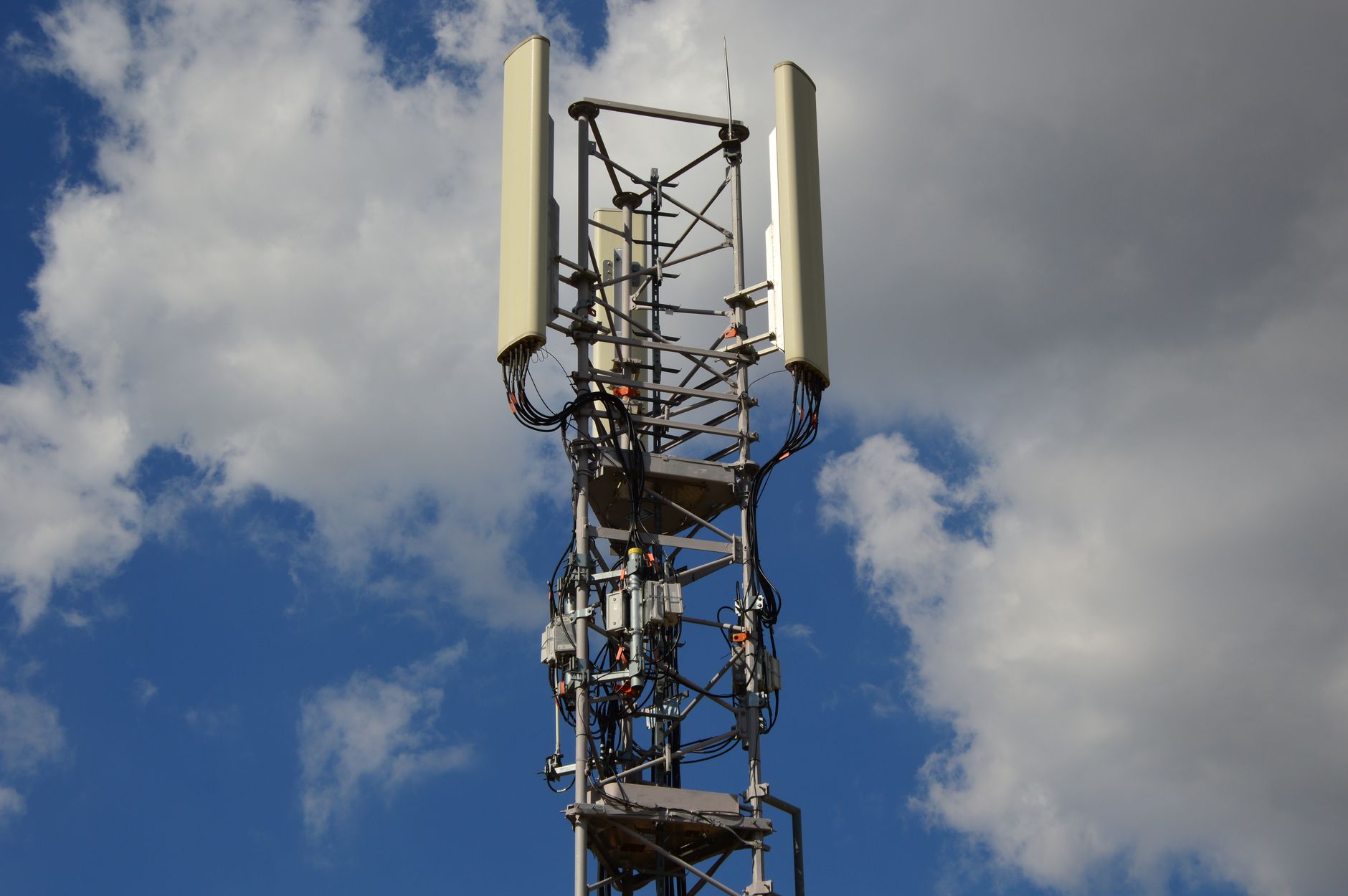
Photo by Ulrick Trappschuh on Pexels
The 6G Gold Rush: Innovation Forum or Industry Theater?
Verizon’s decision to expand its 6G Innovation Forum is the latest signal that America’s largest wireless carriers are pivoting their narrative engines toward a technology that won’t reach commercial deployment until the early 2030s. It’s a familiar playbook in telecommunications — and therein lies the problem. While engineers, standards bodies, and now AI strategists huddle in working groups to define what 6G should be, a growing chorus of industry analysts is pointing at the elephant in the room: 5G still hasn’t delivered on its most transformative promises.
The timing is instructive. Carriers are forming 6G consortia, signing memoranda of understanding with academic institutions, and recruiting AI research partners at precisely the moment when 5G monetization strategies remain frustratingly elusive for most operators globally. The question isn’t whether 6G will eventually arrive — it will — but whether the industry’s enthusiasm for the next chapter is being used, consciously or not, to paper over the unfinished business of the current one.
5G’s Unfinished Business
To understand the stakes of the 6G conversation, it’s worth cataloging where 5G stands today. Standalone (SA) 5G — the architecture that unlocks network slicing, ultra-low latency, and the full suite of enterprise-grade capabilities — remains a minority deployment globally. Most commercial 5G traffic still rides Non-Standalone (NSA) configurations that lean heavily on 4G LTE core infrastructure. The result is a technology marketed as revolutionary that, for most consumers, delivers a faster version of what they already had.
The enterprise and industrial IoT verticals that were supposed to generate the “killer use cases” for 5G — smart factories, autonomous logistics, precision agriculture — have seen adoption that is real but modest, largely confined to private network deployments rather than the broad commercial wave operators projected. Network slicing, one of 5G’s most compelling technical innovations, remains commercially nascent at most carriers worldwide. Revenue per bit continues its long structural decline.
The mmWave Millstone
Millimeter wave (mmWave) spectrum — the high-band frequencies that deliver the gigabit speeds prominently featured in 5G marketing materials — has proven to be among the technology’s most challenging deployments. Coverage limitations, building penetration issues, and the sheer capital intensity of dense small cell deployment have kept mmWave largely confined to stadiums, airports, and select urban corridors. Mid-band spectrum in the C-band and CBRS ranges has done the heavy lifting for nationwide coverage, but it doesn’t produce the jaw-dropping headline numbers that sell smartphones or justify enterprise contracts.
Enter 6G — With AI at the Center
What differentiates the emerging 6G conversation from its predecessors is the centrality of artificial intelligence as both a design principle and a use case driver. Unlike previous generational transitions, where AI was largely an afterthought bolted onto network management functions post-deployment, 6G proponents are arguing that machine learning must be native to the air interface, the core architecture, and the service layer simultaneously.
Verizon’s expanded Innovation Forum reflects this direction, bringing together ecosystem partners to explore AI-driven use cases that could justify the economic model for 6G investment. The technical targets being discussed in early 3GPP and ITU-R working sessions include terahertz (THz) spectrum utilization above 100 GHz, peak data rates exceeding 1 Tbps, sub-100 microsecond latency, and integrated sensing and communication (ISAC) capabilities that would allow the network itself to function as a distributed sensing layer.
These are genuinely exciting technical ambitions. The challenge is that THz propagation physics are even more punishing than mmWave, and the energy consumption implications of the proposed performance targets are significant at a time when operators are under intense pressure to reduce their carbon footprints and operational expenditure simultaneously.
AI Use Cases: Substance or Speculation?
The AI use cases being explored in forums like Verizon’s run the spectrum from concrete to speculative. On the grounded end, AI-native radio resource management and predictive network optimization represent genuine near-term opportunities that could improve spectral efficiency and reduce operational costs. Extended reality (XR) applications, holographic communications, and real-time digital twins of physical environments represent longer-horizon scenarios that require the full capability stack 6G promises to deliver.
Skeptics note that some of these same use cases — immersive XR, connected vehicles, industrial automation — were prominently featured in 5G launch presentations a decade ago. The industry’s credibility with enterprise customers, investors, and regulators will depend significantly on whether 6G’s architectural promises translate to deployed reality more effectively than 5G’s did.
Standards, Spectrum, and Geopolitical Stakes
The 6G standards race carries geopolitical dimensions that give it an urgency beyond mere commercial competition. China’s Ministry of Industry and Information Technology has been funding 6G research since 2019, and Chinese vendors including Huawei have filed significant numbers of early 6G-related patents. Europe’s Hexa-X project and South Korea’s national 6G program are similarly advanced. For U.S. operators and the broader American technology ecosystem, the Verizon forum and parallel initiatives from AT&T and T-Mobile represent the private sector’s contribution to what is increasingly framed as a national competitiveness imperative.
Industry Outlook: Learning From the 5G Playbook
The most constructive version of today’s 6G activity is one where the industry uses the long runway to 2030 deployment to do the difficult foundational work — resolving spectrum policy, establishing sustainable business models, and, critically, finishing the 5G job — before the marketing machine shifts into high gear. The least constructive version is one where 6G forums become a mechanism for deferring accountability for 5G shortfalls.
Telecom’s history suggests both outcomes are possible. The operators, vendors, and standards bodies now shaping 6G’s early contours have a genuine opportunity to break the hype cycle — but only if they treat current network performance gaps as design inputs for the next generation rather than inconvenient footnotes to a forward-looking narrative. The 6G clubs are open. Whether they produce a better network or just better brochures remains the industry’s defining challenge.
