
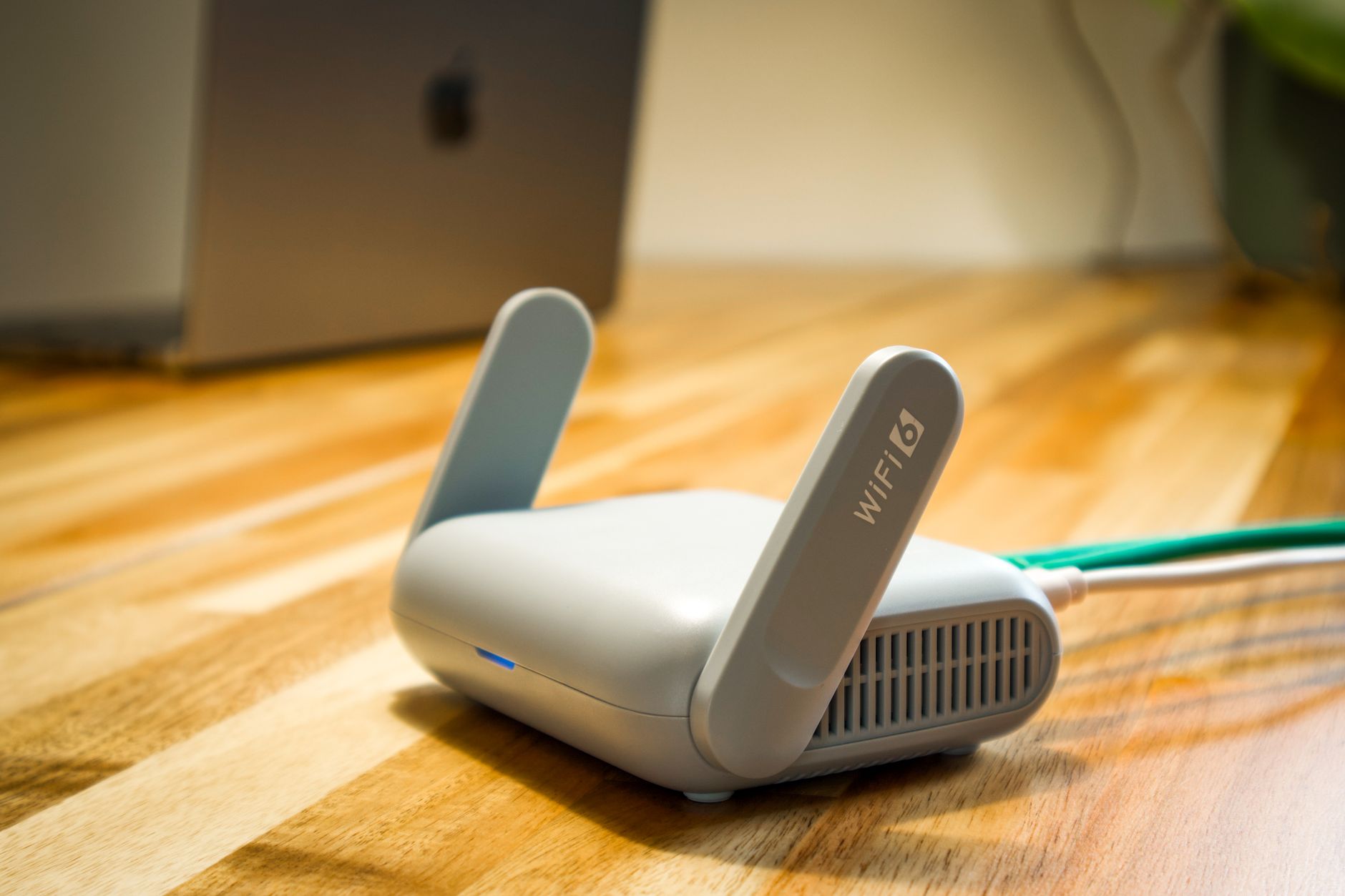
Photo by Pascal 📷 on Pexels
6GHz Wi-Fi Adoption Is Surging — and the Best May Still Be Ahead
For years, the promise of 6GHz Wi-Fi was easy to articulate but harder to prove in practice: a wide-open swath of spectrum, unclogged by the legacy devices and interference that plague the 2.4GHz and 5GHz bands, waiting to deliver the kind of multi-gigabit wireless performance that enterprises, carriers, and consumers have long demanded. In 2025, that promise is rapidly becoming reality. New data from Ookla shows six-fold growth in 6GHz Wi-Fi usage since early 2024, while live deployments at high-density venues are validating the band’s real-world capabilities in ways that benchmark tests never fully could.
But this may only be the beginning. A confluence of regulatory evolution, infrastructure investment, and a rapidly maturing device ecosystem suggests that 6GHz Wi-Fi is approaching a genuine inflection point — one that could fundamentally reshape how wireless connectivity is delivered across enterprise campuses, public venues, multi-family housing, and even fixed wireless access networks.
The Numbers Tell a Compelling Story
Ookla’s Speedtest Intelligence data has become a reliable barometer for real-world wireless adoption, and the 6GHz figures are striking. The six-fold increase in 6GHz Wi-Fi connections measured since the start of 2024 reflects not just more capable routers and access points hitting the market, but a critical mass of client devices — smartphones, laptops, tablets — that are now shipping with Wi-Fi 6E and Wi-Fi 7 chipsets capable of operating in the 6GHz band as a standard feature rather than a premium differentiator.
Perhaps more illustrative of the band’s practical value was Cisco’s deployment at BottleRock Napa Valley, where the company reported that 48% of Wi-Fi traffic at the festival traversed the 6GHz band. Festival environments represent one of the most demanding use cases for wireless infrastructure — thousands of users compressed into a defined geographic area, simultaneously streaming video, uploading to social media, and conducting mobile payments. The fact that nearly half of all traffic offloaded onto 6GHz channels without network degradation speaks directly to the band’s capacity advantages over its congested predecessors.
Technical Foundations: Why 6GHz Is Different
The 6GHz band, opened by the FCC in April 2020, made available up to 1,200MHz of additional spectrum for unlicensed Wi-Fi use in the United States — more than doubling the total spectrum available to Wi-Fi overnight. Critically, the band supports 160MHz-wide channels (and 320MHz channels under Wi-Fi 7’s EHT specification), enabling peak throughputs that dwarf what’s achievable on congested 80MHz channels in the 5GHz band.
Operating exclusively on Wi-Fi 6E and Wi-Fi 7 protocols, 6GHz networks also benefit from the absence of legacy device overhead. Unlike the 2.4GHz and 5GHz bands — where older 802.11b, g, and n clients can drag down overall network efficiency through slower transmission rates and mandatory backward-compatibility mechanisms — the 6GHz band is a clean-slate environment. Every device that connects is a modern, capable client, which dramatically improves spectral efficiency and average user throughput.
AFC, Power Rules, and the Regulatory Unlock
One of the most consequential near-term catalysts for 6GHz Wi-Fi expansion lies in the regulatory domain. The FCC established two operational modes for 6GHz devices: Low Power Indoor (LPI) operation, which allows devices to transmit without coordination, and Standard Power (SP) operation, which requires devices to query an Automated Frequency Coordination (AFC) system to avoid interfering with incumbent licensed users — primarily fixed microwave backhaul operators and broadcast auxiliary services.
AFC systems, which operate similarly to the spectrum access systems used in the CBRS band, are now fully operational in the U.S. following FCC approval of multiple AFC operators. Standard Power operation unlocks significantly higher transmit power — up to 36 dBm EIRP compared to the 24 dBm limit for LPI devices — extending the effective range of 6GHz access points considerably. This is particularly significant for outdoor deployments, fixed wireless access applications, and large venue environments where LPI’s indoor-focused power constraints have been limiting.
Analysts and equipment vendors have highlighted AFC-enabled Standard Power as a major unlock for outdoor 6GHz deployments, potentially enabling Wi-Fi to compete more directly with licensed spectrum technologies in certain fixed broadband scenarios.
Device Ecosystem Reaches Critical Mass
Client-side adoption has historically been the rate-limiting factor for new Wi-Fi band utilization. 6GHz is no exception, but the trajectory has accelerated sharply. IDC and Wi-Fi Alliance data indicate that Wi-Fi 7 chipsets, which support 6GHz operation as a core feature alongside the 2.4GHz and 5GHz bands in a tri-band configuration, are now shipping in flagship smartphones, premium laptops, and an expanding range of mid-tier consumer devices. As device refresh cycles continue, 6GHz-capable clients will become the norm rather than the exception across enterprise and consumer environments alike.
Industry Outlook: From Growth Curve to Standard Infrastructure
The combination of six-fold adoption growth, proven high-density performance, expanding AFC-enabled outdoor deployments, and a maturing device ecosystem positions 6GHz Wi-Fi not as an emerging technology to watch but as infrastructure that network planners need to be designing around today. Enterprises upgrading campus networks, carriers pursuing Wi-Fi offload strategies, and municipalities building smart city wireless frameworks all have compelling reasons to make 6GHz a centerpiece of their wireless architecture.
Industry observers suggest that the next 18 to 24 months will likely determine whether 6GHz becomes the dominant Wi-Fi band for high-performance applications — or whether regulatory inertia and infrastructure investment lag slow its momentum. Based on current trajectory, the smart money appears to be on the former.
