
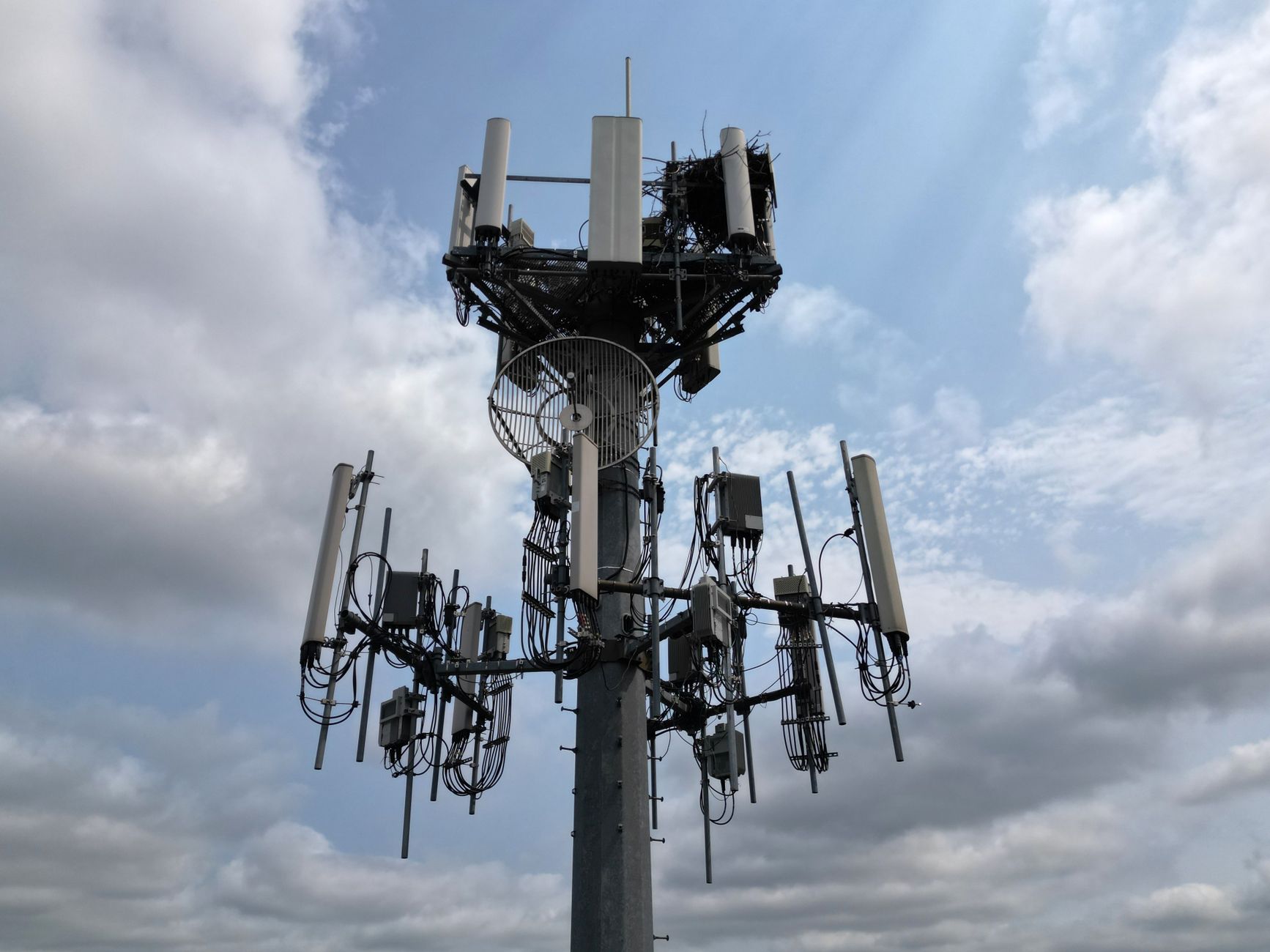
Photo by Giant Asparagus on Pexels
The AI-RAN Reality Check the Industry Needs
The telecommunications industry has heard plenty of bold promises about artificial intelligence revolutionizing the radio access network. Vendors, analysts, and standards bodies have all lined up to paint a picture of AI-driven RAN as the next great leap forward — one that will optimize spectrum usage, slash energy costs, and deliver unprecedented quality of experience. But as operators weigh multi-million-dollar infrastructure overhauls, at least one vendor is urging a dose of commercial pragmatism before anyone reaches for the checkbook.
1Finity, a RAN technology company positioning itself at the intersection of AI and wireless infrastructure, is pushing a straightforward thesis: deploy AI-RAN capabilities where a customer is already paying. It sounds almost disarmingly simple, but in an industry prone to technology-first thinking, the advice carries significant weight.
Performance Gains Aren’t Enough on Their Own
The core of 1Finity’s argument rests on a fundamental business reality. AI-RAN promises measurable improvements in spectral efficiency, interference management, traffic steering, and predictive maintenance. In controlled environments and early trials, those gains are real. But translating network performance improvements into bottom-line revenue is a different challenge entirely — one that many operators have stumbled over in previous technology cycles.
The company contends that performance improvements, however technically impressive, will not independently justify the capital and operational expenditure required to retrofit or replace existing RAN infrastructure with AI-capable systems. Without a clear and direct link to monetizable outcomes — whether that’s reducing churn among high-value subscribers, enabling new enterprise SLAs, or unlocking private network contracts — the business case remains structurally weak.
This is a pointed critique of how AI-RAN is often sold. Much of the vendor narrative focuses on aggregate network KPIs: lower latency, higher throughput, better load balancing. What it frequently glosses over is the gap between a better-performing network and a more profitable one.
Follow the Revenue, Then Deploy the Technology
1Finity’s proposed framework flips the traditional deployment logic. Rather than rolling out AI-RAN capabilities across a footprint and hoping monetization follows, the company advocates for identifying where revenue is already flowing — high-density enterprise campuses, stadium venues, transport corridors with premium service agreements, or densely populated urban cores with significant postpaid subscriber concentration — and prioritizing AI-RAN investment in those locations first.
This approach mirrors strategies that have gained traction in private 5G and network slicing conversations, where the emphasis has shifted toward use-case-specific deployments rather than blanket coverage upgrades. By anchoring AI-RAN investment to existing or contractually committed revenue, operators can construct a defensible ROI model that satisfies both CFOs and network planners.
Enterprise and Private Networks as the Proving Ground
One area where 1Finity’s logic finds particularly fertile ground is enterprise and private wireless networks. These deployments often involve customers who are already paying for dedicated connectivity, defined service levels, and outcomes-based guarantees. AI-RAN capabilities — specifically around dynamic resource allocation, interference mitigation in complex RF environments, and real-time traffic prioritization — can deliver measurable, contractually relevant improvements in exactly these settings.
For operators who have built or are building private 5G businesses, layering in AI-RAN capabilities at customer sites where revenue is secured could serve as both a competitive differentiator and a proof-of-concept template for broader network evolution.
The Broader AI-RAN Landscape
1Finity’s stance arrives at a moment when AI-RAN is rapidly moving from concept to commercial conversation. Major infrastructure vendors including Ericsson, Nokia, and Samsung have all introduced AI-driven RAN optimization products, while Open RAN frameworks have created architectural space for third-party AI engines to plug into the radio stack via standardized interfaces like the O-RAN Alliance’s near-RT RIC and non-RT RIC.
Nvidia has made particularly aggressive moves in the space, partnering with multiple operators on GPU-accelerated AI-RAN platforms that promise to run both telecommunications workloads and general AI inference on shared hardware. The pitch is compelling from an infrastructure efficiency standpoint, but it also requires significant upfront capital commitment — making the question of deployment prioritization all the more pressing.
Meanwhile, operators like T-Mobile, Softbank, and Vodafone have announced or are conducting AI-RAN trials, though commercial-scale deployments remain in early stages across most of the industry.
Avoiding the Build-It-and-They-Will-Come Trap
The telecommunications industry has a complicated history with transformative technology promises. Operators have invested heavily in capabilities — advanced IMS architectures, network function virtualization, early CBRS deployments — that took longer than anticipated to generate returns, or in some cases never fully did. The AI-RAN conversation risks repeating that pattern if commercial rigor isn’t applied from the outset.
1Finity’s message is essentially a call to avoid that trap. Build AI-RAN capabilities, yes — but build them where the economic foundation is already in place to support them.
Industry Outlook
As AI-RAN standards mature and hardware costs begin their inevitable decline curve, the barriers to broader deployment will ease. But in the near term, operators face real capital constraints and investor pressure to demonstrate disciplined spending. Vendors who can connect their AI-RAN value propositions directly to existing revenue streams — rather than promising abstract network improvements — are likely to find a much more receptive audience in operator procurement conversations over the next 12 to 24 months. In that context, 1Finity’s revenue-first deployment philosophy may prove to be less of a contrarian view and more of an emerging industry consensus.
