
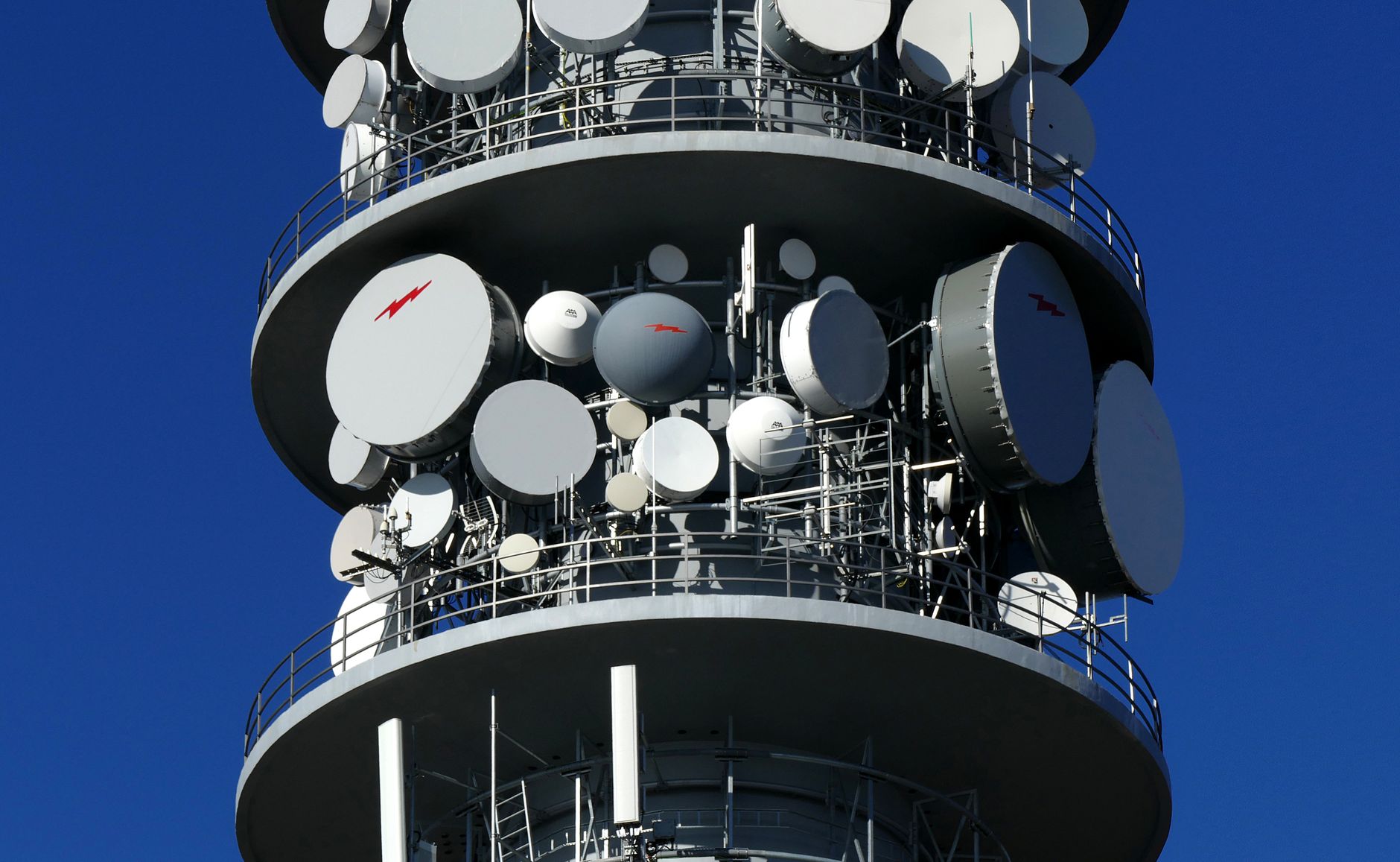
Photo by Branimir Klaric on Pexels
When SpaceX quietly emerged as a bidder for Grain Management’s 800 MHz spectrum holdings, the U.S. telecom industry collectively held its breath. The deal — still pending regulatory review — would hand Elon Musk’s satellite-to-cellular ambitions a tangible, terrestrial weapon: low-band spectrum that travels far, penetrates walls, and covers geography with remarkable efficiency. For the incumbent carriers that have spent decades and billions amassing their own low-band arsenals, this is not just another spectrum transaction. It’s a potential reshaping of the competitive order.
Why 800 MHz Spectrum Is the Crown Jewel of Wireless Real Estate
Not all spectrum is created equal. While mid-band frequencies like 3.5 GHz (C-band) deliver impressive throughput in dense urban environments, and millimeter wave (mmWave) handles massive capacity in stadiums and convention centers, it’s the low-band frequencies — particularly those sitting below 1 GHz — that form the true backbone of broad geographic coverage.
The 800 MHz band, originally carved out from UHF television spectrum and later reallocated for cellular use, is the same frequency range that Verizon leveraged for decades through its legacy Cellular and 850 MHz holdings, and which T-Mobile supercharged through its Sprint merger with 800 MHz SMR (Specialized Mobile Radio) spectrum. A single 800 MHz base station can cover terrain that might require dozens of millimeter wave nodes to replicate. For rural coverage — precisely the territory where Starlink already dominates via satellite — the physics of 800 MHz align perfectly with SpaceX’s geographic ambitions.
Grain Management’s portfolio, assembled through years of secondary market acquisitions, reportedly spans licenses covering a substantial portion of the U.S. population. The specific license boundaries and MHz-per-pop figures will matter enormously when the FCC scrutinizes the transfer, but the strategic logic for SpaceX is transparent: you cannot build a terrestrial wireless network without spectrum, and premium low-band spectrum rarely comes available at scale.
Starlink Mobile’s Terrestrial Play — Ambition Meets Reality
SpaceX has already demonstrated it can deliver direct-to-device (D2D) satellite connectivity through its partnership with T-Mobile, which has activated Starlink’s supplemental coverage on T-Mobile’s network for SMS and basic data in areas beyond terrestrial reach. That service, still in beta evolution, uses SpaceX’s Generation 2 Starlink satellites equipped with cellular payloads operating in T-Mobile’s 1900 MHz PCS mid-band spectrum.
But owning 800 MHz licenses would be an entirely different proposition — one that theoretically enables SpaceX to operate as an independent Mobile Network Operator (MNO) rather than a wholesale capacity provider. With terrestrial spectrum in hand, Starlink Mobile could theoretically construct ground-based base stations, establish roaming agreements, and offer subscribers a hybrid service blending satellite and terrestrial connectivity under a unified Starlink brand.
The operative word, however, is “theoretically.”
Coverage Is Not Capacity — The $30 Billion Question
Industry analysts are quick to pump the brakes on the most aggressive Starlink-as-MNO scenarios. Spectrum licenses grant the right to transmit; they do not conjure a network into existence. Building even a modest nationwide terrestrial footprint — towers, radios, backhaul, core network infrastructure, roaming interconnects — would conservatively require tens of billions of dollars in capital expenditure spread over many years.
T-Mobile spent roughly $43 billion acquiring Sprint in 2020, largely to gain that company’s spectrum and existing tower relationships. AT&T and Verizon have each invested north of $20 billion in recent C-band spectrum alone, followed by additional billions in deployment costs. For context, SpaceX’s Starlink business, while growing, is still maturing its revenue base and faces ongoing capital demands from its satellite constellation expansion and next-generation spacecraft development.
There is also the tower access question. Crown Castle, American Tower, and SBA Communications control the vast majority of macro cell sites in the U.S. Securing leases — especially in competitive rural markets where tower economics are already thin — is a years-long, contract-by-contract process. SpaceX would either need to negotiate access to existing infrastructure or contemplate a greenfield build, each path carrying enormous time and financial cost.
Regulatory Hurdles and Incumbent Pushback
The FCC transfer application will face scrutiny on multiple fronts. Incumbent carriers — particularly T-Mobile, which has its own extensive 800 MHz SMR holdings — will likely file comments raising questions about SpaceX’s technical qualifications, buildout commitments, and competitive impact. The commission will also examine whether the acquisition advances or undermines the agency’s longstanding goal of closing the digital divide in rural America.
Spectrum warehousing rules require licensees to demonstrate meaningful construction progress within defined buildout deadlines. If SpaceX acquires these licenses without a credible deployment roadmap, rivals will argue the spectrum should return to competitive bidding rather than sit idle in a startup MNO’s portfolio.
The Bigger Picture: A New Kind of Competitor Emerging
Regardless of the timeline or ultimate network architecture, SpaceX’s move into licensed terrestrial spectrum signals a new phase in the satellite-to-cellular convergence story. The company is no longer content to be a connectivity wholesaler or a niche rural broadband provider. With 800 MHz spectrum, a direct-to-device satellite fleet, and a consumer brand built on disruption, SpaceX is assembling the pieces of a genuine fourth — or fifth — nationwide wireless alternative.
For AT&T, Verizon, and T-Mobile, the threat may not be immediate, but it is structurally significant. A competitor that can blur the boundary between space-based and terrestrial connectivity — especially one backed by Elon Musk’s capital access and appetite for vertical integration — represents a category of competition the U.S. wireless industry has not faced before.
The earthquake metaphor may be apt. The tremors are just beginning, but industry veterans are wise to check the structural integrity of their foundations now — before the shaking gets worse.
