
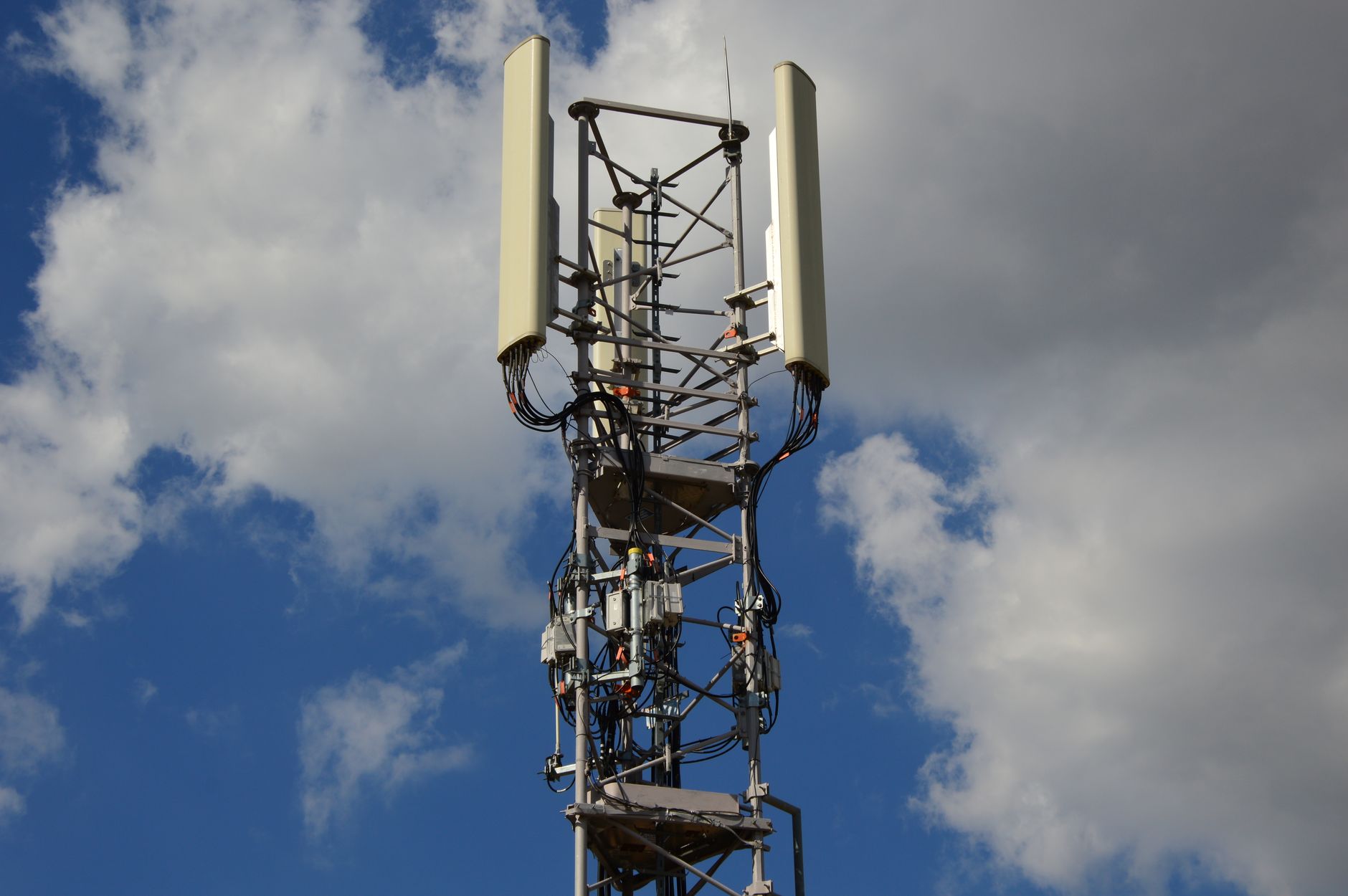
Photo by Ulrick Trappschuh on Pexels
T-Mobile Puts AI at the Heart of Its Network Strategy
When T-Mobile’s Chief Technology Officer John Saw took the stage at Deutsche Telekom’s AI Investor Day, the message was unmistakable: artificial intelligence is no longer a supplemental tool for the Un-carrier — it is the engine driving fundamental decisions about where, when, and how the company spends its network capital. Central to that transformation is a program called Customer-Driven Coverage (CDC), which Saw described as one of the most consequential AI-powered shifts in T-Mobile’s engineering philosophy in recent years.
For decades, wireless carriers have followed a relatively uniform playbook when expanding or upgrading their networks: identify geographic coverage gaps, assess population density, model projected traffic, and deploy accordingly. T-Mobile’s CDC initiative flips that model on its head by anchoring infrastructure investment decisions directly to granular, real-world customer behavior and experience data — filtered and synthesized at scale through machine learning algorithms.
What Is Customer-Driven Coverage?
At its core, the Customer-Driven Coverage program uses AI to aggregate anonymized data from T-Mobile’s subscriber base — including signal quality reports, dropped connections, data throughput anomalies, and location patterns — to build a continuously updated map of where customers are actually experiencing network deficiencies. Rather than relying solely on drive tests, third-party benchmarking tools, or static RF propagation models, T-Mobile’s AI systems synthesize millions of real-time data points daily to create a living, breathing picture of network performance from the subscriber’s perspective.
This means network investment decisions are increasingly being driven not by where towers are cheapest or easiest to build, but by where customers are suffering most — and where targeted improvements will yield the greatest measurable impact on user experience. The system can identify micro-areas where, for instance, a dense cluster of users consistently struggles during morning commute hours, or where a rural corridor sees unexpected high-value usage that traditional coverage models would have overlooked entirely.
AI-Driven Prioritization of Capital Expenditure
The implications for capital expenditure are substantial. T-Mobile, like all major carriers, operates under significant CapEx pressure — balancing the ongoing densification demands of its 5G mid-band and mmWave buildout with the expectations of Wall Street and a fiercely competitive market. By using AI to rank and prioritize network improvement projects by their predicted customer impact score, the company claims it can extract more value from each infrastructure dollar spent.
In practice, this means some traditional coverage extension projects — adding a new macro site in a lightly trafficked area, for example — may be deprioritized in favor of small cell deployments, antenna modifications, or spectrum reconfigurations in areas where CDC data reveals acute, high-frequency customer pain points. The AI effectively acts as a triage system for network engineering resources, directing human and capital assets toward the highest-return interventions first.
Resilience as a Second AI Frontier
Beyond investment prioritization, Saw emphasized AI’s growing role in network resilience — the ability to predict, withstand, and recover from disruptions ranging from equipment failures to extreme weather events. T-Mobile has invested heavily in AI-driven anomaly detection systems that can identify the early signatures of hardware degradation or software faults before they escalate into outages. Predictive maintenance algorithms now flag at-risk components, enabling proactive field interventions that reduce mean time to failure across the network’s vast infrastructure footprint.
This approach gained added urgency in the wake of high-profile network disruptions industry-wide in recent years, which exposed the vulnerability of carrier infrastructure to cascading failures. By training models on historical outage data, environmental conditions, and equipment telemetry, T-Mobile’s AI systems can run continuous simulations of failure scenarios — essentially stress-testing the network in the digital realm to identify single points of failure before they manifest in the physical one.
Integration With Deutsche Telekom’s Broader AI Vision
T-Mobile’s AI ambitions don’t exist in isolation. As the American flagship subsidiary of Deutsche Telekom, the Un-carrier’s initiatives are deeply intertwined with the German parent company’s group-wide push to become an AI-native operator. Deutsche Telekom has articulated a strategic vision in which AI permeates every layer of the telecom stack — from network planning and operations to customer service, fraud detection, and enterprise product development. The AI Investor Day forum itself signals how seriously the parent group is positioning its AI credentials to capital markets, with T-Mobile’s CDC program serving as one of the most tangible proof points of operational AI deployment at scale.
This cross-group alignment also opens the door to shared model development, federated learning across international networks, and the leveraging of diverse datasets from European and American markets — giving T-Mobile potential access to insights that a purely domestic operator could not generate independently.
Industry Implications and the Road Ahead
T-Mobile’s Customer-Driven Coverage model represents a broader inflection point for the wireless industry. As AI maturity increases across carriers globally, the competitive differentiation will increasingly hinge not on raw spectrum holdings or tower counts, but on the intelligence layer above the physical network. Operators that can translate behavioral data into faster, smarter infrastructure decisions will be better positioned to retain high-value subscribers in an era where switching costs continue to decline.
Rivals including AT&T and Verizon are equally vocal about their AI-driven network management ambitions, meaning the race to operationalize these capabilities at meaningful scale is well underway. But T-Mobile’s willingness to tie AI directly to capital allocation decisions — rather than limiting it to operational efficiency gains — suggests the company is pushing the technology further into its core business strategy than most.
For the broader telecom sector, the message from T-Mobile’s presentation is clear: the next wave of network competition will be won or lost in the data layer, and the carriers investing most intelligently in AI today are laying the foundation for network superiority tomorrow.
