
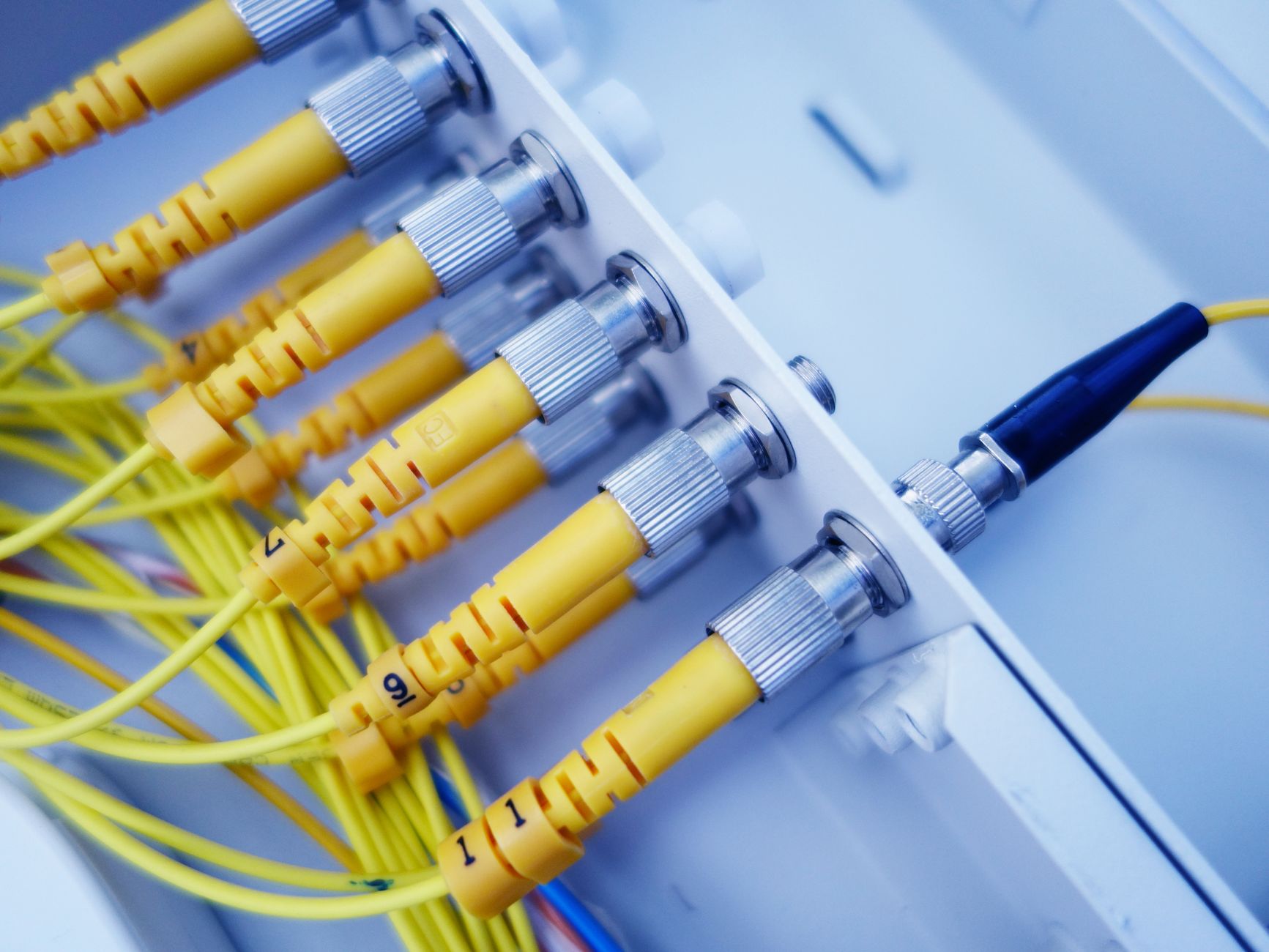
Photo by panumas nikhomkhai on Pexels
The Infrastructure Play That Could Outlast Every Radio Generation
In an industry obsessed with the latest radio access technology — whether it’s massive MIMO, Open RAN, or the early whispers of 6G — Boldyn Networks is making a decidedly contrarian wager. Rather than chasing the bleeding edge of the radio layer, the global neutral-host infrastructure provider is betting that whoever owns the underlying pipes, physical sites, and power assets will win the long game. It’s a strategy that sounds almost boring until you realize just how capital-intensive, permission-heavy, and time-consuming it is to replicate that foundation from scratch.
Boldyn, which was rebranded from BAI Communications in 2023, has quietly assembled one of the world’s most significant portfolios of neutral-host distributed antenna systems (DAS), fiber networks, and shared wireless infrastructure. With a presence spanning transit systems, stadiums, airports, urban cores, and enterprise campuses across multiple continents, the company is now accelerating its push into the United States — a market where the neutral-host model is still maturing but demand signals are increasingly hard to ignore.
The Neutral-Host Model: Infrastructure Agnosticism as a Competitive Advantage
At the heart of Boldyn’s strategy is a fundamental decoupling: separate the passive and semi-active infrastructure layers from the radio technology that rides on top of them. Fiber backhaul, conduit, physical mounting structures, power supplies, and even real estate access agreements are all assets that don’t become obsolete when a new radio standard emerges. A fiber strand laid today can carry 4G LTE, 5G NR, and eventually 6G signals without replacement. A rooftop lease secured for a small cell site serves operators regardless of which generation they’re deploying.
This is the essence of what Boldyn calls its “own the pipes, stay neutral on the radios” philosophy. By investing heavily in these long-duration physical assets and then offering them on a shared, multi-operator basis, the company creates a revenue model that is simultaneously carrier-agnostic and generation-proof. Mobile network operators — who are themselves under intense pressure to reduce capital expenditure — get access to ready-made infrastructure without the burden of ownership, permitting battles, or long-term maintenance obligations.
Converged Networks and the Owner-Funded Model
One of Boldyn’s more distinctive operational stances is its preference for owner-funded, converged network builds rather than relying heavily on operator anchor commitments before breaking ground. In traditional neutral-host deployments, a project often doesn’t move forward without at least one major carrier signing on as a lead tenant. Boldyn is increasingly willing to fund infrastructure speculatively — banking on the conviction that quality sites in high-traffic locations will attract multiple tenants over time.
This approach mirrors what tower companies like American Tower and Crown Castle did in the macro cell era: build it, and they will come. Applied to in-building DAS, urban fiber rings, and transit system wireless networks, the model demands deep pockets and patient capital, but it also gives Boldyn greater control over network design, timeline, and ultimately, the economics of tenancy. The company’s backing from institutional investors provides the financial runway to sustain this posture in competitive markets.
Cautious on Private 5G and Open RAN — For Good Reason
Despite the enormous industry hype surrounding private 5G networks and Open RAN architectures, Boldyn has notably tempered its enthusiasm for both — at least as near-term revenue drivers. This measured skepticism is worth unpacking, because it reflects a sober reading of where enterprise deployments actually stand versus where vendor marketing suggests they should be.
Private 5G, while technically compelling for industrial IoT, factory automation, and campus connectivity use cases, has faced slower-than-expected enterprise uptake due to complexity, integration challenges, and questions about managed service ownership. Similarly, Open RAN — the disaggregated, software-defined radio access network architecture championed by the O-RAN Alliance and backed by operators like Rakuten and Dish Network — continues to grapple with performance parity gaps, interoperability friction, and vendor ecosystem immaturity at scale.
Boldyn’s caution isn’t dismissiveness — it’s sequencing. By not overcommitting capital or operational resources to technologies that remain in proving-ground phases, the company preserves flexibility to integrate these capabilities once the ecosystem matures. In the meantime, its neutral infrastructure assets remain equally compatible with traditional vendor-specific RAN equipment and next-generation open interfaces.
US Expansion: The Priority Market
The United States represents both the most contested and most promising frontier for Boldyn’s expansion ambitions. American cities present a unique combination of infrastructure density needs, complex permitting environments, and a carrier landscape where AT&T, T-Mobile, and Verizon are simultaneously under pressure to extend coverage while managing capital budgets with increasing discipline. Neutral-host solutions that reduce duplicative infrastructure spending are a natural fit — provided they can navigate municipal rights-of-way, building owner negotiations, and carrier interconnection requirements.
Transit and venue deployments are expected to anchor Boldyn’s US growth, building on its existing track record in systems like the New York City subway, where neutral-host fiber and DAS infrastructure underpins wireless service for millions of daily riders. Expanding this model to additional transit authorities, airports, and large-scale venues creates both recurring revenue and a reference architecture that can attract enterprise and carrier customers alike.
Industry Outlook: The Infrastructure Layer Becomes the Moat
As the telecom industry enters an era defined by network densification, spectrum complexity, and the blurring lines between fixed and mobile connectivity, the ownership of shared physical infrastructure is emerging as a genuine and durable competitive moat. Boldyn’s bet is that in a world of rapidly evolving radio standards, the entities that control the underlying layer — fiber, sites, power — will extract consistent, long-term value regardless of which technology sits on top.
Analysts watching the neutral-host space increasingly agree that the model’s time has come, particularly as operators face mounting pressure from investors to move toward asset-light balance sheets. If Boldyn executes on its US expansion with the discipline it has demonstrated in international markets, the company could emerge as the defining infrastructure partner of the 5G densification era — and quite possibly the one that follows it.
