
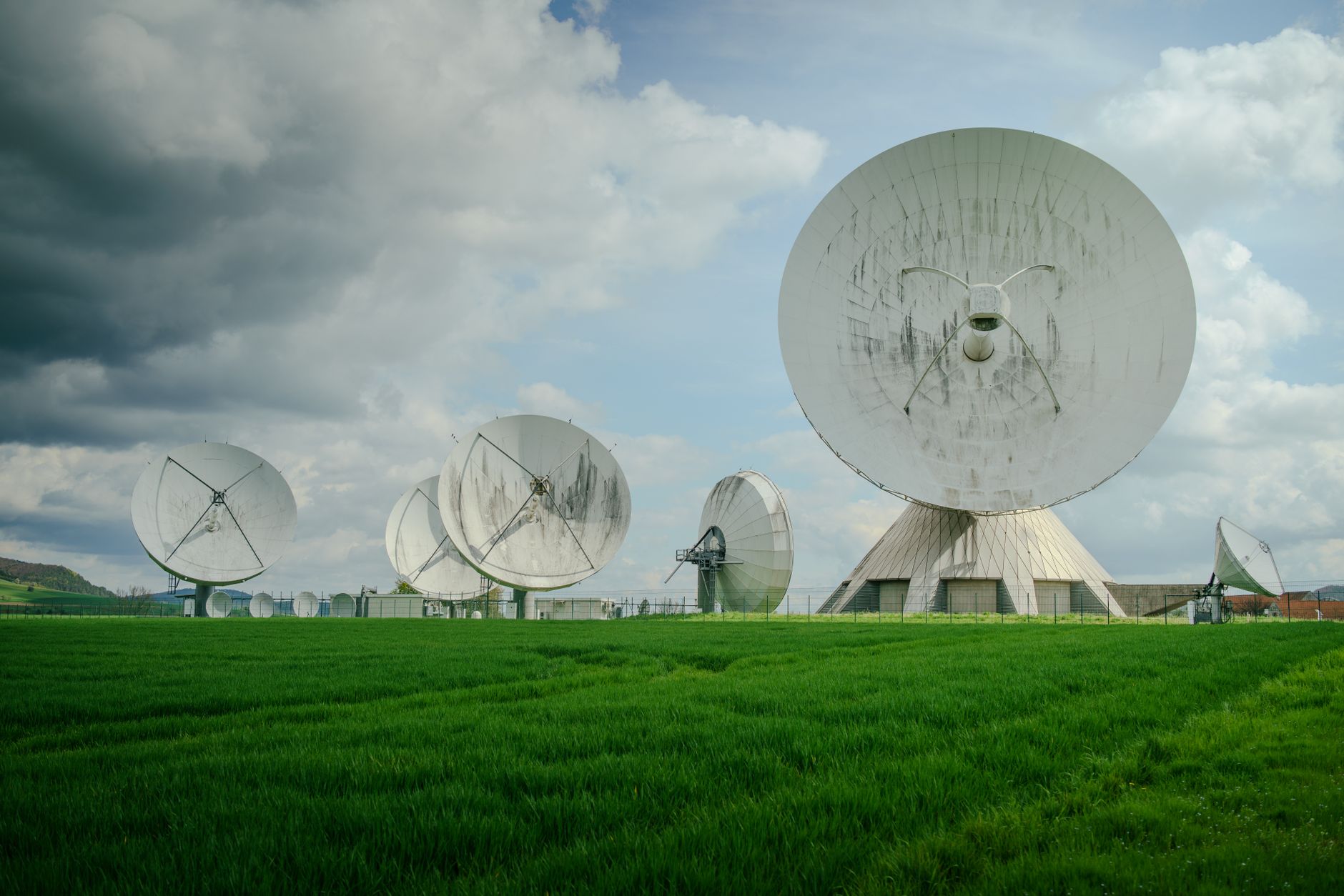
Photo by Der_ Hördt on Pexels
The Regulatory Race Nobody Planned For
Direct-to-device (D2D) satellite connectivity has done what disruptive technologies often do — it arrived faster than the rulebook could keep up. Companies like SpaceX Starlink, AST SpaceMobile, Lynk Global, and Apple’s emergency SOS satellite partners have already demonstrated — and in some cases commercially launched — services that beam signals directly to standard, unmodified smartphones from low Earth orbit (LEO). The problem? Much of the spectrum being eyed or used for these services was originally allocated exclusively for terrestrial mobile networks under international radio regulations.
Now, with the International Telecommunication Union’s World Radiocommunication Conference 2027 (WRC-27) on the horizon, regulators across three continents are scrambling to define their positions — and they aren’t necessarily singing from the same hymn sheet.
Why WRC-27 Is the Defining Moment for D2D
The World Radiocommunication Conference, held every four years under the ITU umbrella, is where the global spectrum rulebook gets rewritten. WRC-23, concluded in Dubai in late 2023, laid some early groundwork for non-terrestrial networks (NTN), but left the thornier questions around supplemental D2D downlink spectrum largely unresolved — deliberately kicking them to WRC-27. That decision has created a four-year window of regulatory ambiguity that operators, satellite providers, and national regulators are now navigating in real time.
At the heart of the debate is a deceptively simple question: Can spectrum bands designated solely for terrestrial mobile use be legally and technically shared with satellite systems delivering D2D services? The answer has enormous commercial consequences. Bands like portions of L-band, S-band, and key segments of mid-band spectrum allocated for IMT (International Mobile Telecommunications) are attractive to D2D providers precisely because smartphones are already tuned to receive them.
Three Countries, Three Approaches
United States: Market-First, Regulate Later
The U.S. Federal Communications Commission (FCC) has taken an aggressive, innovation-forward stance. Under its Supplemental Coverage from Space (SCS) framework, the FCC has already granted authorizations allowing satellite operators to use terrestrial carrier spectrum — with Mobile Network Operator (MNO) consent — to extend coverage into rural and remote areas. T-Mobile’s partnership with SpaceX, which launched limited beta SMS services in 2024, is the most prominent commercial example of this approach in action.
Washington’s strategy essentially bets that bilateral agreements between MNOs and satellite operators can resolve interference concerns domestically, with WRC-27 expected to provide the multilateral blessing after the fact. It’s a classic U.S. regulatory posture: move fast, demonstrate viability, then seek international harmonization.
United Kingdom: A Cautious, Evidence-Based Path
Ofcom, the U.K.’s communications regulator, has been more measured. The agency has launched consultations and technical studies examining how D2D services could coexist with existing terrestrial infrastructure without causing harmful interference — particularly in densely populated areas where spectrum reuse pressures are most acute. Britain’s post-Brexit regulatory independence gives it flexibility to craft bespoke frameworks, but Ofcom has also signaled its intention to align closely with whatever emerges from WRC-27, avoiding the reputational risk of being out of step with international norms.
Spain and the EU Bloc: Coordinated but Complex
Spain, operating within the broader European framework coordinated by CEPT (European Conference of Postal and Telecommunications Administrations), faces the additional complexity of EU-wide spectrum harmonization requirements. European regulators have been vocal about protecting existing terrestrial licensees — particularly MNOs that paid billions in spectrum auctions — from satellite interference. CEPT’s preparatory work for WRC-27 has focused heavily on defining strict technical coordination criteria, including power flux-density limits and geographic exclusion zones, that would need to be met before D2D operations in terrestrial bands could be sanctioned internationally.
The Technical Tightrope: Interference Is the Core Challenge
Beneath the regulatory diplomacy lies a genuinely difficult engineering problem. LEO satellites transmitting in terrestrial mobile bands must do so at power levels sufficient to reach a standard smartphone’s antenna — which was never designed to receive signals from space. Achieving that link budget without overwhelming terrestrial base stations operating in the same or adjacent spectrum requires sophisticated coordination. Technologies like beamforming, dynamic spectrum sharing, and time-domain separation are being proposed, but their effectiveness at scale remains an active area of study.
The ITU’s own studies, along with submissions from industry players through bodies like the GSMA and the CEPT, are attempting to model worst-case interference scenarios across a range of frequency bands and deployment geometries. These technical inputs will directly shape the agenda items and working documents that delegates debate at WRC-27.
Commercial Stakes Could Not Be Higher
The business case for getting this right is enormous. Analyst firm NSR projects the D2D satellite market could exceed $20 billion annually by the early 2030s, driven by demand for ubiquitous connectivity in underserved regions, emergency communications, and IoT applications. MNOs see D2D as a way to plug coverage gaps without building expensive terrestrial infrastructure. Satellite operators see it as a pathway to mass-market relevance beyond niche broadband services.
If WRC-27 fails to produce clear, harmonized rules, the consequences could include regulatory arbitrage — where services launch under permissive national frameworks but create interference problems for neighbors — and a chilling effect on investment as legal uncertainty discourages both satellite operators and their MNO partners from committing capital.
Industry Outlook: Convergence or Collision?
Most industry veterans expect WRC-27 to produce some form of regulatory accommodation for D2D in selected terrestrial bands, given the commercial momentum and political pressure from major economies. However, the details — power limits, coordination obligations, geographic scope — will determine whether the resulting framework enables a thriving global market or merely papers over unresolved national disagreements.
What is increasingly clear is that the path to WRC-27 is itself shaping the D2D landscape. Every national consultation, every FCC authorization, and every CEPT technical study is creating facts on the ground — and in orbit — that will make it harder, not easier, to ignore D2D when delegates convene in 2027. The real question is whether the world’s regulators can move from parallel tracks onto a shared one before the conference gavel falls.
