
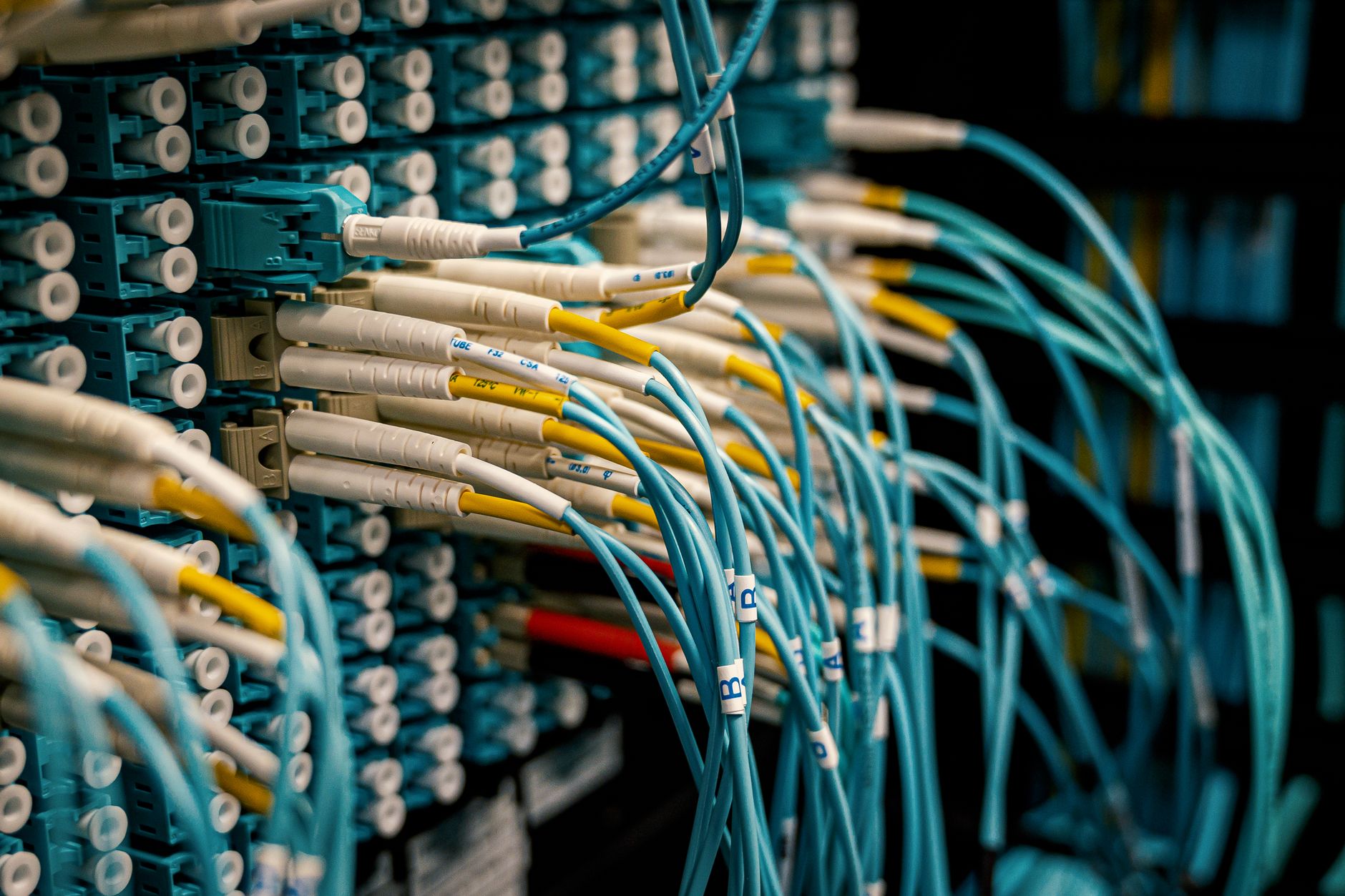
Photo by Brett Sayles on Pexels
The AI Inflection Point Telecom Can’t Afford to Ignore
For the better part of the last decade, the conversation around artificial intelligence in telecommunications was dominated by one word: training. Massive GPU clusters, hyperscale data centers, and billion-dollar model development pipelines captured the industry’s imagination — and its capital expenditure budgets. But 2026 marks a turning point. The center of gravity in enterprise and carrier-grade AI has shifted decisively toward inference — the real-time, continuous application of trained models to live data, live users, and live networks.
This isn’t a subtle evolution. It’s a fundamental restructuring of how telecom operators must think about their infrastructure, their partnerships, and their bottom lines. And as forums like RCR Wireless’s AI Infrastructure Forum return to center stage, two questions are emerging as the defining challenges of this new era: Can networks deliver the latency, throughput, and reliability that inference workloads demand? And can operators actually make money doing it?
Inference vs. Training: Why the Distinction Matters for Networks
Training a large language model or a computer vision system is an enormous but largely batch-oriented task — it happens on a schedule, in a controlled environment, and the network requirements, while substantial, are predictable. Inference is a different animal entirely. Every time a user queries a generative AI assistant, every time a self-driving vehicle processes a sensor feed, every time a network optimization engine makes a real-time routing decision — that’s inference. And it happens thousands, millions, or billions of times per day.
The implications for telecom infrastructure are profound. Inference workloads are latency-sensitive in ways that training never was. A generative AI application serving enterprise customers may have a tolerance window measured in tens of milliseconds. Autonomous systems may require sub-10ms round-trip response times. This means the compute can’t all live in a distant hyperscale cloud — it has to be distributed, pushed to the edge, and tightly integrated with the radio access network itself.
Edge Computing Steps Into the Spotlight
Multi-access Edge Computing (MEC) — long discussed as a theoretical advantage of 5G — is now being put to the test in real deployments. Operators including AT&T, Deutsche Telekom, and NTT have accelerated their edge AI strategies, co-locating inference engines at or near base stations and regional data centers. NVIDIA’s Jetson and Hopper GPU platforms, alongside purpose-built inference accelerators from companies like Qualcomm and Marvell, are increasingly appearing in operator infrastructure roadmaps.
The architecture emerging from this push is sometimes called AI-RAN — a model in which AI inference capabilities are embedded directly within the Radio Access Network. Samsung, Ericsson, and Nokia have all announced AI-RAN initiatives, promising dynamic spectrum management, predictive interference mitigation, and self-optimizing network slices — all powered by on-device or near-device inference models running in real time.
The ROI Pressure Cooker
Infrastructure investment in AI doesn’t come cheap. Deploying GPU-accelerated edge nodes across a national network footprint can cost operators hundreds of millions of dollars before a single enterprise customer is billed. This creates a brutal ROI calculus that is increasingly dominating boardroom conversations across the industry.
Operators are pursuing several monetization strategies to justify the spend. Network-as-a-Service (NaaS) models that bundle AI-powered SLAs — guaranteed latency, dynamic bandwidth, predictive reliability — are gaining traction with enterprise verticals including manufacturing, healthcare, and logistics. Others are positioning themselves as inference hosting providers, offering GPU-as-a-service on their edge infrastructure to enterprises that don’t want to build their own.
End-User Experience: The Wildcard Variable
On the consumer side, the ROI equation is complicated by end-user expectations that are rising faster than operators can build. Subscribers who interact with AI-powered customer service agents, AI-enhanced video streaming, or AI-driven smart home platforms increasingly associate network quality with AI responsiveness. A laggy AI assistant isn’t just an annoyance — it’s a churn risk.
This means operators must simultaneously invest in the underlying compute infrastructure and optimize the network pathways that connect users to inference endpoints. Techniques like network slicing, Quality of Service (QoS) prioritization for AI traffic, and intelligent traffic steering using — appropriately — AI-driven network management tools are becoming operational necessities rather than future roadmap items.
Standards, Spectrum, and the Road Ahead
The standards bodies are catching up. 3GPP’s Release 18 and the forthcoming Release 19 introduce native AI/ML capabilities into the core network and RAN specifications, laying the groundwork for interoperable AI-native networks. Meanwhile, spectrum policy discussions in the U.S. and Europe are beginning to factor in the bandwidth demands of distributed AI inference, particularly as mmWave and mid-band 5G deployments expand.
The convergence of these technical, commercial, and regulatory threads is what makes the current moment so consequential for telecom. The operators that can navigate the inference transition — building infrastructure that is both technically capable and financially sustainable — will define the shape of the industry for the next decade.
Industry Outlook: Pressure Breeds Innovation
The dual pressure of user experience and ROI is uncomfortable, but it’s also clarifying. It’s forcing telecom operators to make real architectural decisions, forge deeper partnerships with hyperscalers and silicon vendors, and develop genuinely differentiated service offerings. As the AI Infrastructure Forum and similar gatherings bring together network engineers, enterprise customers, and technology vendors, the consensus is cautiously optimistic: the infrastructure challenge is solvable, but only for those willing to move with urgency and precision.
The age of AI as a future promise in telecom is over. The age of AI as an operational reality — with all the complexity and opportunity that entails — has well and truly begun.
