
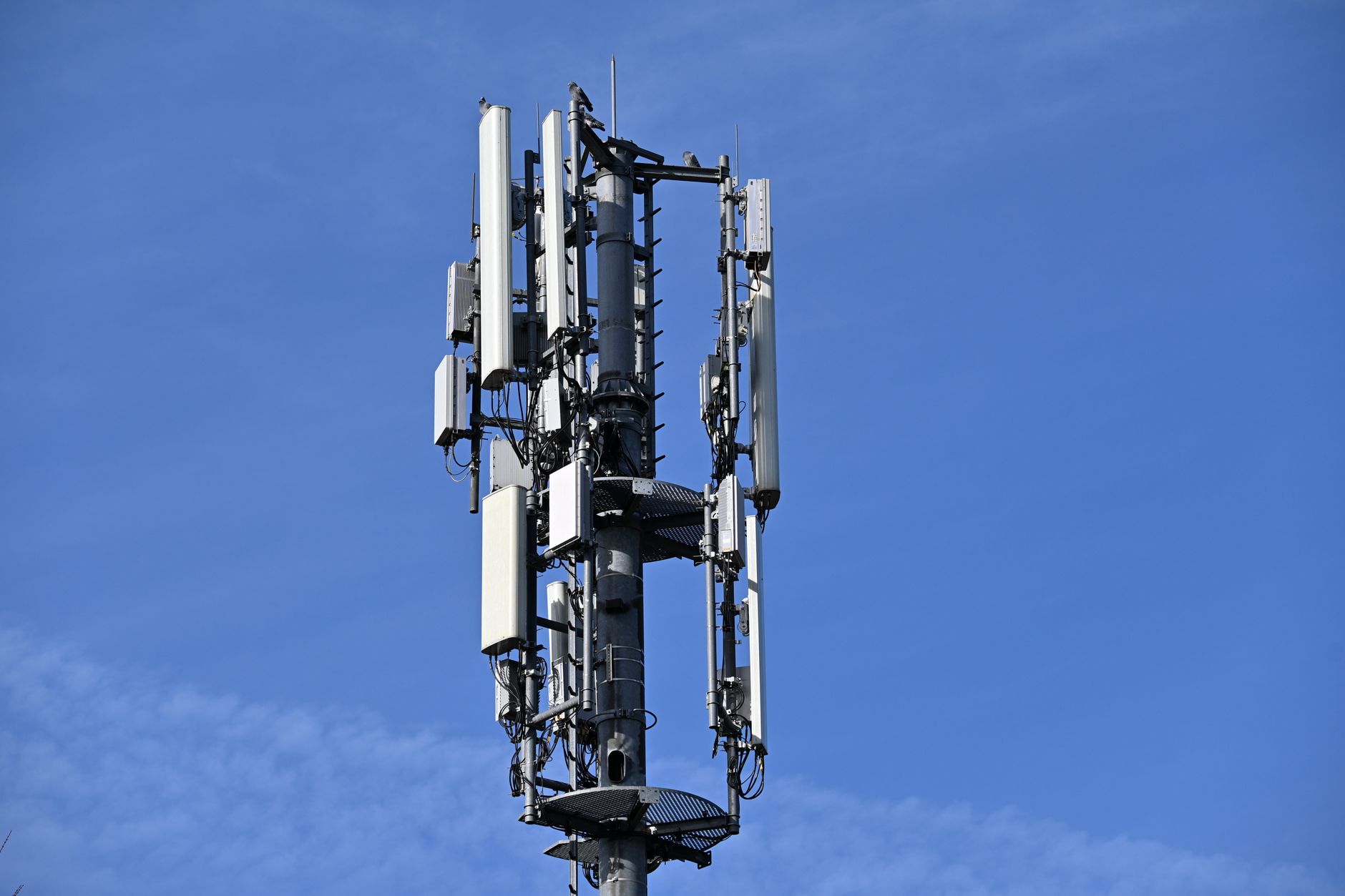
Photo by Edvin Gál on Pexels
American Tower’s CEO Makes the Case That Satellites Can’t Go It Alone
The telecommunications industry has been buzzing with speculation about whether low-Earth orbit (LEO) satellite networks — led by SpaceX’s Starlink, Amazon’s Project Kuiper, and others — will one day make traditional cell towers obsolete. American Tower’s chief executive officer Steve Vondran isn’t buying it. In a recent investor address, Vondran argued that satellite and terrestrial wireless infrastructure are not rivals but partners — and that the rise of satellite connectivity could actually strengthen the case for ground-based tower assets rather than undermine them.
It’s a message tailor-made for investor confidence, but it also reflects a technical reality that industry engineers have long understood: satellites, no matter how capable, still depend heavily on terrestrial networks to deliver the kind of reliable, high-capacity, low-latency connectivity that consumers and enterprises demand.
The Technical Reality Behind the Rhetoric
To understand why Vondran’s argument holds weight, it helps to look at how satellite networks actually function. LEO constellations like Starlink operate at altitudes between roughly 340 and 1,200 kilometers, enabling dramatically lower latency than traditional geostationary satellites. But even at these altitudes, satellite signals must connect to ground-based gateway stations — also known as terrestrial points of presence — to route traffic onto the internet backbone.
These gateway stations require physical infrastructure: land, power, fiber connections, and in many cases, the kind of tower or rooftop mounting assets that companies like American Tower specialize in managing. As LEO constellations scale to hundreds or even thousands of satellites, the number of required ground stations grows proportionally to handle handoffs, reduce latency, and maintain coverage continuity.
The Backhaul Bottleneck
Beyond ground stations, there’s the persistent challenge of backhaul — the connections that carry traffic from access points (whether a cell tower or a satellite gateway) back to the core network. Even satellite-delivered broadband services often rely on terrestrial fiber or microwave backhaul links at some stage of the network journey. This creates a natural intersection where tower infrastructure becomes an enabling layer for satellite operators, rather than a competing one.
American Tower, which manages more than 220,000 tower sites globally across markets in the Americas, Africa, Europe, and Asia-Pacific, is well-positioned to serve as that enabling layer. The company has already signaled interest in diversifying beyond traditional wireless carrier leasing into broader digital infrastructure plays, including data centers through its CoreSite subsidiary.
Direct-to-Device: Hype vs. Reality
Part of what’s driving the “satellites vs. towers” narrative is the rapid development of direct-to-device (D2D) satellite connectivity — a technology that allows smartphones to connect directly to low-orbit satellites without an intermediary ground station or femtocell. Apple’s emergency SOS via satellite, T-Mobile and SpaceX’s direct-to-cell partnership, and AST SpaceMobile’s broadband satellite ambitions have all fueled speculation about a future where handheld devices bypass towers entirely.
But even the most optimistic D2D deployments come with significant caveats. Current direct-to-device satellite links support limited bandwidth — often sufficient for text messages or basic data in emergency scenarios, but far from capable of replacing the multi-gigabit throughput that dense urban 5G networks deliver. Satellite physics impose hard constraints: a single LEO satellite passing overhead serves an enormous geographic footprint, meaning spectrum must be shared across potentially thousands of simultaneous users.
Vondran’s position implicitly acknowledges this gap. For the foreseeable future, satellites will complement terrestrial networks by filling coverage voids in rural and remote areas — not by replacing the capacity-dense macro cell infrastructure that powers urban and suburban connectivity.
What This Means for Tower Economics
American Tower’s framing of satellites as complementary infrastructure carries real financial implications. Tower companies generate revenue through long-term lease agreements with wireless carriers, and investor concern has grown that satellite expansion could slow carrier demand for new tower leases or accelerate decommissioning of rural sites.
If Vondran’s vision plays out — with satellite operators becoming new customers for tower infrastructure rather than substitutes for it — American Tower and peers like Crown Castle and SBA Communications could see an entirely new revenue stream emerge. Ground station hosting, edge computing nodes co-located on tower sites, and small cell densification to handle satellite traffic offloading all represent potential growth vectors.
A Shifting Competitive Landscape
Not everyone is convinced the transition will be seamless. Some analysts point out that satellite operators have strong incentives to build proprietary ground infrastructure rather than lease from tower companies, particularly as they scale. SpaceX, for instance, has largely developed its own gateway network independently. The degree to which satellite companies become meaningful tower tenants remains an open and commercially contested question.
Industry Outlook: Convergence, Not Competition
The broader trajectory of the telecom industry points toward convergence — an integrated architecture where LEO satellites, 5G macro cells, small cells, Wi-Fi, and fixed wireless access all play defined roles within a unified network fabric. Standards bodies including 3GPP have already begun work on non-terrestrial network (NTN) integration within the 5G and future 6G frameworks, formalizing the relationship between space-based and ground-based systems.
For American Tower, that convergence narrative is both a business strategy and a survival argument. By positioning terrestrial infrastructure as the indispensable backbone that makes satellite connectivity viable, Vondran is making a bet that the ground beneath the stars will remain valuable real estate — no matter how crowded the skies above become.
As LEO constellations continue to proliferate and 5G densification accelerates, the companies that thrive will likely be those that can serve both worlds. American Tower appears determined to be one of them.
